

This article first appeared in Digital Edge, The Edge Malaysia Weekly on October 12, 2026 - October 18, 2026
NEWS
Malaysia’s daily multimodal AI use to reach 43% by 2030
Malaysia’s daily use of multimodal artificial intelligence (AI) is projected to reach 43% by 2030, exceeding the global estimate of 30%, according to new research by Ericsson ConsumerLab.
Multimodal AI refers to applications that combine text, voice, images and video. Ericsson expects usage to move from occasional queries to more continuous interactions across devices and locations.
The increased use of such services is expected to place greater demands on mobile networks, particularly as image, video and voice-based interactions increase upload traffic and create short bursts of demand in busy areas.
Ericsson says Malaysia’s 5G network operated by Digital Nasional Bhd, including its 5G advanced capabilities, could provide the connectivity foundation needed to support these applications.
The research also points to growing adoption of agentic AI, which can carry out tasks such as making bookings or managing schedules on behalf of users. Across the markets surveyed, 38% of smartphone users expect to use agentic AI by 2030, compared with 4% currently.
The study surveyed more than 43,000 smartphone users aged 15 to 69 across 27 markets, including Malaysia, Indonesia, the Philippines, Singapore and Thailand.
Banks face pressure to rethink B2B payments
Business-to-business (B2B) payments are entering a new phase as corporates demand greater visibility, predictability and control, putting pressure on banks to rethink how payments are executed, settled and monetised.
According to technology consulting and outsourcing firm Capgemini’s 2027 World Payments Report, 60% of banks had prioritised B2B payment innovation over the past three years, but only 32% of corporate clients said they were satisfied with their primary banking partners.
Corporates are increasingly seeking real-time payment visibility, liquidity control, embedded compliance and faster reconciliation, creating opportunities for instruments such as stablecoins, tokenised deposits and central bank digital currencies (CBDCs).
However, adoption remains limited, with only 21% of banks actively scaling at least one accelerated intelligent money instrument. Nearly 60% of corporates surveyed said they would consider stablecoin-based services from non-bank providers if their banking partners failed to keep pace.
The report found that 74% of respondents described cross-border payments as slow, costly and unpredictable, while 59% faced accounts payable or receivable pressures and 55% reported reconciliation delays caused by legacy systems.
Some 36% of B2B payment volume already flows through non-bank providers.
The main bottleneck increasingly lies in the processes surrounding payments rather than the transfer itself. Data from the Society for Worldwide Interbank Financial Telecommunication shows that 90% of cross-border payments reach the recipient bank within an hour, but Capgemini estimates that the full corporate payment journey takes about 3½ days once approvals, compliance checks, execution and reconciliation are included.
Among emerging instruments, tokenised deposits were identified by banking executives as the top near-term priority because they allow funds to remain in the regulated banking system while operating in programmable environments.
Stablecoins are seen as having strong potential for cross-border settlement, while wholesale CBDCs are more focused on interbank settlement and risk control. Capgemini estimates that stablecoins, tokenised deposits and CBDCs could account for about 4% of global payment volume by 2030.
The change could also disrupt banks’ existing revenue models, with about US$230 billion in payment revenue from foreign exchange spreads, correspondent banking fees, float income and transaction processing and settlement fees potentially exposed. Capgemini says banks will need to look beyond transaction fees and develop services around settlement certainty, liquidity optimisation, real-time visibility and workflow coordination.
The report draws on surveys of 1,110 senior executives from large corporates and 300 banking executives across nine markets. — By Brandon Pang
AI puts US$4.7 tril in global profits at stake by 2035
AI could put US$4.7 trillion in global corporate profits at stake by 2035, with its economic impact expected to be far greater than that of the internet, according to Bain & Co.
Bain estimates that 71% of businesses could face structural change from AI, compared with 41% during the internet era, as adoption spreads beyond digital services into manufacturing, healthcare and other physical industries.
Of the total profit pool shift, about US$1.1 trillion is expected to come from direct productivity gains, US$2.2 trillion from new product innovation and US$1.3 trillion from market share redistribution.
Bain groups the disruption into four clusters.
Technology foundations account for about US$1.5 trillion in profits at stake, driven by demand for cloud infrastructure, data centres, semiconductors, hardware and energy. Another US$1.5 trillion sits in the “rewired” cluster, covering sectors such as pharmaceuticals, healthcare, aerospace, defence, software, automotive, consulting and logistics.
The “augmentation” cluster, worth US$1.3 trillion, includes industries where AI is expected to improve productivity, pricing and customer insights without replacing the core business model. The remaining US$300 billion is concentrated in sectors such as customer support, IT services and online tutoring, where AI could replace existing delivery models.
CGC youth programme helps 58 graduates register businesses
A youth entrepreneurship programme run by Credit Guarantee Corporation Malaysia Bhd (CGC) has helped 58 graduates register businesses, creating 86 jobs across the agriculture, food and beverage, fashion and services sectors. The CGC100 Youth Entrepreneurship Programme has produced 100 graduates since its launch in 2022.
Developed with PINTAR Foundation and supported by the Ministry of Education, it targets Malaysians aged 18 to 23 from underprivileged communities, particularly those with technical and vocational education and training backgrounds. The participants received training in business fundamentals, branding, digital skills, financial literacy and sustainability, alongside mentoring and pitching experience.
PINTAR Foundation’s post-programme assessment found that 58% of graduates were generating income from their businesses, with more moving into the RM10,000 to RM50,000 monthly revenue bracket.
CGC launched a new Youth Entrepreneurship Programme on Sept 1, expanding eligibility to aspiring entrepreneurs aged 18 to 35 from all backgrounds.
macOS users report more malware and scams than Windows users
A Kaspersky survey has found that macOS users reported higher rates of malware, phishing and online scams than Windows users, despite the perception that Apple devices are inherently more secure. Some 12% of macOS users reported malware infections compared with 9% of Windows users, while only 35% of Mac owners installed dedicated security software versus 42% of Windows users.
The survey also found differences in security habits, with 62% of Windows users saying they avoid opening random or suspicious links compared with 51% of macOS users. Windows users were also more likely to use complex and unique passwords, as well as two-factor or multi-factor authentication.
Kaspersky says macOS users reported higher rates across major cybersecurity incidents over the past 12 months, including scams and investment fraud, malware infections, phishing, personal data theft and privacy violations. The cybersecurity firm says modern threats increasingly rely on phishing, supply chain attacks and malware designed specifically for Macs, reducing the effectiveness of relying solely on built-in operating system protections.
Kaspersky recommends using dedicated security software and password managers alongside native security features.
Singularity Connect and IJN Research partner on healthcare AI
Technology group Singularity Connect Sdn Bhd has signed a memorandum of understanding with IJN Research Sdn Bhd to develop and commercialise AI applications for cardiovascular care and related healthcare fields. The partnership will combine Singularity Connect’s agentic AI capabilities with IJN Research’s clinical expertise, research framework and medical data.
The two parties plan to form a multidisciplinary team of medical professionals, data scientists, bioinformaticians and statisticians to develop a responsibly governed AI platform. They will also explore collaborations with MRANTI and other innovation partners to support commercialisation.
The initiative will focus on explainable, human-centred AI aimed at supporting clinicians, improving research and developing locally validated healthcare solutions with potential for regional deployment.
AIREI scales up AI-driven smart palm oil mill
Malaysia Digital Status Company AIREI Sdn Bhd has launched its second AI-based smart palm oil mill at Perak Motor Co in Teluk Intan, Perak. Its proprietary platform integrates with existing mill machinery and uses real-time process data to automate operational control.
AIREI says the system improved oil extraction rates by 0.1% to 0.2% and reduced mesocarp oil losses at the press station by 13%. Foreign operator dependency also fell by 20% in the first month, with workforce optimisation projected to reach 40%.
The company says the deployment demonstrates the scalability of home-grown AI solutions for palm oil processing and supports Malaysia’s broader push for industrial AI adoption.
Alibaba Cloud supports AI untuk Rakyat with MuleRun and WonderClip
Alibaba Cloud is supporting the government’s AI untuk Rakyat Programme by featuring MuleRun and WonderClip among the initiative’s initial AI tools.
Implemented by MyDIGITAL Corporation through the Rakyat Digital platform, the programme aims to equip 100,000 Malaysians aged 18 to 30 with practical AI skills. Participants who complete the required learning modules will receive three months of free access to selected AI tools.
WonderClip is an AI video creation platform that supports scriptwriting and editing, while MuleRun is an AI agent workflow automation platform designed for tasks such as data processing and content generation.
The initiative will broaden access to AI tools and support youth participation in the digital economy, says Alibaba Cloud.
Sports fans seek simpler digital experience as platform choices expand
Sports fans are placing greater expectations on digital experiences as streaming choices expand, according to IBM’s latest Sports Intelligence Report. Based on the responses of more than 20,000 fans in 12 countries, 46% said their expectations for digital sports experiences are higher than one to two years ago.
Subscription streaming services were the preferred option for watching live sports among 30% of respondents, narrowly ahead of linear broadcast at 29%.
AI use among fans rose from 52% to 69% year on year, although trust in AI-generated sports content fell from 63% to 59%. Accuracy remains important, with 44% prioritising highly accurate sports information over speed.
Sports apps are also becoming more central, with 72% of respondents using them and 74% trusting them for accurate information. However, fragmentation remains a concern, with 39% frustrated at having to subscribe to multiple platforms to watch the sporting events they follow.
Zapp World launches heat reclamation energy solution Kairos
Climate tech and green technology company Zapp World Asia Sdn Bhd has launched Kairos, a solid-state thermal battery designed to maximise turbine power generation by cooling and stabilising incoming air before it enters the turbine, helping the existing equipment to recover lost energy.
Unveiled at the Energy Tech Summit Asia 2026 in Kuala Lumpur on Sept 29, Kairos integrates power generation and data centre operations to reclaim wasted energy and improve efficiency.
Originally developed for power plants, the technology uses graphene-enhanced heat-absorbing materials from Zapp World’s thermal batteries for chip cooling. Combined with direct liquid cooling and a hermetically sealed cabinet, the system manages heat to prevent chips from overheating.
Zapp World also released Athena, its proprietary AI platform for monitoring data such as weather forecasts, plant operations and thermal conditions.
The company has signed MoUs with UCSI University’s Cheras Low Carbon Innovation Hub Research Consortium and Genovasi University College to develop next-generation chiplet-level cooling for higher-wattage chips.

PICTURE OF THE WEEK
South Korea’s home-grown Nuri space rocket lifted off from the Naro Space Center in Goheung, South Jeolla, on Oct 7, carrying 15 satellites into orbit, including five for the country’s first domestically launched microsatellite constellation.

TECH BOOKS
Mood Machine: The Rise of Spotify and the Costs of the Perfect Playlist by Liz Pelly
An unsparing investigation into Spotify’s origins and influence on music, weaving unprecedented reporting with incisive cultural criticism, illuminating how streaming is reshaping music for listeners and artists alike.
Drawing on over 100 interviews with industry insiders, former Spotify employees and musicians, Mood Machine takes us to the inner workings of today’s highly consolidated record business, showing what has changed as music has become increasingly playlisted, personalised and autoplayed.
Building on her years of wide-ranging reporting on streaming, music journalist Liz Pelly details the consequences of the Spotify model by examining both sides of what the company calls its two-sided marketplace: the listeners who pay with their dollars and data and the musicians who provide the material powering it all.
The music business is notoriously opaque, but here Pelly lifts the veil on major stories like streaming services filling popular playlists with low-cost stock music and the rise of new payola-like practices.
For all of the inequities exacerbated by streaming, Pelly also finds hope in chronicling the artist-led fight for better models, pointing to what must be done collectively to revalue music and create sustainable systems.
A timely exploration of a company that has become synonymous with music, Mood Machine will change the way you think about and listen to music. — Amazon
EDITOR’S MUST-HAVES
AI-assisted learning in one tablet
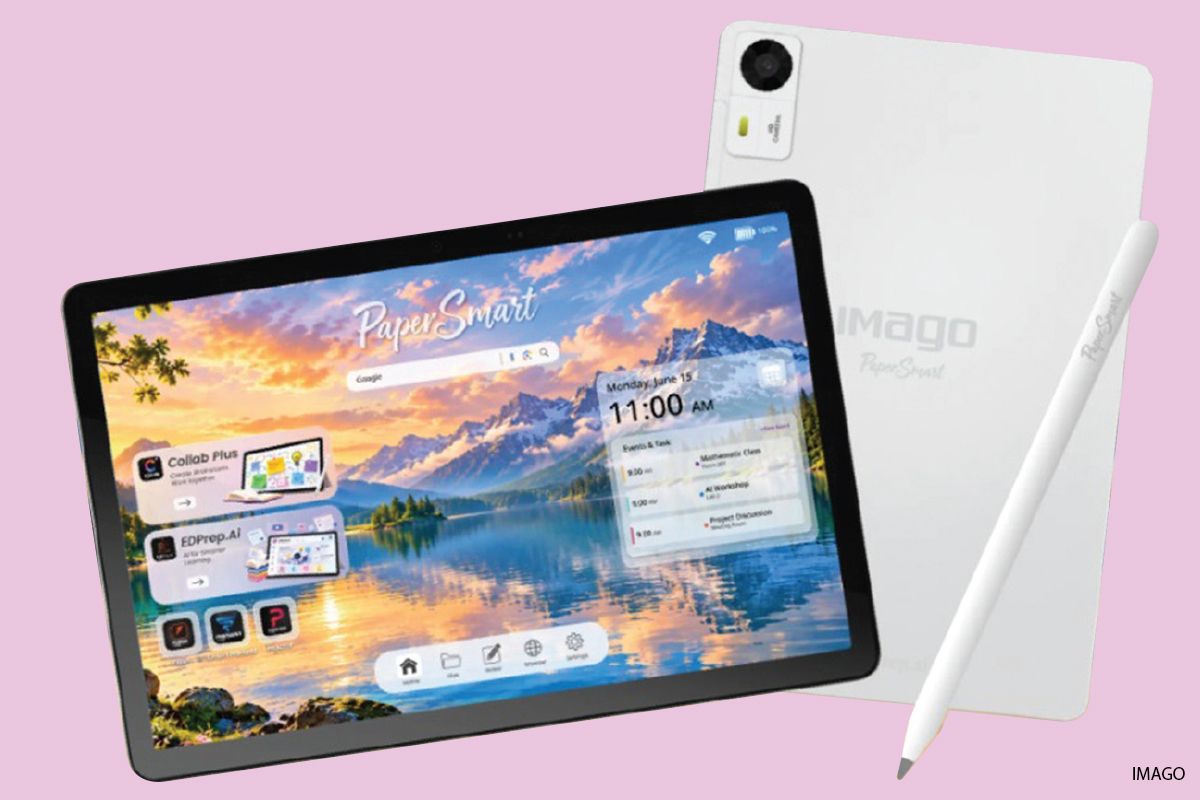
Tech firm IMAGO Technologies has released PaperSmart, a dual-mode tablet that combines personalised AI learning tools with classroom collaboration, digital assessment and device management features.
Designed for students and educators, PaperSmart brings together course materials, handwritten notes, guided practice and institutional tools that are accessible through its EdPrep.ai platform, forming the core of the learning experience.
EdPrep.ai is a personalised AI tutor that helps students understand concepts, review mistakes and decide what to study next. Its Smart Learning Memory function draws on a student’s study history, practice results, feedback and milestones to tailor subsequent learning sessions around individual strengths and weaker areas.
The platform supports preparation for examinations such as SPM, STPM, MUET, IGCSE, A-Levels, IELTS, TOEFL and SAT, with exercises covering multiple-choice questions, calculations, essays and spoken responses. One of PaperSmart’s distinguishing features is its two viewing modes.
Users can switch with a double tap between a full-colour Standard Mode for visual and interactive content and Paper Mode for reading and handwritten notes, without losing open applications, textbook pages, annotations or notes.
The tablet also includes IMAGO Collab, which combines an interactive whiteboard and digital notebook, allowing teachers and students to annotate materials and work together in real time.
Google Workspace integration and teaching templates are included, while Meeting Mind can record lectures or discussions offline before generating transcripts, summaries, key takeaways and action items.
For schools and other institutions, PaperSmart includes mobile device management tools that allow IT teams to enrol devices and manage policies remotely.
A dedicated Proctor Mode can restrict access to selected applications and device functions during digital examinations, helping institutions maintain a controlled assessment environment.
IMAGO Technologies is currently accepting registrations from educational institutions and organisations interested in deploying PaperSmart, including introductory offers, volume pricing and bundled packages under its launch programme. https://imago.us/paper-smart-tablet/
Save by subscribing to us for your print and/or digital copy.
P/S: The Edge is also available on Apple's App Store and Android's Google Play.