

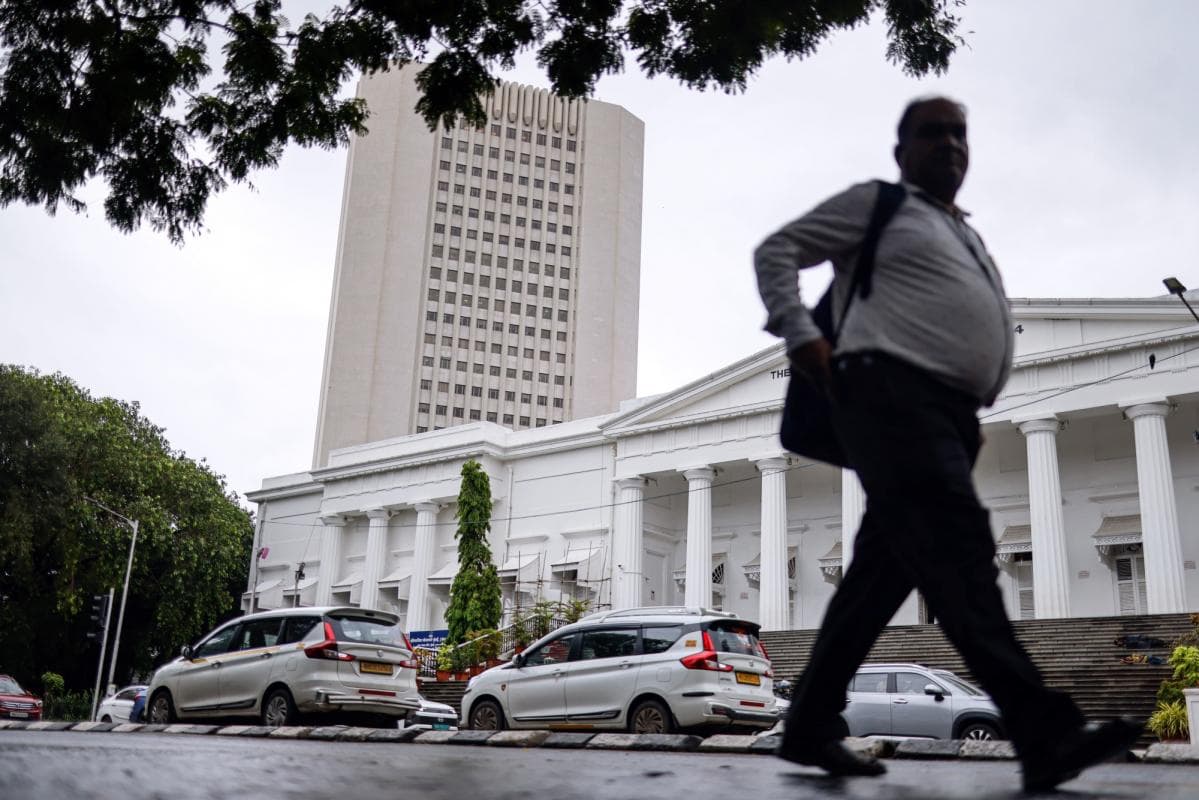
(Oct 8) : India’s central bank raised interest rates for the first time in nearly four years and signaled further hikes may be on the table as accelerating inflation and a weakening currency drive a policy pivot.
The Reserve Bank of India’s six-member monetary policy committee voted unanimously to raise the benchmark repurchase rate by 25 basis points to 5.50%, the first hike since Sanjay Malhotra took over as governor in December 2024. Most economists in a Bloomberg survey predicted the move.
The committee voted four-to-two to shift its policy stance to calibrated tightening from neutral, implying a “milder form” of a hiking cycle, Malhotra said. “It’s more data-dependent rather than kind of a pre-determined” path.
The benchmark 10-year bond yield jumped as much as 7 basis points to a nearly three-year high. It closed Wednesday 5 basis points higher at 7.24%. The rupee — which is the worst performing currency in Asia this year — weakened 0.4% to 96.77.
“There’s a high chance of a consecutive rate hike,” said Jeff Ng, head of Asia macro strategy at Sumitomo Mitsui Banking Corp. in Singapore. “Global inflation, interest rate, yield environment has shifted sufficiently over the past months to warrant more hawkishness instead of a one-and-then wait-and-see stance.”
Sonal Varma, economist at Nomura Holdings Inc., called Wednesday’s decision “hawkish,” citing the shift in stance together with commentary that inflation is becoming more broad-based.
“Markets will see the stance change as a signal that the rate hike is not just policy re-calibration, but the beginning of a steeper tightening cycle,” she said.
Expectations for a hike gathered pace after consumer inflation climbed to 4.82% in August, edging closer to the upper end of the RBI’s 2%-6% tolerance band. The weakest monsoon in more than a decade is adding to the risk of higher food prices, while the rupee’s slide is making imported goods and commodities more expensive.
Malhotra pointed to some early evidence that inflation is becoming generalized, including a pick up in the core measure as well as higher price pressures across a larger segment of the CPI basket.
“Given the current conditions, rate cuts are off the table in the near term and policy action ahead can only be a rate hike or a pause, depending on the evolving conditions and the outlook,” Malhotra said in a televised statement from the RBI’s headquarters in Mumbai. “The duration and extent of rate hike cycle would be contingent on the actual growth-inflation developments and outlook.”
The central bank on Wednesday lifted its projection for inflation to 5.2% for the year-ending March 2027, from a previous expectation of 5%. During a post-policy press briefing, Malhotra said the RBI will remain focused on bringing headline inflation back toward its 4% target.
The RBI “has prepared markets for a higher-for-longer interest rate environment,” said Madhavi Arora, economist at Emkay Global Financial Services Ltd., predicting a total of 75 basis points of hikes in the current cycle.
She added that India may need to offer investors a higher risk premium as global volatility and oil prices remain high and dollar inflows stay weak. At the same time, the US Federal Reserve has already raised rates, narrowing the room for emerging-market policymakers to look past higher energy costs.
Central banks across Asia have also tightened policy in recent months.
“Global financial conditions could thus increasingly dictate the RBI’s reaction function,” alongside growth and inflation, Arora added.
The tightening comes in the middle of India’s festival season and could dampen consumer sentiment and spending.
Even so, the RBI upgraded its fiscal year growth forecast to 7.1%, from 6.7% previously. The economy expanded 7.8% in the June quarter, beating the central bank’s forecast as domestic demand remained resilient.
The Indian rupee is down about 7% so far this year despite measures by the RBI to support the currency. The governor said that the rupee is probably undervalued by a number of estimates.
He said the RBI will continue to let the rupee move in line with economic fundamentals while curbing excessive volatility. He also pledged to use a range of liquidity tools to keep overnight borrowing costs closely aligned with the policy rate. During his press conference, Malhotra said raising the cash reserve ratio, or the amount of cash banks must set aside, was the RBI’s “least preferred” option.
Economists generally expect some liquidity measures in coming days.
With overnight borrowing costs trading below the repo rate, the RBI would first need to bring market rates closer to its policy rate for any hike to work effectively, said Gaura Sengupta, economist with IDFC First Bank. Any measures are “likely to be short-term in nature.”
The RBI has been aggressively reducing liquidity after its recent program to attract foreign-currency deposits from overseas Indians brought in larger-than-expected flows, flooding the banking system with cash and threatening to fuel inflation. Surplus liquidity rose to an all-time high of 11 trillion rupees in September.
The governor said a significant portion of the banking system’s surplus liquidity should be drained during the current fiscal year.
The central bank last month carried out 1 trillion rupees of bond sales in three tranches. The extra debt supply is weighing on the market as it comes during a year in which government borrowing is set to hit a record high.
uploaded by Isabelle Francis