

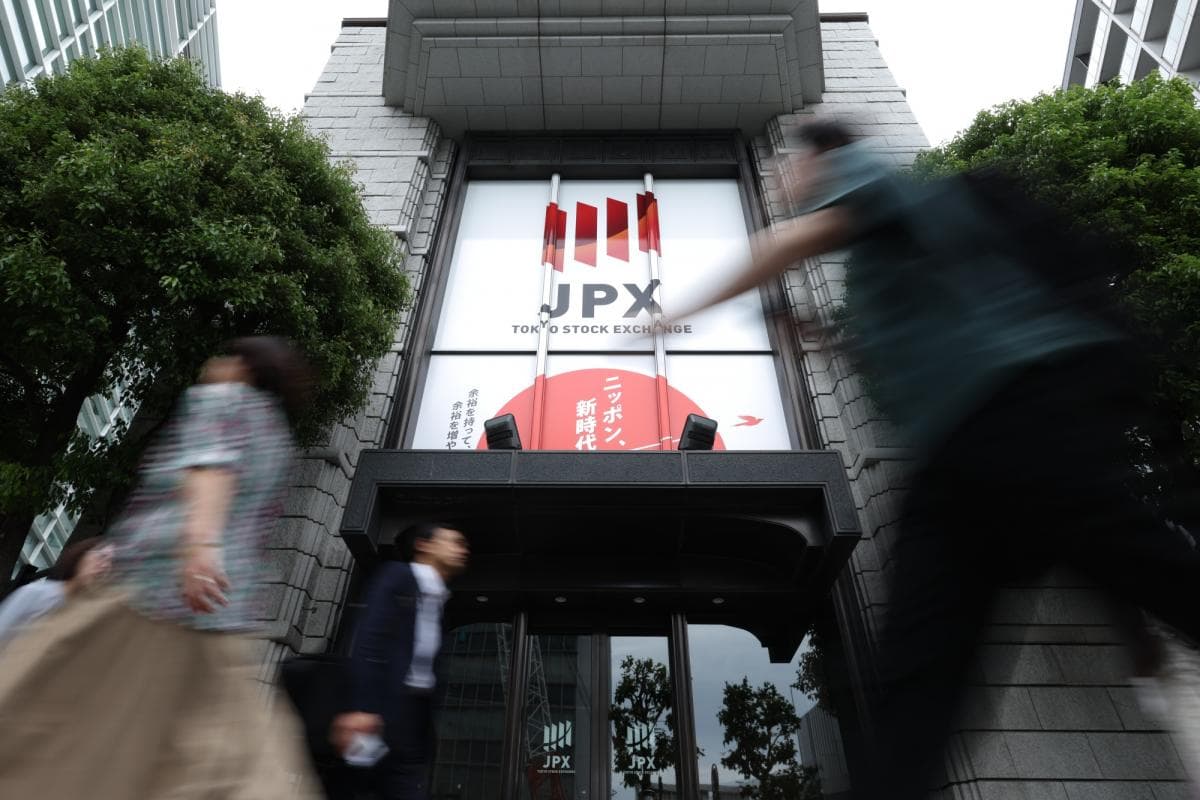
(Oct 8) : Asian stocks were poised for declines, tracking moves on Wall Street as elevated oil prices continued to stoke inflation concerns.
Equity-index futures for Japan, Australia and South Korea pointed to a second day of declines for a regional stock gauge. US stock contracts were little changed after the S&P 500 retreated from a record and the Nasdaq 100 slipped 0.2%. The Philadelphia Semiconductor Index fell 1.2%.
US oil advanced 0.8% in early Asian trading after Brent settled around $100 as traders weighed an increase in Iranian attacks on vessels in the Strait of Hormuz against resilient flows from the Middle East. Ten-year Treasuries rebounded from session lows on Wednesday after a solid US$39 billion auction, though yields remained near their highest since 2002. A gauge of dollar strength rose 0.3% to close near its highest since June.
Elevated oil prices are complicating the outlook for investors by adding to inflationary pressures just as the Federal Reserve signals it may need to tighten policy further. Minutes from the Fed’s September meeting showed officials unanimously backed a rate increase, with many supporting the move as insurance against stronger price pressures.
“Another rate hike is probably coming this year because current policy isn’t very restrictive,” said David Russell at TradeStation. “With inflation above target and most measures of economic activity strong, price stability is the Fed’s dominant mandate.”
All 19 Fed officials backed last month’s decision to raise the target range for the benchmark rate by a quarter point to 3.75% to 4%, the first increase since July 2023. The move came as policymakers saw signs of renewed strength in the economy.
Officials also discussed financial conditions, with many noting that even after the rise in longer-term Treasury yields, conditions remained supportive of growth as equities rallied and corporate bond spreads stayed narrow.
In Asia, the yen was steady around 158 per dollar. The Fed minutes showed that US participation in Japan’s late-July intervention to support the yen was carried out by the Treasury Department and did not involve the Fed’s own funds.
Traders were also watching France’s fiscal strains, which threaten to pull the European Central Bank into its sharpest confrontation with markets since the euro-area debt crisis. France’s finance ministry said it isn’t changing its bond-issuance strategy.
Attention is also shifting to the coming earnings season for signs that profit growth can justify elevated valuations as macro risks mount, and whether the artificial-intelligence boom has further to run. In Asia, Samsung Electronics Co. is set to report its preliminary quarterly earnings Thursday.
Expectations have been rising, with earnings per share for S&P 500 companies projected to increase more than 24% in the coming reporting season, according to Bloomberg Intelligence.
Barclays Plc strategists say AI remains a key earnings driver, though rising debt issuance and the capital-intensive nature of the buildout are putting returns under greater scrutiny. The team, led by Emmanuel Cau, continues to favor semiconductor stocks and sees scope for beaten-down software shares to benefit as the AI trade broadens.
uploaded by Isabelle Francis