

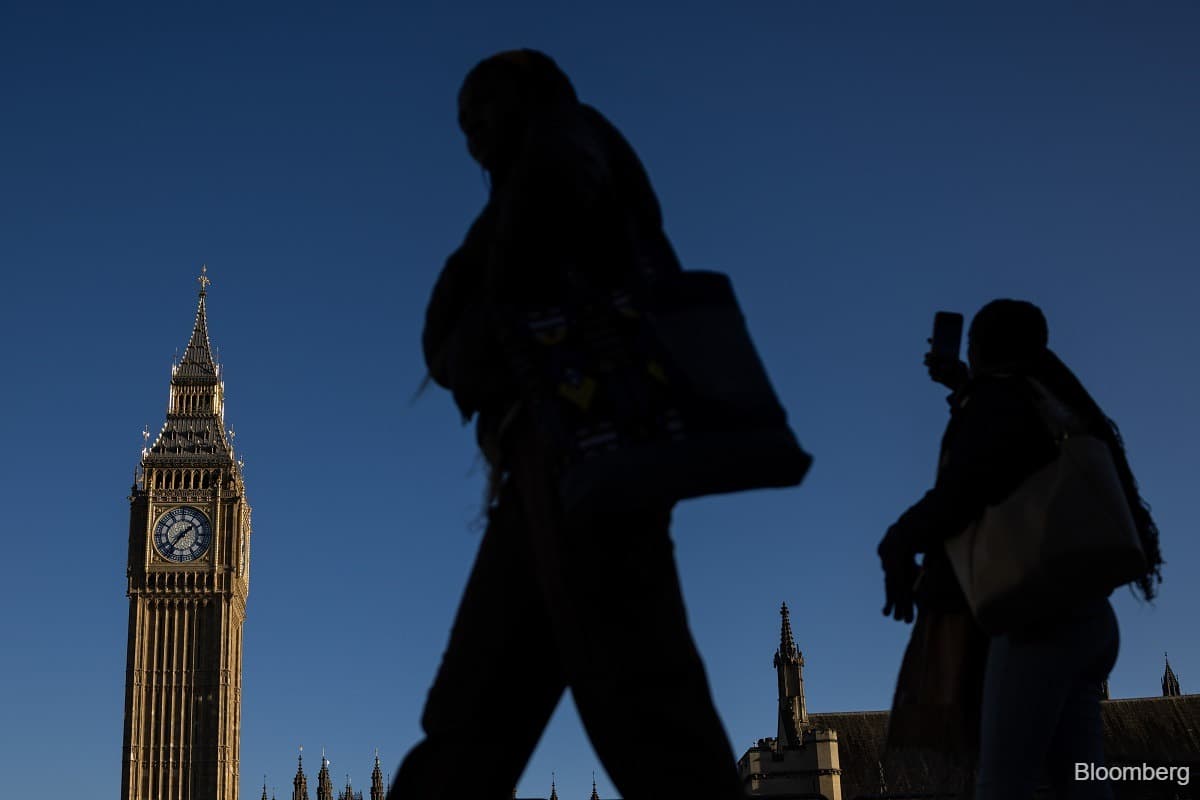
LONDON (Oct 7): British 30-year bond yields rose to a 28-year high on Wednesday as a global bond sell-off pushed equivalent US borrowing costs to their highest since 2002, adding to pressure on finance minister John Healey before his first budget in three weeks' time.
Yields on 30-year gilts — once a major part of UK debt issuance —jumped 13 basis points on the day to peak at 6.036% at 1341 GMT, their highest since January 1998 and pushing past a previous record set on Oct 1.
Yields on 20-year gilts were a whisker away from a similar record and 30-year yields were on course for their biggest daily rise since Aug 14.
Inflation and high levels of government borrowing remain a big worry for bond investors globally, exacerbated on Wednesday as oil prices, inflamed by the US-Israeli war against Iran, rose further above US$100 a barrel.
Wednesday's move in gilts comes the day after finance minister John Healey met economists employed by primary dealers — also known as gilt-edged market makers or GEMMs — to gauge market sentiment ahead of his first budget on October 28.
"He emphasised the importance of fiscal credibility in a challenging global economic environment, reaffirming the government's commitment to the fiscal rules and its focus on delivering economic stability, growth and jobs," Britain's finance ministry said in a statement on Wednesday.
Economists at Bank of America on Tuesday forecast that Healey's budget would lead to £15 billion (US$19.9 billion or RM81.3 billion) increases in public borrowing in both the current financial year and 2027/28, and to less leeway to hit longer-term budget goals.
The sell-off in gilts — whose prices move opposite to yields — was somewhat sharper than for US Treasuries, as is normal when there are big moves.
Thirty-year Treasury yields were seven bps up on the day while 10-year Treasuries were six bps higher, compared with a 10 bp rise in Britain's 10-year gilt to 5.48%.
Ten-year gilt yields are more representative of the cost of new government borrowing, and are just short of their highest since 2007.
Uploaded by Magessan Varatharaja