

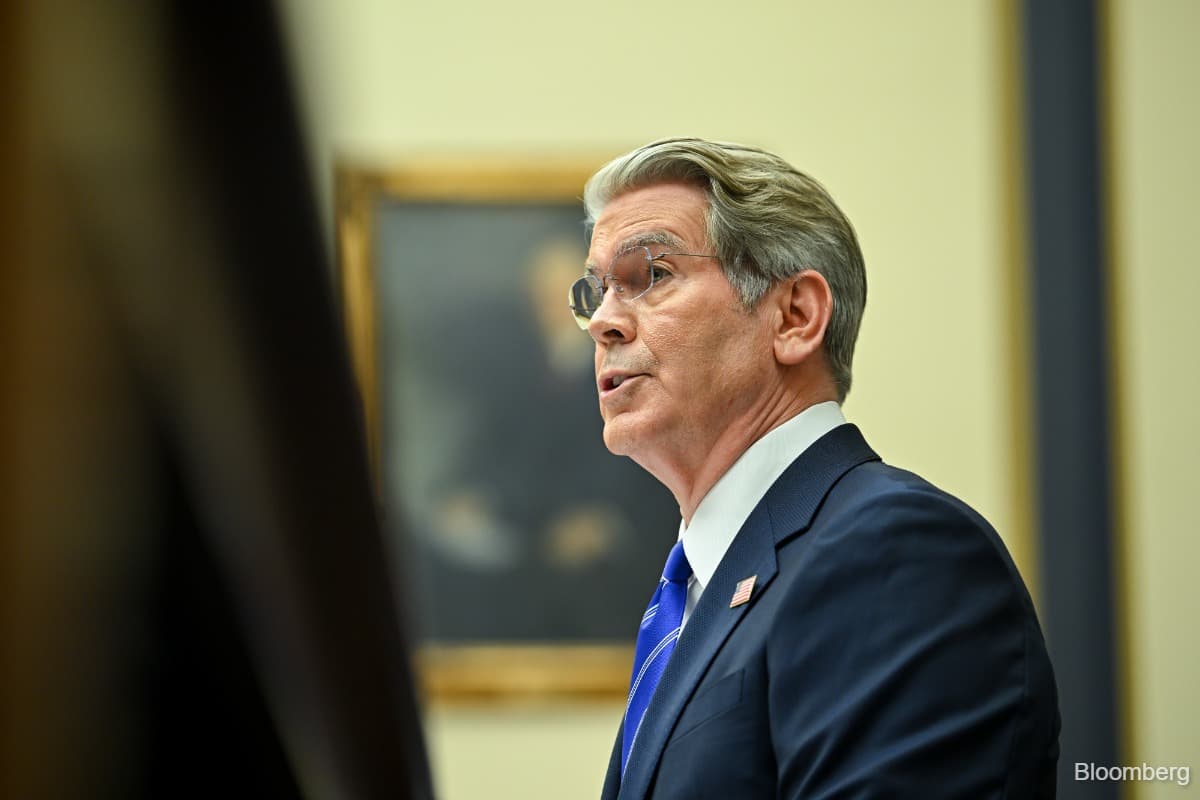
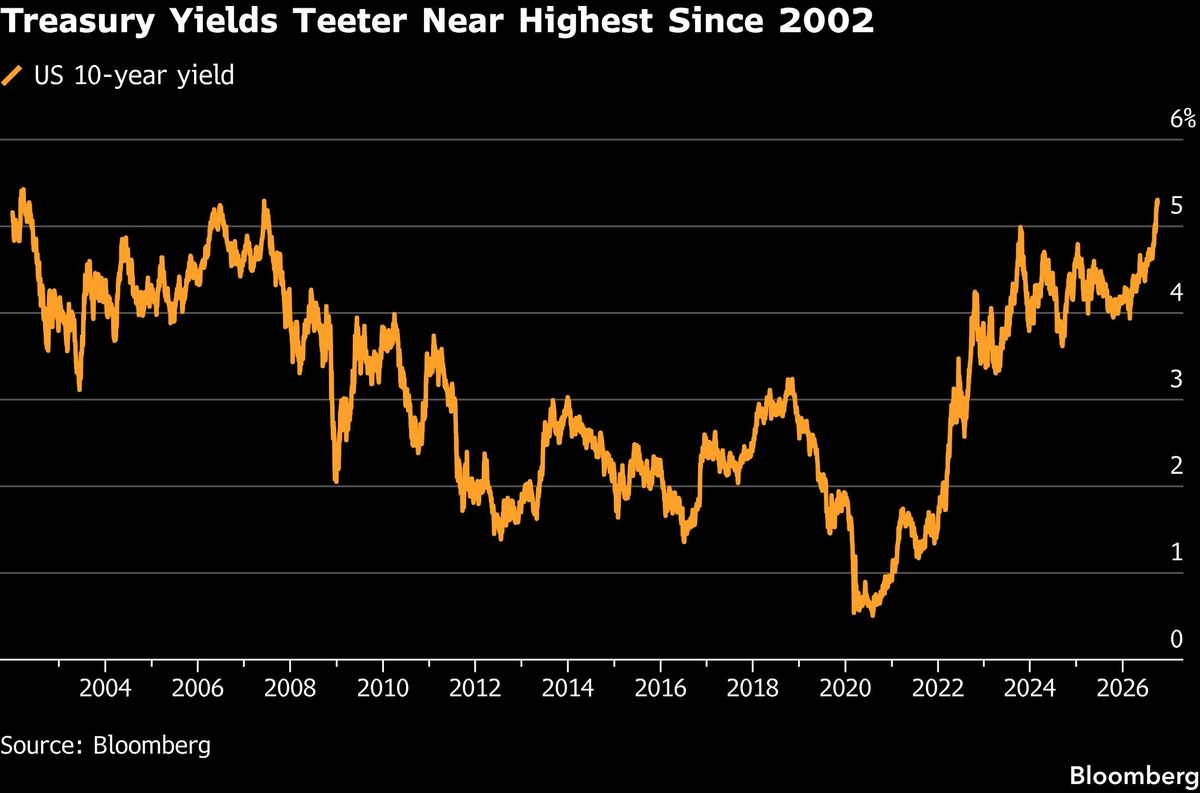
(Oct 6): US bond yields fell from their highest levels since 2002 as oil prices retreated below US$100 a barrel and Treasury Secretary Scott Bessent insisted the government’s debt load can be tamed.
It marked a pause in the global bond rout that’s been driven by inflationary fears from the US-Iran war as well as bets on more aggressive tightening from the Federal Reserve as US economic data comes in strong.
Bessent tried to reassure investors that a mix of economic growth and spending restraints will “very quickly” start to alter the path of US government borrowing. Speaking at a fireside chat in Pennsylvania on Monday night, he said the government would start “bending that curve".
Treasury 10 and 30-year yields fell by three and four basis points to 5.27% and 5.63%, respectively while those on the two-year were little changed. Crude prices retreated on Tuesday on signs more supplies were getting through the Strait of Hormuz.
Still, investors greeted Bessent’s comments with caution and were reluctant to call an end to the selloff.
“The market is likely to be very skeptical, given the deficit is 6% and there is no plan to reduce it,” said Gareth Berry, a strategist at Macquarie. “A stated ambition is not a plan.”
James Ringer, a fund manager at Schroders, said he is looking beyond the headline crude oil price.
“To see a meaningful rally across the curve, the number one thing you need to see is energy prices starting to decline,” he said. “That’s not just crude; that’s got to be the refined products as well.”
Separately, Bridgewater Associates founder Ray Dalio warned that the US is approaching the limits of its debt cycle and potentially faces a crisis within three years if spending continues to outpace revenue.
Treasuries are vulnerable to a pullback of demand from China and Japan, two of the US’s largest foreign creditors, he said.
While HSBC Holdings plc strategists called bets for around 80 basis points of Fed hikes in 2027 "excessive", they’re sticking with a wager on the gap between five- and 30-year Treasury yields moving wider.
“The surge in volatility, coupled with a lack of any clear technical resistance at these levels from recent history has, in our view, kept many investors on the sidelines despite the growing optical appeal of elevated long-end rates,” Dhiraj Narula, US rates strategist at HSBC, wrote in a note.
Uploaded by Arion Yeow