

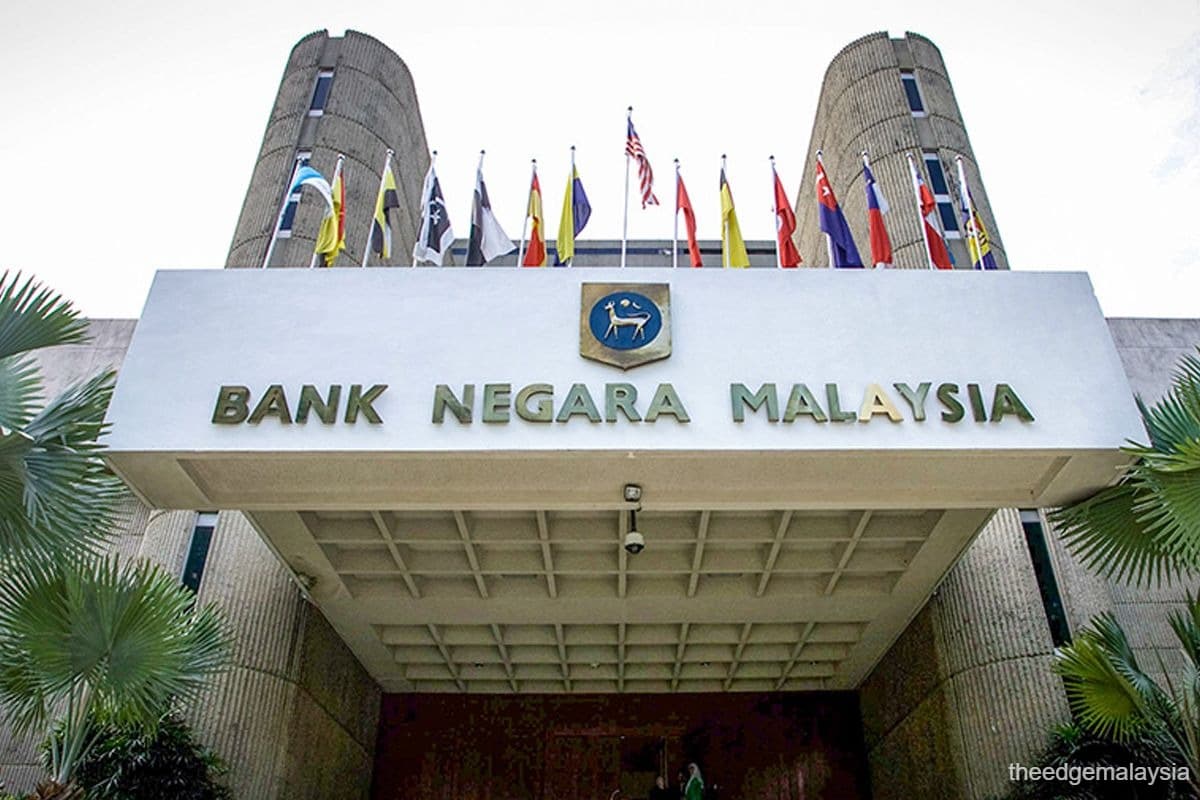
KUALA LUMPUR (Oct 6): Bank Negara Malaysia (BNM) and the financial industry are developing industry-wide fraud alert capabilities that could warn banks and customers of potential risks before transactions are completed, said BNM governor Datuk Seri Abdul Rasheed Ghaffour.
The initiative comes as financial institutions increasingly use technology and advanced analytics to strengthen fraud prevention.
Since October 2025, the National Fraud Response Centre has piloted the analysis of network data patterns to identify potentially fraudulent accounts.
To date, more than 1,600 suspicious accounts have been flagged by Payments Network Malaysia (PayNet), many of which were subsequently assessed as presenting mule-related risks.
“This demonstrates the potential of network-level intelligence, by connecting information across financial institutions, to identify risks that may appear invisible from the perspective of any one individual institution,” he said during his special address at the 16th International Conference on Financial Crime and Counter Terrorism Financing (IFCTF 2026) at the Kuala Lumpur Convention Centre on Oct 6.
Abdul Rasheed also announced that selected banks will pilot the fraud alert capability in the first half of 2027, ahead of wider implementation.
To support this shift, BNM has strengthened its technology risk management and fraud prevention framework.
Abdul Rasheed said the revised Risk Management in Technology policy document strengthens financial institutions’ resilience against technology-related risks, cyber risks and rapidly evolving digital crimes.
Meanwhile, the recently issued Financial Institutions’ Response to Fraud policy document further reinforces accountability for fraud risk management while promoting the responsible use of intelligence, analytics and technology, he said.
“In the first half of 2026 alone, the financial sector has prevented approximately RM1.9 billion in attempted fraudulent transactions, surpassing the RM1.2 billion prevented during the whole of 2025,” added Abdul Rasheed.
More than RM37 billion in assets has also been recovered over the past five years while prominent and complex financial crime cases, including those involving multiple agencies, have been investigated and prosecuted.
“These achievements are a testament to our whole-of-nation efforts. I express my deepest appreciation to all agencies, institutions and individuals who have contributed to this journey,” he said.
However, Abdul Rasheed cautioned that technology has also transformed the way criminals operate.
“Unfortunately, it is also changing how criminals finance and disguise their activities. Criminals no longer operate at the speed of people. They operate at the speed of technology.”
He said artificial intelligence (AI) content can now mimic voices and appearances with impeccable realism, making fraud increasingly difficult to detect.
“With AI, it is easier for criminals to socially engineer and manipulate victims. Today, about 95% of online fraud cases involve victims who are deceived into transferring funds themselves. AI agents can power fraud campaigns, identify vulnerabilities and amplify cyberattacks,” he said.
INTERPOL estimates AI-enabled fraud to be 4.5 times more profitable than traditional methods, enabling criminals to operate faster, reach further and inflict greater harm.
These developments are creating an arms race between financial institutions and criminals, Abdul Rasheed said.
As criminals use automation, AI and other technologies to scale deception and accelerate fraud, financial institutions must strengthen automated detection capabilities and become more agile in identifying, disrupting and preventing illicit activity, he added.
Echoing this sentiment, Asian Institute of Chartered Bankers (AICB) chairman Tan Sri Azman Hashim said that as AI increasingly shapes decisions affecting livelihoods, access to services and personal information, its responsible use will be essential to maintaining public trust.
Strong governance and capable professionals will therefore be critical not only to protecting the integrity of Malaysia’s financial system but also to supporting the country’s wider economic progress, he said.
“This responsibility places greater expectations on banking and compliance professionals. Alongside technical knowledge, they must understand emerging criminal methods, digital assets, geopolitical risks and new technologies. They must be able to question AI outputs, assess incomplete information and exercise sound judgment.” he said.
Now in its 16th edition, IFCTF, organised by AICB and the Compliance Officers’ Networking Group, will showcase intelligence-led and risk-based approaches to anti-money laundering and counter-terrorism financing, the responsible use of AI and analytics, fraud and corruption, digital assets and governance, and organisational resilience.