

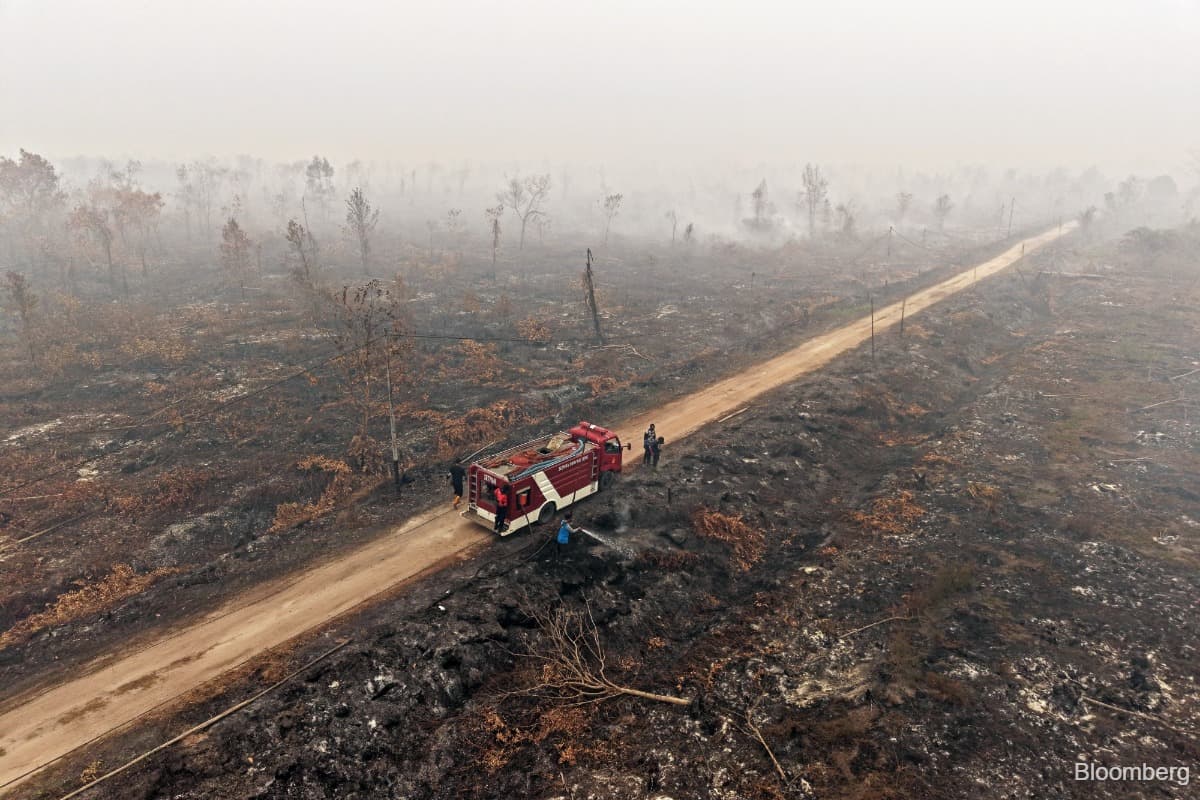
(Oct 6): Greenpeace has identified more than 20 palm, pulp and sugar companies, including several with links to Malaysia and Singapore, whose land concessions contained sources of smoke from fires that have ravaged Indonesia in recent months.
The environmental group worked with Indonesian NGO Pantau Gambut to detect 6,811 smoke-source points from Aug 1 through Oct 1 across Kalimantan, Papua, Sumatra, Sulawesi and Maluku, they said in a press briefing in Kuala Lumpur on Monday. These are locations that are likely sources of haze emitted by forest and peat fires, identified using satellite data.
Indonesia is battling one of its worst fire seasons in years as an intensifying El Niño raises temperatures and exacerbates drought, turning the landscape into a giant tinderbox. Also driving the uncontrolled blazes is the long-running use of slash-and-burn agricultural practices, which has proved hard to stamp out despite repeated attempts by Indonesian authorities.
The disaster has once again blanketed parts of Southeast Asia in toxic smog. Air quality was “very unhealthy” in Kuala Lumpur on Tuesday, according to IQAir, and both the Malaysian capital and Singapore ranked among the top three most-polluted cities in the world.
At least four concessions with smoke-source points were found to have corporate links to Singaporean palm oil companies, the activists said, adding there was also a Malaysian plantation group on the list. The rest were Indonesian companies.
Greenpeace named firms including Singapore-listed First Resources Ltd and Malaysia-listed Kuala Lumpur Kepong Bhd, both of which did not immediately respond to requests for comment.
The findings indicate “a pattern of continued tolerance of fires to facilitate the clearing of land for new commercial development”, Greenpeace said in a statement.
Greenpeace called on Indonesia to halt the expansion of agricultural industries in environmentally vulnerable areas and revoke permits for concessions implicated in peatland destruction. The group also demanded stronger laws addressing transboundary haze, including clearer cross-border corporate accountability and measures designed to deter future fires.
Relief from the fires and smog is not expected until the end of October, when rains are forecast to start picking up, according to the latest seasonal outlook from the Asean Specialised Meteorological Centre. Indonesia’s national weather forecaster has said the rainy season will commence later than usual this year as a result of the powerful El Niño, keeping fire risks elevated for longer.
Uploaded by Arion Yeow