

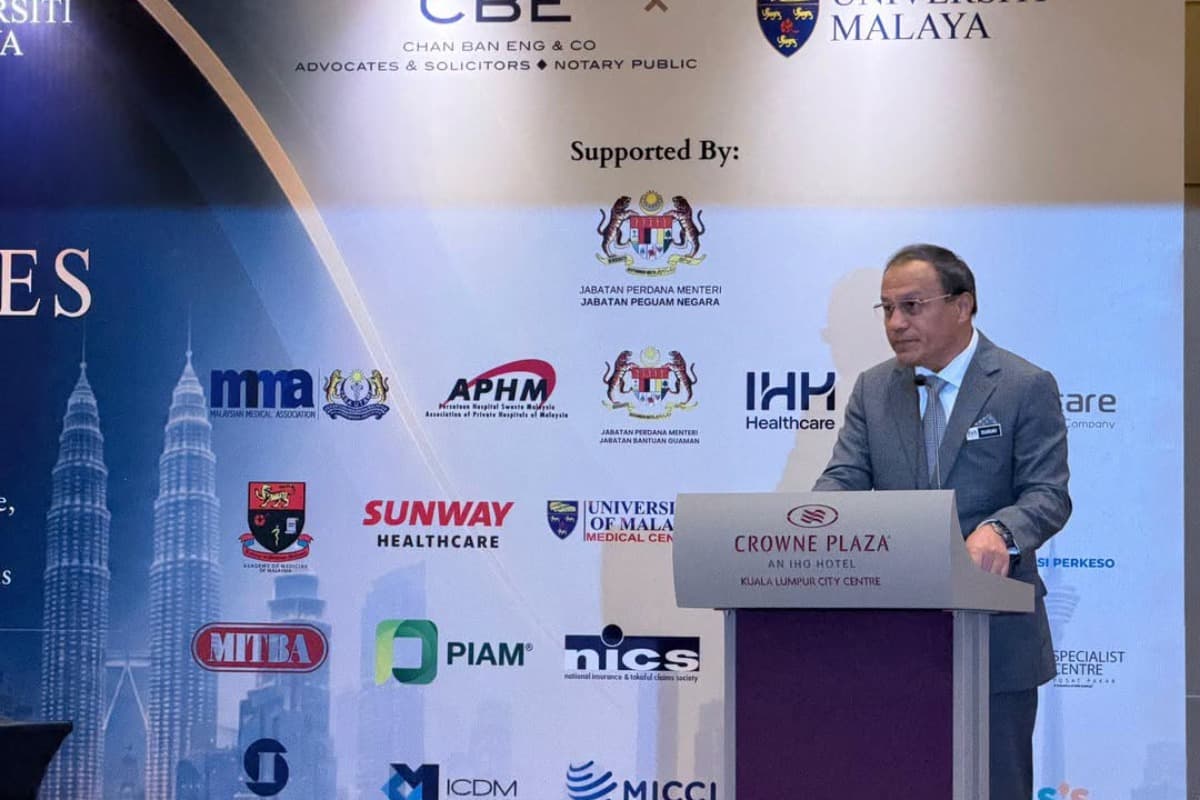
KUALA LUMPUR (Oct 6): It is the duty of the Attorney General's Chambers to protect government doctors from unmeritorious medical negligence claims to ensure public funds are not spent on excessive awards.
AG Tan Sri Mohd Dusuki Mokhtar said in his keynote speech at the Inaugural Financial Lines Forum 2026 that claims made against public or private hospitals must be based on evidence and not speculation.
Dusuki said this principle is central to the AG Chambers when reviewing awards made against the government and government medical practitioners.
“Where appropriate, the AG Chambers may pursue appeals to ensure that awards are fair, proportionate and legally sustainable. In doing so, the chambers not only protects public funds from excessive or unwarranted awards but also promotes consistency in the application of the law and ensures that justice is properly served,” he said.
Dusuki said the AG's duty as principal legal adviser to the government is set out in Article 145(2) of the Federal Constitution, and this role includes protecting the legal interests of the government in civil proceedings.
“This role is particularly relevant in the context of medical negligence. The AG Chambers represents the Malaysian government and its medical practitioners in civil proceedings ... including claims arising from medical treatment rendered at public healthcare facilities.
“In discharging this responsibility, the AG Chambers must protect the government and its medical practitioners from unmeritorious claims, while ensuring that legitimate claims are addressed in accordance with law, evidence and the public interest.
Medical negligence intersects law, medical judgment
Dusuki said medical negligence presents unique challenges as it lies at the intersection of law, professional medical judgment and human consequences, raising questions of negligence, liability, professional standards and institutional responsibility.
In claims against the government, he said the AG Chambers with the assistance of the Health Ministry, may appoint an independent medical expert to evaluate clinical records and other relevant evidence.
“The fundamental question is whether the medical practitioner’s conduct fell below the standard of care required by law. The applicable standard is that of an ordinary skilled practitioner exercising and professing to have the skill in question.
“Importantly, not every error of judgment, adverse outcome or medical complication constitutes negligence. Where a recognised medical practice is relied upon, the court is invited to consider whether the clinical decision in question was one that a reasonably competent practitioner, exercising ordinary care and possessing the requisite skill, might properly have made.
Crucially, the AG said the clinical decision should be assessed based on the circumstances and information available at the time, rather than solely with the benefit of hindsight.
He said medical negligence cases may involve death or serious injury, but damages must be assessed according to evidence and established legal principles rather than sympathy or emotion.
Dusuki said the court reiterated that damages are intended to compensate proven loss, rather than to reward claimants or punish defendants.
“Accordingly, awards must be supported by cogent evidence and not founded on speculation,” he said, adding that for these reasons his chambers work closely with the Health ministry, its agencies and healthcare authorities in promoting accountability and enhancing healthcare practices.
The forum is organised by law firm CBE and Universiti Malaya with the theme "Medical Negligence, Corporate and AI Governance, Directors' and Officers' Liability Insurance and Reinsurance: Claims, Coverage and Emerging Risks."