

(Oct 6): Japan’s 10-year government bond auction Tuesday saw stronger demand than the 12-month average as elevated yields underpinned buying.
The bid-to-cover ratio was 3.76 compared with 3.29 at the previous sale and a 12-month average of 3.21. Bond futures pared their losses after the result.
The benchmark 10-year yield hit 3.115% on Tuesday, matching its highest level since 1996. A sale of the same tenor last month passed smoothly after yields reached 3%.
Yields above 3% helped draw solid demand at the auction, said Takuya Onizawa, fixed income strategist at Mitsubishi UFJ Morgan Stanley Securities. Concerns over fiscal expansion and the risk that the Bank of Japan is falling behind the curve on inflation have not disappeared but the appeal of the higher yield outweighed those worries, he said.
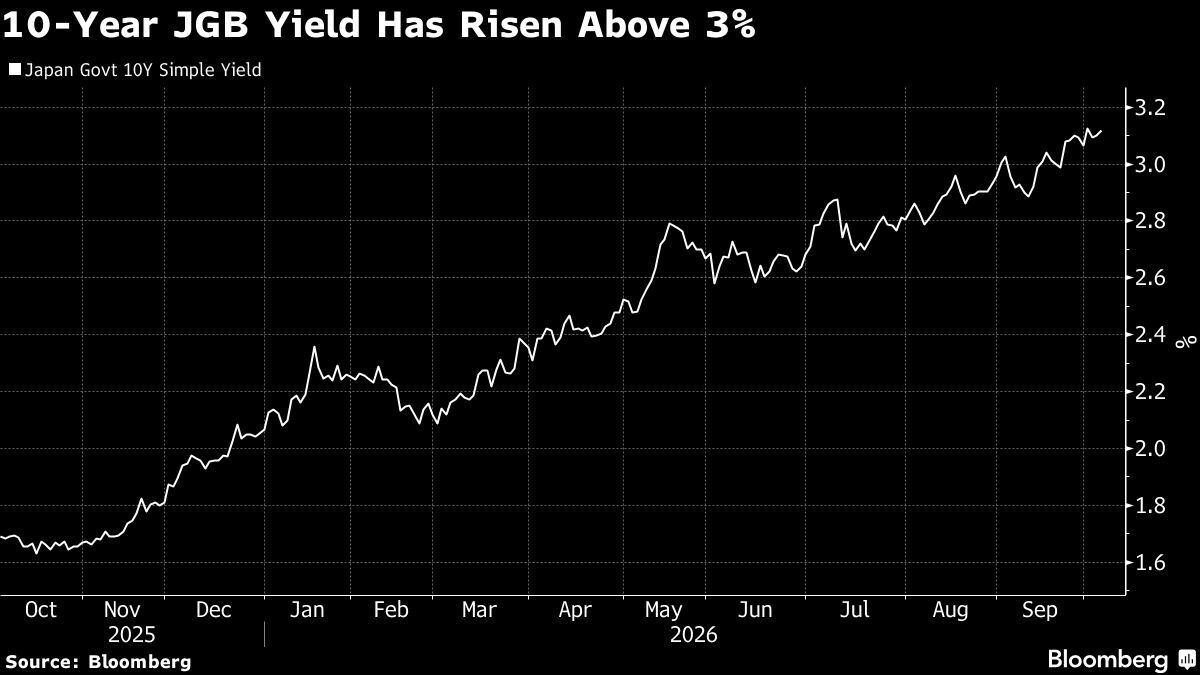
In another sign of strong demand at the auction, the tail or gap between average and lowest-accepted prices was 0.02, compared with 0.12 last month.
The domestic backdrop has become somewhat more supportive of bonds. Expectations for October rate hikes in both Japan and the US have receded while Prime Minister Sanae Takaichi’s administration has sought to dispel concerns that it favours reflationary policies or would pressure the BOJ to keep borrowing costs low.
Still, heightened global risks are adding to uncertainty. Treasuries saw renewed selling pressure, pushing longer-dated yields to fresh multi-decade peaks and extending a months-long slide. Meanwhile, mounting fiscal concerns in France have fuelled a selloff in government debt, adding to volatility across global bond markets and making investors more cautious about taking duration risk.
Attention now turns to Thursday’s 30-year bond auction which will provide another test of investor demand for longer maturities.
The rise in Japanese yields has broader consequences at home. Higher government borrowing costs increase the expense of servicing Japan’s large debt burden and can feed through to corporate and household financing costs, potentially weighing on investment.
Uploaded by Arion Yeow