

(Oct 5): “Shame on you! My family in India are dying from drought because of you.”
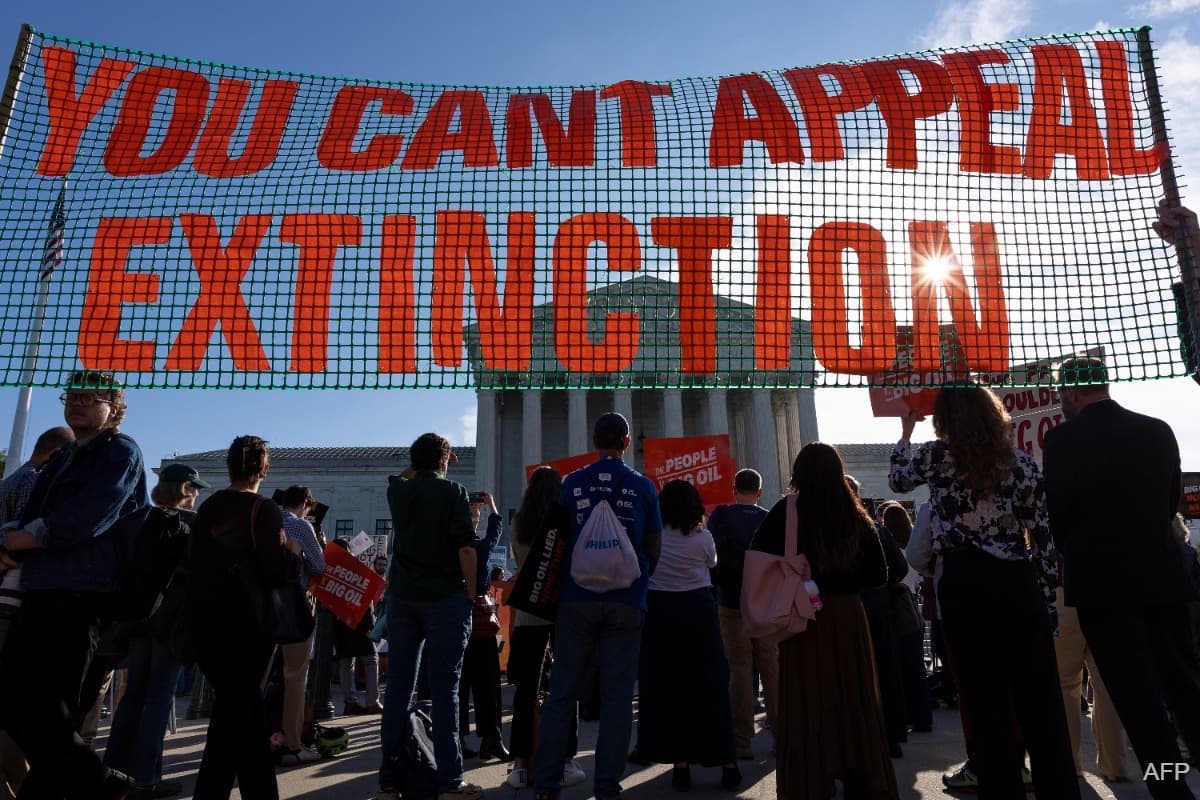
With those words, an Indian student interrupted Josh Parker, Nvidia’s head of sustainability, during a Climate Week panel in New York on Sept 23. The student invoked the water consumed by data centres, asked how many more people would die, and challenged the company’s environmental claims.
The sight of security escorting him from the room carried the ugly symbolism of a voice being silenced. Within hours, his accusation had travelled far beyond those four walls.
The exchange became a defining moment of Climate Week NYC 2026 and the 81st United Nations General Assembly. Artificial intelligence (AI) surfaced in sessions devoted to electricity, investment, urban development, corporate responsibility and global governance.
Most tellingly, AI’s physical footprint came into view, resting on power stations, transmission lines, cooling systems and increasingly contested water supplies.
At the general assembly, United Nations Secretary-General António Guterres warned world leaders that humanity now faces four tests of power involving war and peace, inequality, climate change and AI. On AI, his framing left us at a fork in the road. “Artificial intelligence could help solve all these challenges, or make them worse,” he said. Properly governed, AI can improve climate modelling, strengthen grids and accelerate scientific discovery. Poor governance brings surging electricity demand, fresh gas lock-in, higher household tariffs and data centres in water-stressed communities.
From declarations to delivery
Across social media, professional commentary echoed Guterres’s focus on AI and widened the lens to resilience and delivery. A qualitative reading of several dozen posts by corporate leaders, investors, consultants and civil society struck a note of cautious optimism.
That marked a break from the siege mentality that followed the unwinding of American climate policy following Donald Trump’s return to office. Political hostility is now treated as a given in corporate planning. Companies are pressing ahead with less fanfare, investors are back at the negotiating table and clients are seeking transition finance. Cities are planting trees and setting clean-power targets.
The optimism was of a practical kind. In New York, the appetite for grand declarations had waned, and attention had turned to permits, balance sheets, Scope 3 data and, ultimately, the price society pays for delay.
At a deeper level, the language itself is changing. Energy security, competitiveness and resilience now open doors that the vocabulary of sustainability once found firmly shut.
That shift is clearest in resilience, once a sideshow to emissions policy and now at the centre of the climate agenda. Heat, floods, crop failures and rising insurance losses have brought physical risk into homes, workplaces and public budgets. As a result, carbon targets alone no longer amount to a complete climate strategy. Governments and firms must also ask whether families can insure their homes, workers can stay safe in extreme heat, and critical infrastructure can survive the next disaster.
Adaptation cannot wait
Seen from the developing world, the priorities look different. There, the climate debate begins with development, finance and the urgent work of adaptation. Delay is expensive. A seawall, a drainage system, a heat-health plan or drought-resistant crops protect people now. Such measures cannot wait for distant net-zero goals or the next round of international funding.
The finance system moves through long project pipelines, costly consultants and hard-currency loans. Climate impacts follow the weather, while international funding follows its own calendar. That mismatch is itself a source of insecurity.
In Africa, this urgency took the form of calls for energy access, ownership of critical minerals and investment in transmission. The continent is home to about one-fifth of humanity yet attracts only a small share of global energy investment. Its leaders want success measured in households connected and jobs created.
In India, the conversation combined confidence in the country’s scale with anxiety over water, trade and the distribution of costs. A long-overdue question was finally asked aloud. Who pays? AI is ostensibly a global good, yet its benefits remain highly concentrated and its demand for land, water and electricity is experienced locally.
In Latin America, contributors emphasised the cost of capital and the shortage of investable projects. Currency risk can add eight or nine percentage points a year to the cost of financing a long-term project in Brazil.
Small island developing states and other vulnerable countries, meanwhile, spoke the language of survival. For them, solidarity means accessible finance, stronger institutions and greater local control over resources.
Southeast Asian representatives were also present in New York. Yet the region punched below its weight, and its priorities barely registered in the wider conversation there. Much of its attention was fixed closer to home, centred on the regional power grid, energy prices, the insurance protection gap and climate finance. That muted presence matters. Agendas are set by those who command the room.
Lessons for Malaysia
For Malaysia, three lessons follow. First, data centres are also energy, water and land-use projects. Their approvals should include clean-power conditions, water limits, transparent disclosure and ecosystem safeguards.
Second, adaptation requires a permanent place in public and private budgets. Malaysia’s economic institutions must treat resilience as productive investment, with measurable returns in avoided losses, fiscal stability, and public health nationwide. Without such spending, uninsured losses from floods and heat eventually become liabilities for the state.
Third, Malaysia, working through Asean, should carry its case into global forums with greater coherence, especially on grid interconnection, affordable capital and locally led adaptation.
Taken together, these signals define a new phase. The climate movement is learning to work around political headwinds and leadership vacuums, putting implementation first. A new contest is brewing over the resources that sustain AI.
Governance of technology has become inseparable from governance of climate. We must decide who controls the infrastructure, who receives its benefits and who carries its environmental costs.
The Indian student gave those questions a human face. The answers will settle which way we turn at the fork the outgoing UN Secretary-General described.
Dr Hezri Adnan is a sustainability strategist bridging public policy, markets and industry.