

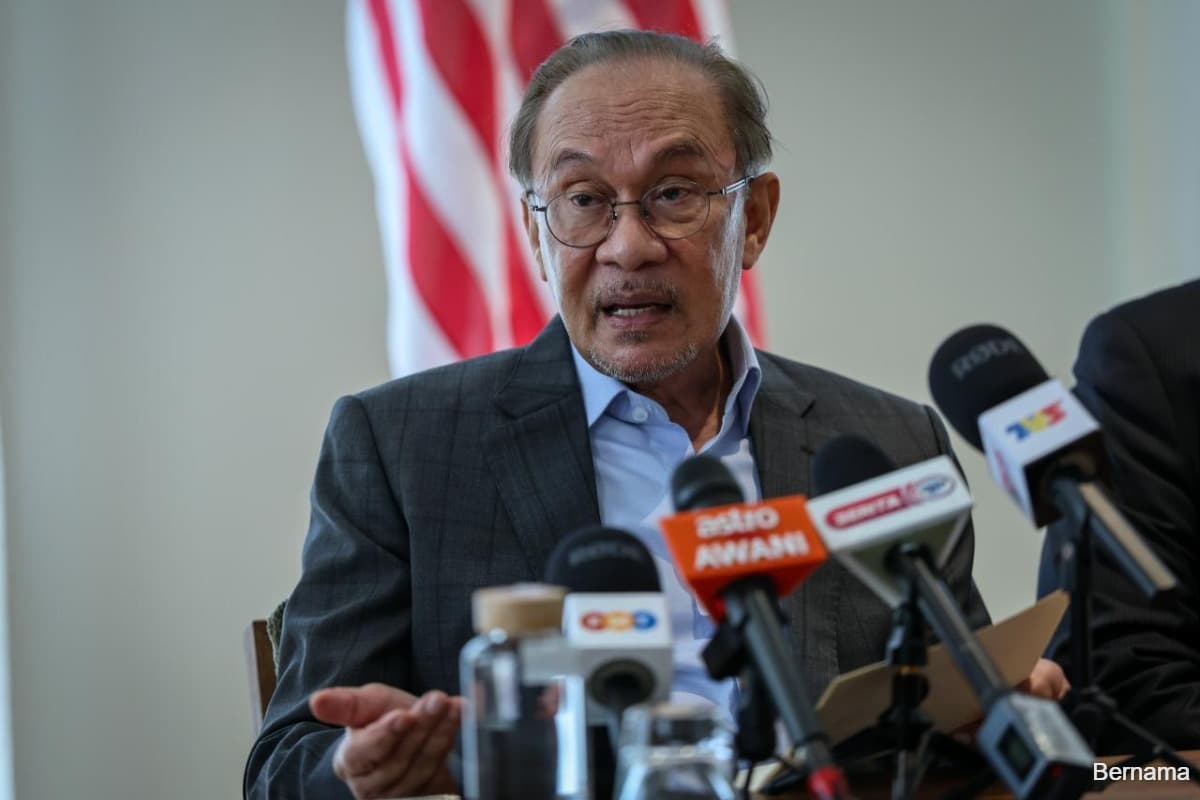
(Oct 5): This year’s federal budget is being prepared under a deepening election shadow. The results of state elections in Johor and Negeri Sembilan, together with shifting coalition dynamics raise questions about the diverging interests within the Madani government. This could be the final budget before a federal election and Prime Minister Datuk Seri Anwar Ibrahim doubtless hopes that it can strengthen the electoral prospects of Pakatan Harapan.
‘Election budgets’ tend to prioritise short-term political expediency over long-term investment and deep reform. They favour highly visible, fast implementation, and usually low-imagination cash handouts over complex activities that require planning and nuanced political communication. Governments typically tinker with and throw more money at existing policies, particularly in contested electorates, rather than pursue systemic change to address the people’s most pressing needs.
The prime minister’s Merdeka Day announcement provides early examples of a narrowing election focus. The monthly quota for petrol subsidies was restored despite earlier claims that fewer than 1% of Budi95 users regularly exceeded 200 litres. The annual revenue threshold for mandatory e-invoicing was also raised from RM1 million to RM3 million, exempting thousands of businesses from laudable measures to reduce tax avoidance. The announcement also beneficially included increased funds to repair schools; schools that may not have become dilapidated if countless Malaysian budgets had not deprioritised development expenditure.
With its deteriorating fiscal space, the complicating global context, and rising societal needs, Malaysia literally cannot afford to continue short-term focused budgeting. The federal tax base is in structural decline and at just 16% of gross domestic product (GDP) is less than half that of the high-income countries that Malaysia has long aspired to emulate. More than 60% of government operating expenditure is tied up in paying civil servants, pensions, and debt repayments, applying a handbrake to development and social spending. Technology, climate change, and geopolitical instability are dramatically reshaping Malaysian lives and governments need to both invest in the transition and save for a rainy day; which is impossible to do without political patience and a sound revenue base.
For Budget 2027 to chart a sustainable and impactful course and resist providing another sugar hit to voters, it could deliver on the following five areas.
First, offer a credible plan to reduce the fiscal burden of fuel subsidies and increase green investment. Amid ongoing disruptions in the Strait of Hormuz, the government was forced to raise the allocation for fuel subsidies from RM15 billion to RM40 billion; or almost 10% of total federal budget expenditure. The subsidies are not only financially unsustainable but position Malaysia among the world’s biggest incentivisers of fossil fuel use at a time when oil supplies are disrupted and global markets are raising green standards. Budget 2026 forecast allocations for renewable energy and the environment were forecast at around just 0.1% of GDP, a mere fraction of the billions spent on (and received from) fossil fuels. At a minimum, fuel subsidies should move to a floating formula tied to global price movements and a dividend agreement with PETRONAS. Green investment can then increase exponentially.
Second, Budget 2027 can start a conversation around strategic and holistic tax reform instead of obsessing over the question of "GST or not to GST". There has long been a disconnect between governments acutely aware that they need more revenue to meet rising societal demands for infrastructure, education, health and more, and both businesses and households unwilling to pay their fair share. Shifting this narrative requires a more comprehensive tax vision based on clear evidence on expected impacts and deep stakeholder engagement in both design and implementation. A GST or SST-GST hybrid alone can never adequately substitute for tax reform engaging multiple tax levers, with any design vulnerable to accusations of unfairness without accompanying income taxes or transfers to reduce any perverse impacts.
Third, provide a sizeable increase in development spending instead of raising untargeted cost-of-living and cost-of-business relief. Development expenditure — investments in roads, hospitals, schools, public transport and more — has been stuck in the 3.5% to 4% of GDP range despite significant needs for new and replacement assets. Productivity-enhancing investments through development expenditure are essential to sustainable and inclusive growth. Social welfare expenditure and business shock buffers are also important but are unaffordable if provided indiscriminately. With increasingly frequent global shocks providing ammunition for handout seekers, the government needs to deepen its preparedness around shock risks, resilience, and policy targeting to direct scarce funds to where they are most needed.
Fourth, building a future healthcare system that increases inclusiveness alongside affordability. Efforts to reduce healthcare costs and offer basic insurance products like MediAsas are welcome, but an overemphasis on efficiency risks missing out on cutting-edge treatments and abandoning the most vulnerable. Insurance that eliminates coverage for the most catastrophic risks defeats the purpose of pooled financing and leaves those with rare conditions with limited recourse. Impactful reforms to build pooled finance and pursue innovative procurement models to access expensive emerging treatments will take patience and ambition, but cannot be avoided if the government is to deliver on the health minister’s compassionate National Day message to leave no person with a rare disease behind.
Last but not least, the Madani government began with a promise of bold governance reforms and has much left to deliver. Budget 2027 could provide renewed vision and resources to progress long delayed reforms to separate the attorney general and public prosecutor roles, introduce public funds and strict rules for political financing, increase accountability through Freedom of Information laws, and depoliticise local financing through transparent and fair formulas for constituency funding allocations and federal-state transfers.
So mark your calendar for Oct 9 and hope the deep reform bingo card attracts a few marks.
Dr Stewart Nixon is director of research at the Institute for Democracy and Economic Affairs (IDEAS Malaysia)