


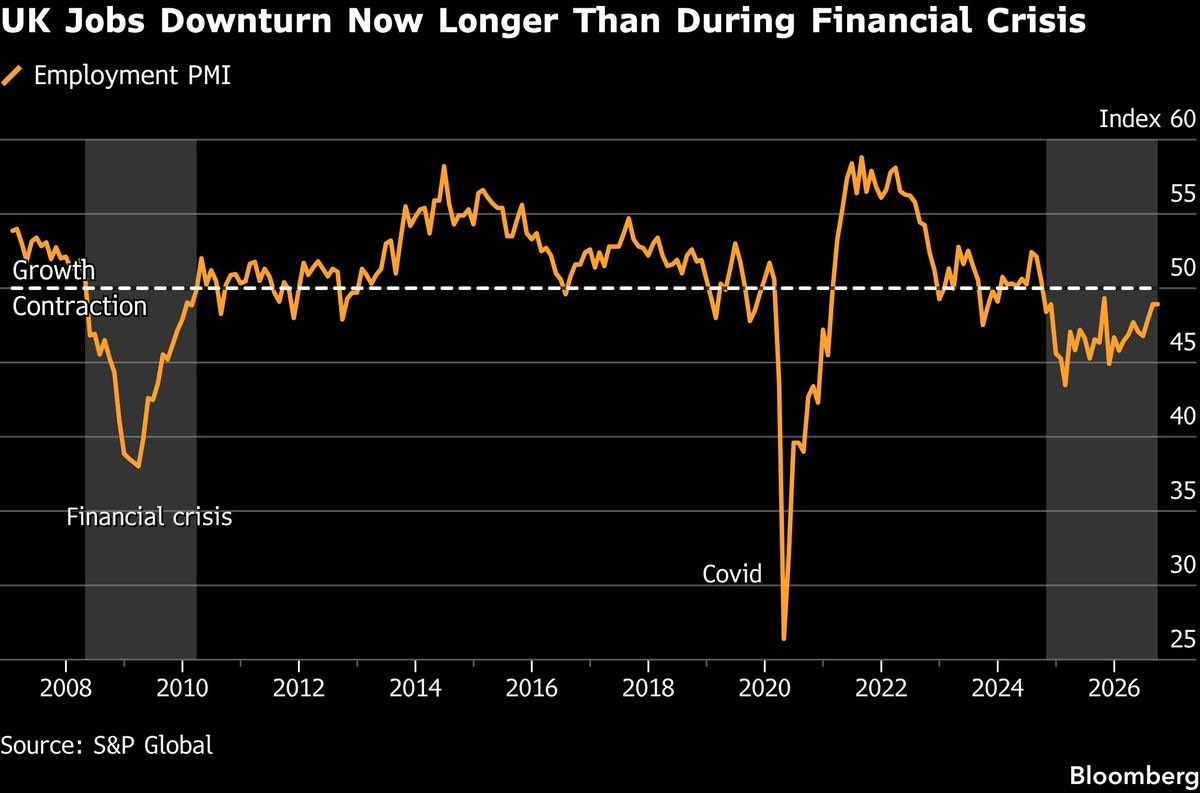
(Oct 5): Britain’s jobs market is stuck in its longest downturn since the early 2000s, according to a closely-watched survey, surpassing the decline during the financial crisis.
S&P Global’s UK purchasing managers’ index (PMI) said employers cut back on staff for a 24th consecutive month.
The figures will be a concern for Andy Burnham’s government ahead of the budget later this month with the intensifying energy shock and artificial intelligence (AI) threatening to dampen demand for workers. Employers have been shedding staff since the Labour government raised payroll taxes and the minimum wage shortly after returning to power in 2024.
There were some signs of the slump bottoming out, however, as job cuts in the services sector were the smallest in almost a year. Furthermore, Britain’s official unemployment rate remains much lower than during the period after the global financial crisis.
Britain’s labour market has been soft despite the wider economy smashing expectations during a resilient first half of the year. S&P’s survey suggested that the private sector is largely holding up against the energy shock for now, with demand boosted by stronger consumer spending and technology services amid a rush to harness AI.
The composite PMI eased to 52 in September from 52.5 the previous month, remaining above the 50 threshold separating growth from contraction. It was slightly better than the 51.7 reading in the flash estimate.
Still, the outlook has darkened since a resurgence in energy prices last month that has prompted traders to ramp up bets on the Bank of England raising interest rates several times to stop inflationary pressures spreading across the economy.
“Subdued demand conditions and rising inflationary pressures contributed to weaker business activity expectations for the year ahead,” said Tim Moore, economics director at S&P Global Market Intelligence. “Greater-than-expected business requirements seem to have helped to stem the jobs downturn in recent months.”
The survey pointed to price pressures growing. Firms’ cost burdens and the prices they charge customers both rose at the quickest pace since June.
Uploaded by Felyx Teoh