

(Oct 5): China’s mutual funds are closing at the fastest pace in eight years as weak returns and investor redemptions leave hundreds of products too small to survive.
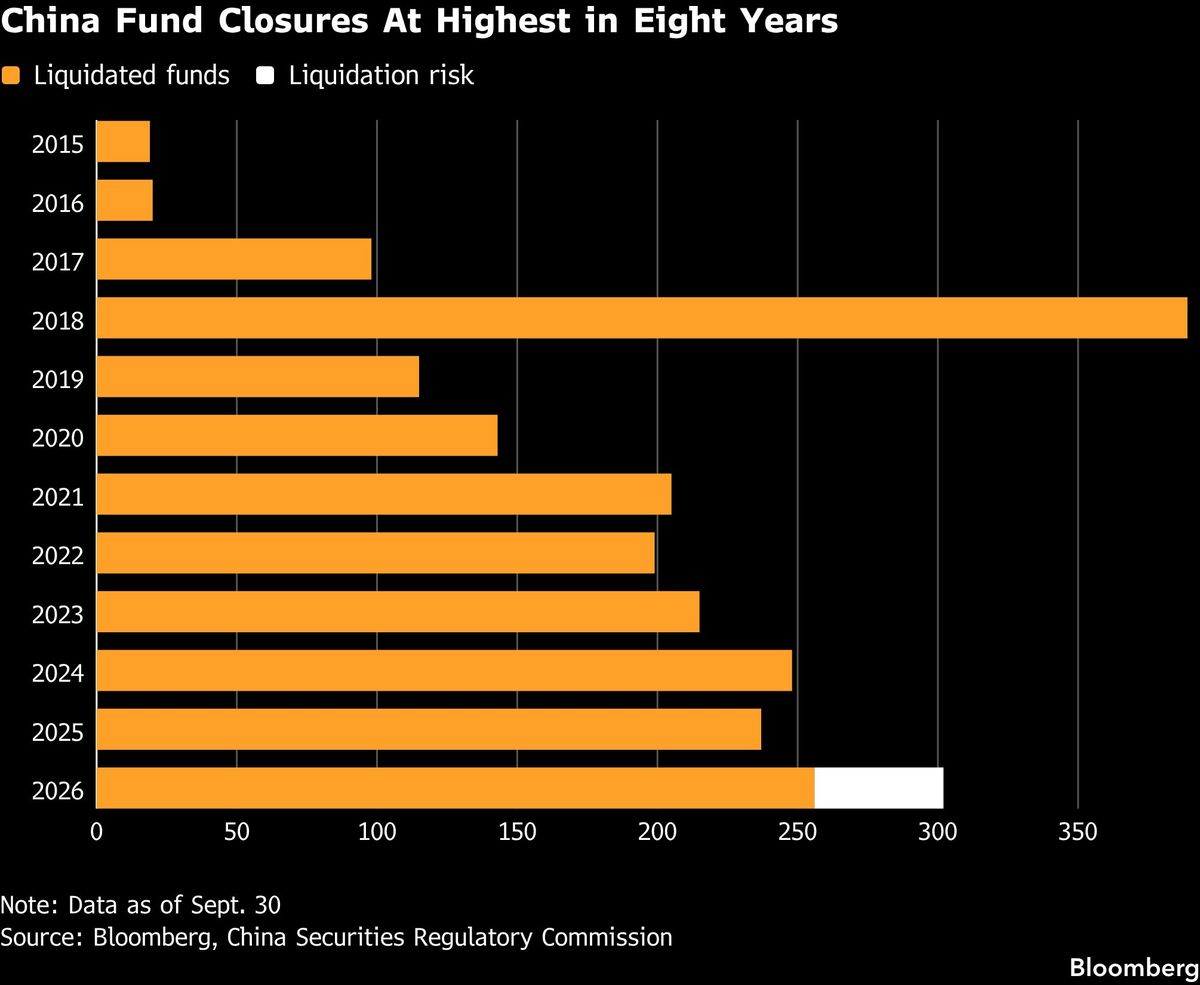
About 256 publicly offered funds have been liquidated this year, with another 46 warning investors they may soon close, according to Bloomberg-compiled data. That means potentially more than 300 products closing doors by year-end, the highest annual tally since a record in 2018, when sweeping industry reforms triggered shutdowns.
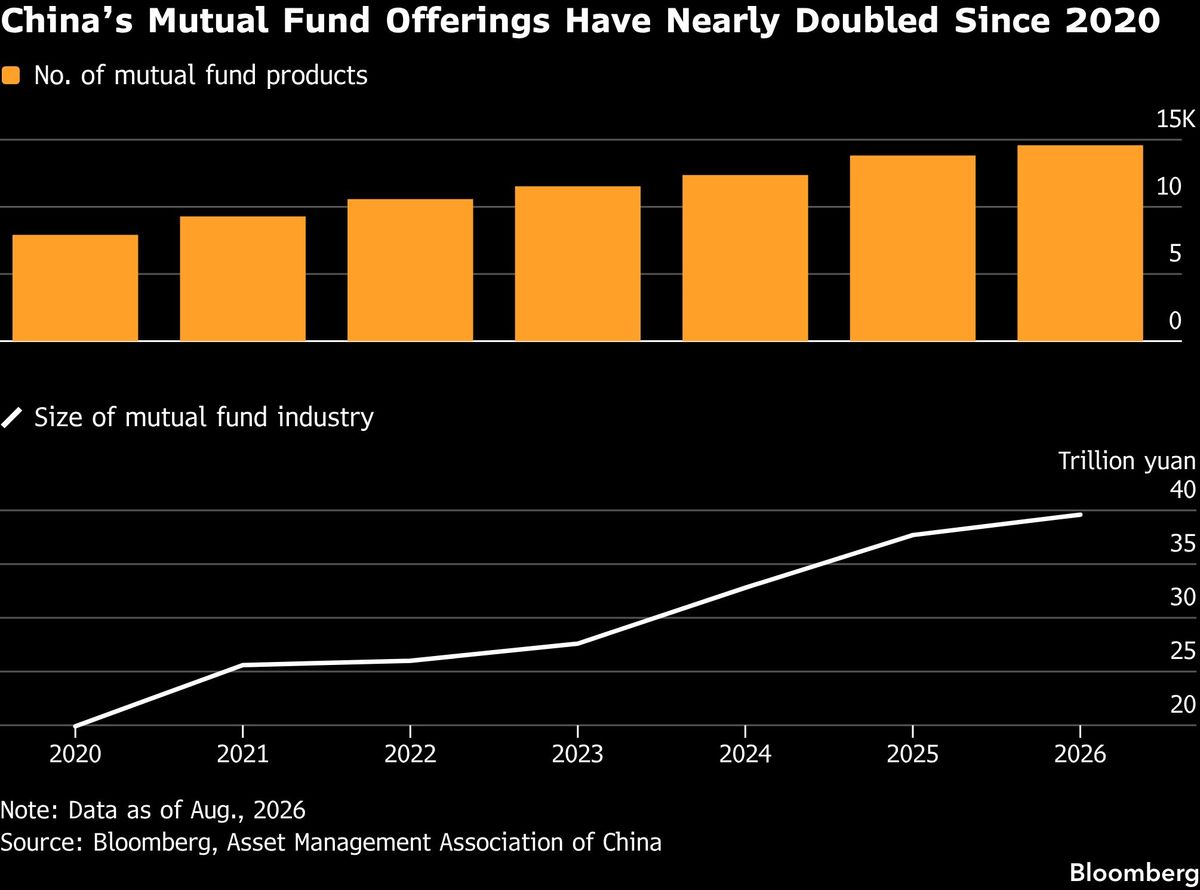
China has seen a steady increase in new fund launches over the years, driven by an official push to channel household savings into the capital market. Yet investor enthusiasm has waned alongside languishing market returns, resulting in many products suffering from waves of redemptions and lack of inflows.
The latest spike in liquidations is also the full-circle impact of a 2023 industry initiative, which encouraged fund companies to invest in their own products but was subject to a rule mandating closure after three years if assets fall below a set threshold.
“Products that are too small, have too few investors, or consistently lag their benchmarks are costly to maintain and increasingly difficult to justify,” said Chen Zunde, fund manager at Guangdong Fund Investment Co. “Market pullbacks in recent months have dampened risk appetite.”
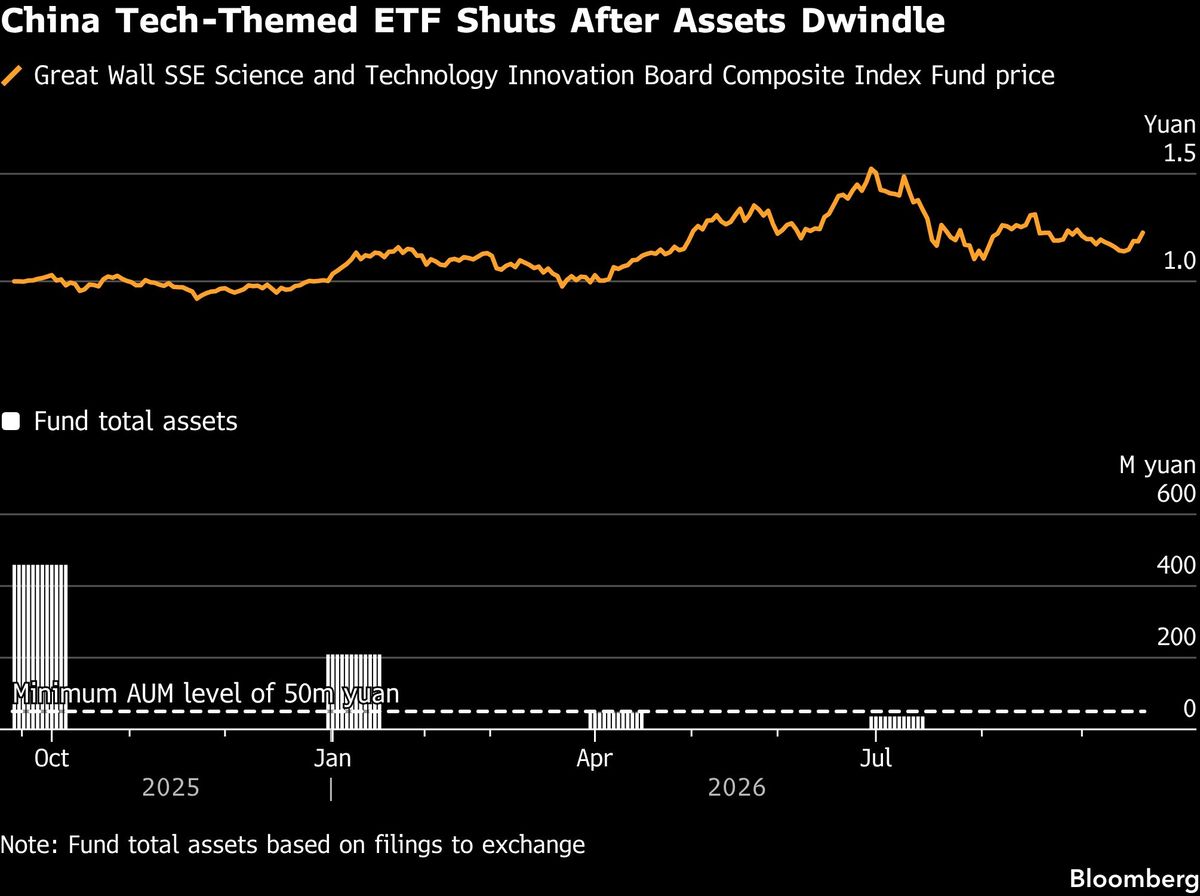
China’s securities rules require fund managers to report remedy proposals, such as liquidation, to regulators if their net assets remain below 50 million yuan (US$7.5 million or RM30.6 million) for 60 consecutive sessions. A majority of the funds that are closing this year fell into that category, according to Bloomberg-compiled data.
Dampened appetite
Inconsistent returns have left many funds short of the inflows needed to keep them operating, while new products continue to hit the market. China Securities Index Co’s index of active stock funds have posted a five-year annualised return of -0.8%, though they are up 3.6% this year.
Chinese stocks started the year on a high note, lifted by recovery hopes and the global AI boom. However, momentum faded in the second half due to intense domestic competition in the tech sector and persistent weakness in consumer spending.
The broader benchmark CSI 300 has fallen about 6% in 2026, while the chip-heavy Star 50 trimmed its advance to about 14%. Onshore Chinese markets are closed through Wednesday for a national holiday.
“The industry needs to shift away from relying on new launches and blockbuster products to drive growth” said Wang Shan, an analyst at Morningstar’s fund research center in China. “The exit of inefficient products is a healthy part of the industry’s evolution to pursuing quality over scale.”
Even for decently-performing funds, dwindling investor enthusiasm can quickly take a toll. The Great Wall SSE Science and Technology Innovation Board Composite Index Fund, which focuses on semiconductor and other strategic industries championed by Beijing, debuted just over a year ago and delivered a 23% gain before shutting down operations.
“Many retail investors don’t hold mutual funds for the long term,” Zhang Jingzhong, analyst at FOF99 Fund Research Institute, said. “They tend to buy after a fund has already performed well, rather than stay invested through cycles, hence hurting their returns.”
The issue of oversupply isn’t going away. Despite ongoing closures, the number of publicly offered fund products totaled 14,585 as of end-August, up more than 10% from a year ago.
The market saturation may be giving others pause. Some new fund launches delayed fundraising deadlines recently due to lukewarm demand, according to a Securities Times report.
A market meltdown in 2023 similarly wreaked havoc on the asset management sector, but this year’s wave is exacerbated by a surge in “sponsor-backed” fund closures.
Launched amid the 2023 government stimulus push to shore up confidence, these funds were initially exempt from the requirement of having at least 200 million yuan of asset at launch. However, they face mandatory termination if assets fail to reach the 50 million threshold three years after the launch. That rule is driving nearly 100 liquidations this year, according to Morningstar’s Wang.
“Mutual funds are often launched with little to distinguish them from existing products,” FOF99 Fund’s Zhang said. “There are simply too many similar offerings on the market.”
Uploaded by Magessan Varatharaja