


This article first appeared in The Edge Malaysia Weekly on October 5, 2026 - October 11, 2026
KPJ Healthcare Bhd
As private hospital operators grapple with rising medical costs, KPJ Healthcare Bhd (KL:KPJ) continues to chart a steady growth path.
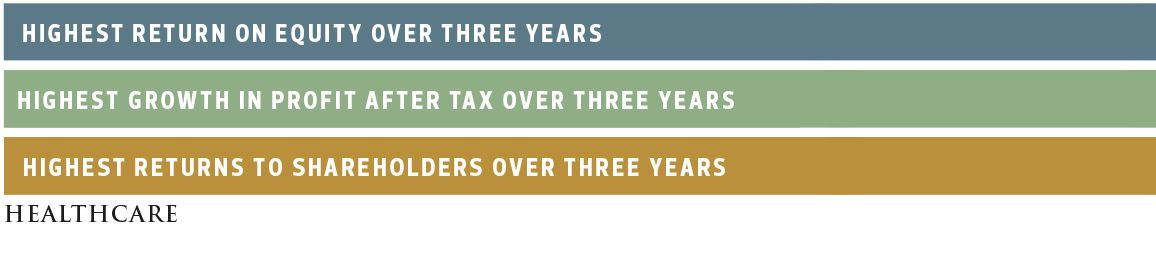
The group — 44.36% owned by Johor Corporation — repeated its hat-trick of wins last year, reflecting its continued efforts to improve operational efficiency and optimise its hospital network, while investing in digitalisation and artificial intelligence (AI) to enhance care delivery and patient flow.
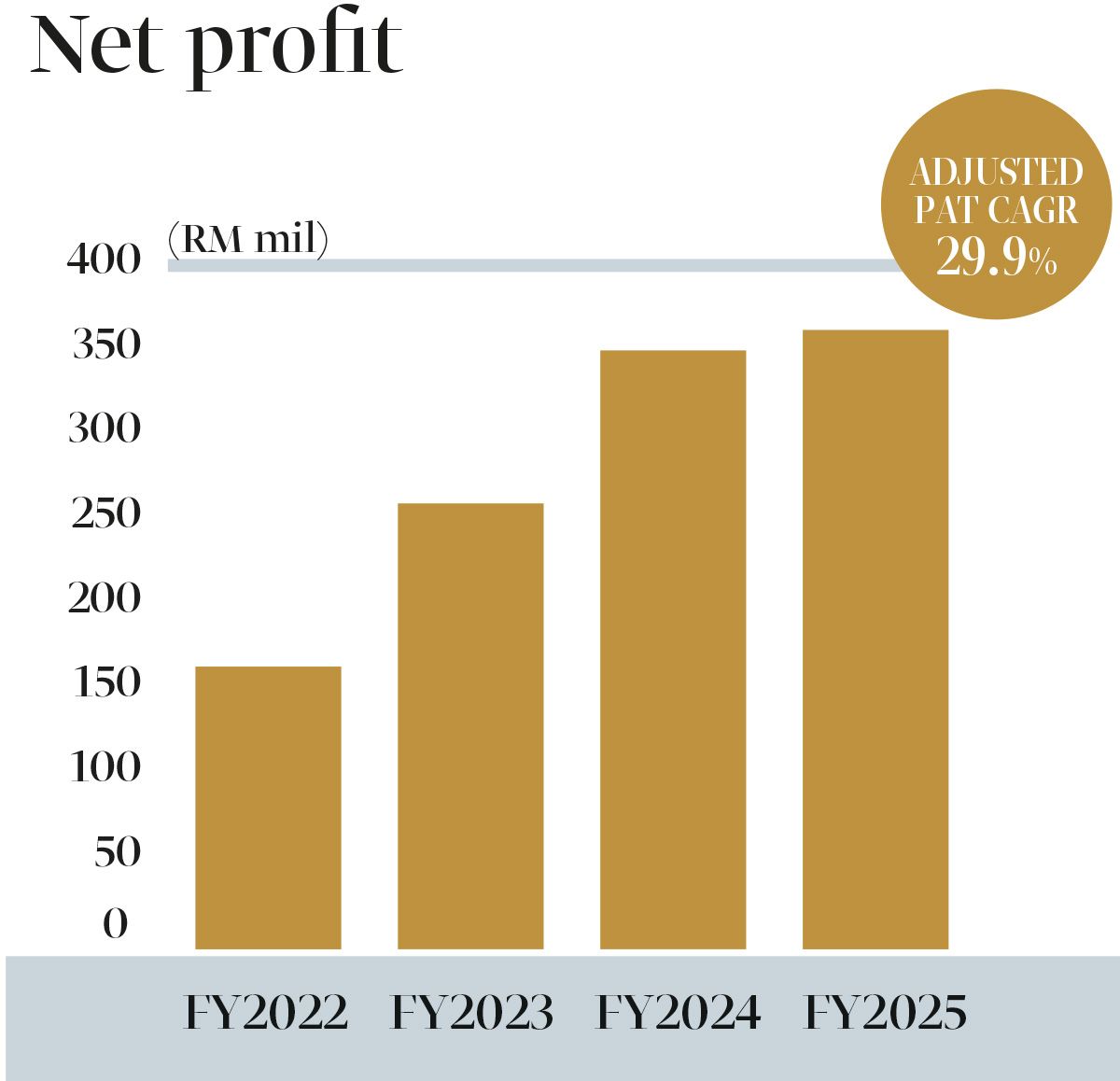
These initiatives have helped KPJ sustain its growth momentum. The group delivered record earnings in the financial year ended Dec 31, 2025 (FY2025), with its net profit rising 3.4% to RM365.9 million from RM353.8 million a year earlier, while revenue grew 9% to RM4.3 billion from RM3.9 billion. This compares with a net profit of RM263.4 million and revenue of RM3.4 billion in FY2023.
This led to KPJ winning the award for Highest growth in profit after tax over three years in the healthcare sector. According to The Edge Billion Ringgit Club (BRC) methodology, its net profit recorded a compound annual growth rate (CAGR) of 29.9% over the three-year period, the highest among its peers. The stronger earnings supported a higher dividend per share of 4.23 sen in FY2025, compared with 4.15 sen in FY2024 and 3.35 sen in FY2023.
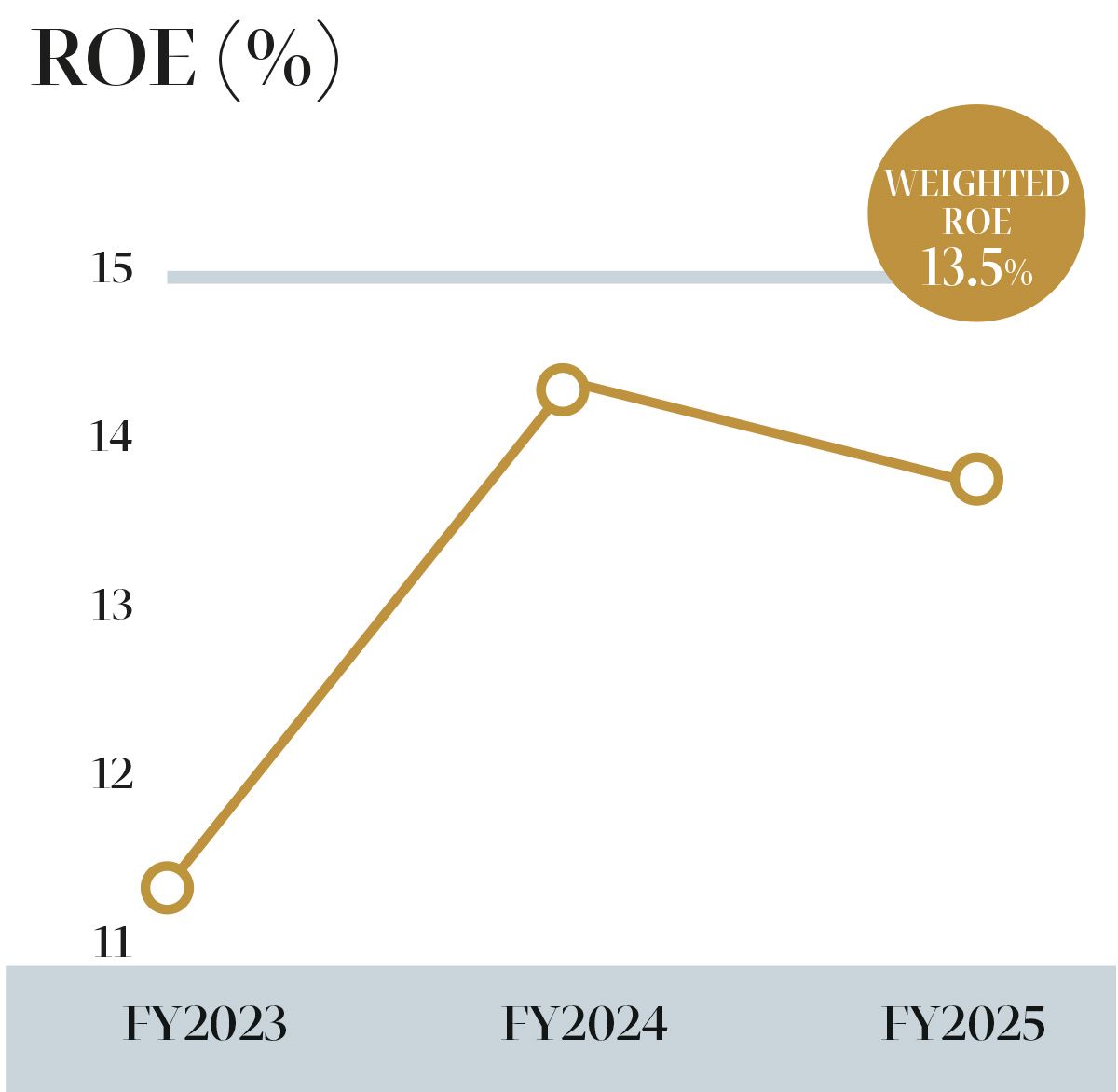
KPJ’s adjusted weighted return on equity (ROE) also outperformed its peers, at 13.5% over FY2023 to FY2025, earning it the award for Highest ROE over three years. Its ROE stood at 13.8% in FY2025, 14.4% in FY2024 and 11.4% in FY2023.


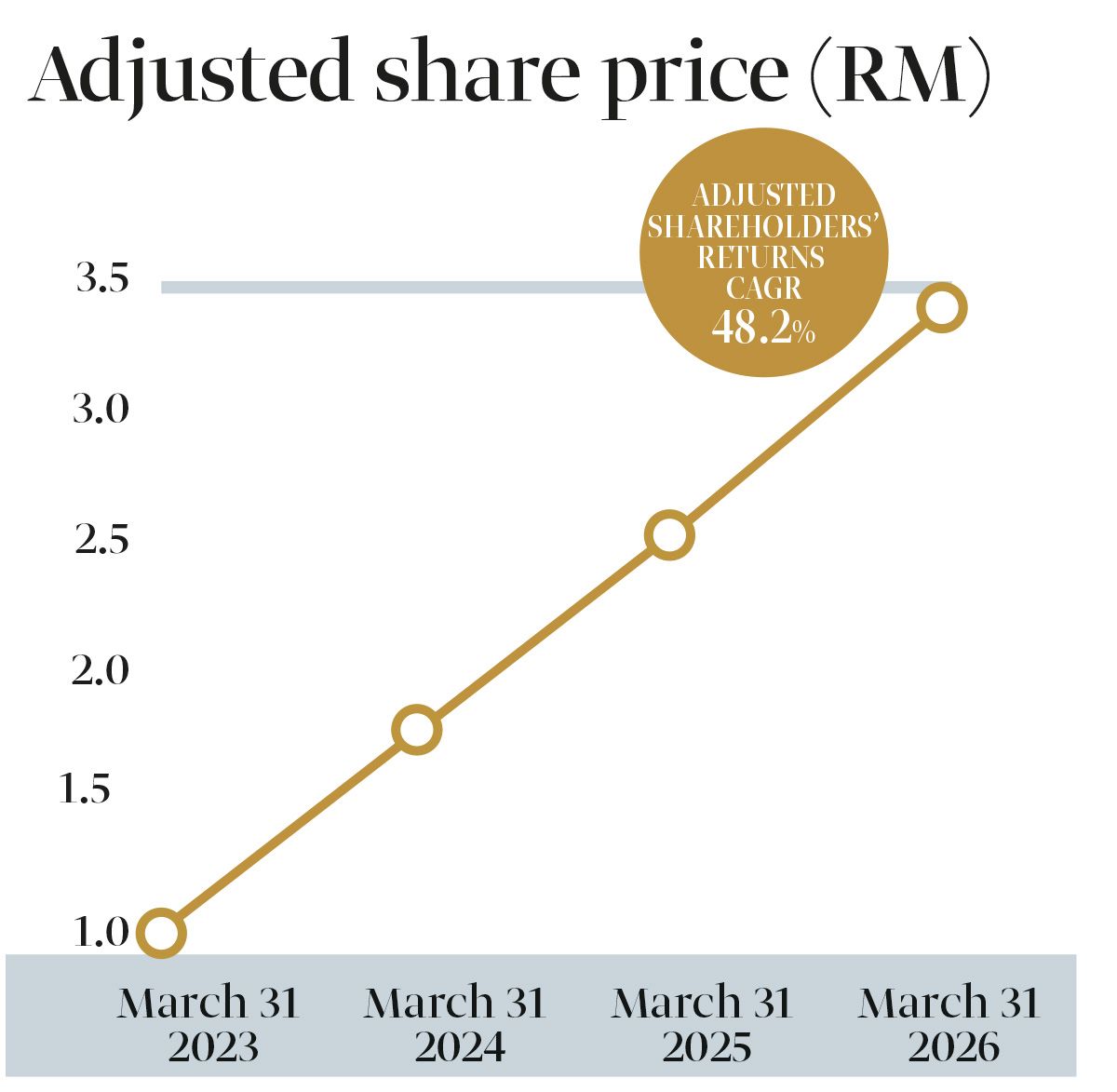
Meanwhile, the group’s adjusted share price experienced a strong rally, climbing to RM3.42 on March 31, 2026 — the BRC membership cut-off date — from RM2.59 on March 28, 2025, RM1.82 on March 31, 2024, and RM1.05 on March 31, 2023. As a result, it clinched the award for Highest return to shareholders over three years, based on a decent three-year CAGR of 48.2%.
Having hit an all-time high of RM3.53 in March this year, the share price has come under pressure recently following the abrupt resignation of its president and managing director Chin Keat Chyuan in August. His departure has raised questions about whether KPJ can maintain its growth momentum under new leadership. Chief medical director Professor Datuk Dr Hanafiah Harunarashid has assumed the role of officer in charge pending the appointment of a successor.
As at Aug 28, KPJ’s share price closed at RM2.70, giving the group a market value of RM11.95 billion.
In FY2025, the group’s operational beds increased 4% year on year (y-o-y) to 3,934, while inpatient admissions and outpatient visits rose 1% and 4% to 379,342 and 2.93 million respectively. Surgical procedures climbed 7% to 116,816.
More revenue was generated from each patient, with average revenue per inpatient rising 9% y-o-y to RM8,195 and average revenue per outpatient increasing 4% to RM328.
To be sure, medical inflation, workforce constraints and rising clinical complexity will continue to challenge healthcare providers, while ageing populations and growing expectations of quality and access are driving demand for more integrated and specialised care.
For KPJ, integration will remain central to its growth strategy, with the KPJ Health System (KPJHS) and KPJ Care Network aimed at improving care coordination, clinical outcomes and patient experience. Its hub-and-spoke model, with Centres of Excellence (CoEs) as hubs and Ambulatory Care Centres extending access to surrounding communities, will allow the group to expand capacity efficiently while improving patient flow.
Guided by its Care for Life philosophy, KPJ is also building an integrated, digitally enabled healthcare system, supported by the Future Health Institute (FHI), which will integrate clinical practice, education, research and digital innovation across the KPJHS.
“Maintaining cost discipline while ensuring reliable and professional healthcare services will remain an important priority for KPJ as we navigate an increasingly demanding healthcare environment. A mature clinical governance ecosystem, supported by data, quality intelligence and rigorous oversight, will continue to guide how KPJ navigates complexity,” said KPJ chairman Tan Sri Ismail Bakar in the group’s latest annual report.
“KPJ Healthcare University and our hospital network play an important role in developing the next generation of healthcare professionals, strengthening the training and ongoing development of doctors, nurses and allied health personnel across our system.”
At the same time, technology will play an increasingly important role in healthcare, with AI and digital tools offering opportunities to improve efficiency and decision-making, he noted.
KPJ is backing this transformation with an estimated RM5 billion in capital expenditure over the next five years, targeting AI adoption, digitalisation, CoEs, system-wide integration and brownfield expansion.
“We remain mindful that healthcare institutions must stay close to the people they serve, responding to the needs of patients and communities with responsibility, compassion and trust. Above all, we remain committed to ensuring that KPJ continues to be an institution that patients, partners and communities can rely on with confidence, today and in the years ahead,” said the chairman.
Save by subscribing to us for your print and/or digital copy.
P/S: The Edge is also available on Apple's App Store and Android's Google Play.