

(Oct 1): El Niño is hitting world’s biggest sugar producers, exposing the crop’s acute vulnerability to the climate phenomenon but also providing an early glimpse of broader threats to farmers and global food inflation.
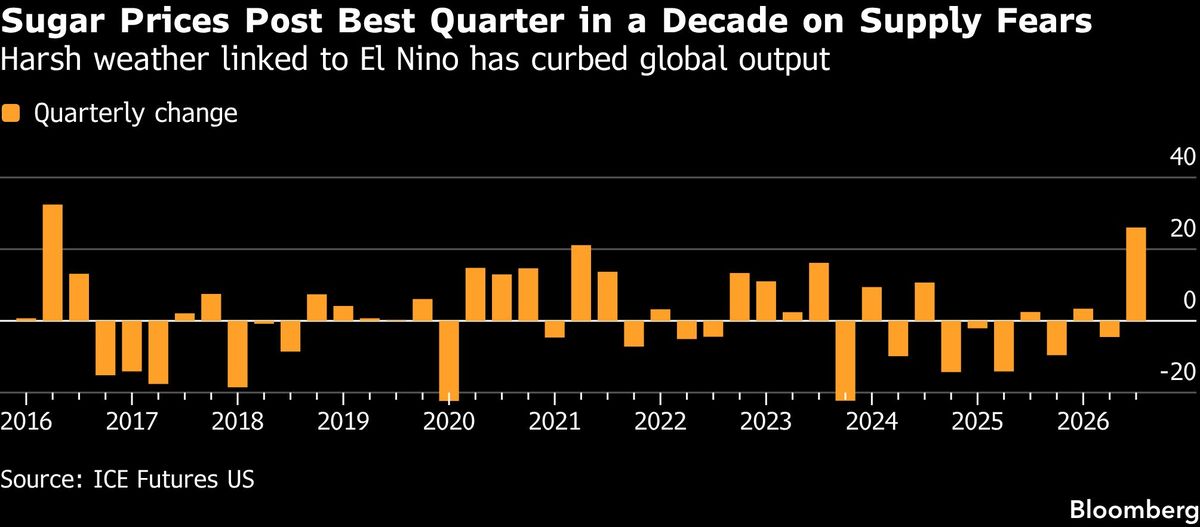
At the beginning of this year, the sugar market was facing a glut, but El Niño is driving a sharp reversal, with many analysts now expecting a deficit for the season starting this week. Raw sugar futures have surged more than 25% since July.
For sugar, El Niño is a particular problem: intensifying rainfall in Southern Hemisphere growing regions, while accentuating drought north of the equator. The concentration of production in Brazil, India and Thailand — all countries exposed to the climate phenomenon — make sugar a leading indicator of wider crop damage, with El Niño only forecast to peak around the end of this year.
“Sugar is one of the clearest El Niño-sensitive commodities,” writes Leonardo Alencar, a São Paulo-based food, beverages and agribusiness analyst at XP Investimentos. “When El Niño simultaneously threatens Center-South Brazilian cane performance and Asian exportable surplus, the market loses its main supply buffers, typically leading to a tighter global balance, lower inventories, and support for sugar prices.”
The sweetener has helped drive global food prices to the highest in more than three years. That’s adding another inflationary concern for consumers and policymakers contemplating further monetary tightening amid the impact of wars in the Middle East and Ukraine.
Excessive rainfall is slowing cane harvesting and crushing in top producer Brazil. In India, farmers are complaining of a weak monsoon curbing their yields, while a scorching summer in Europe is resulting in the worst sugar-beet harvest in more than a decade.
Add in drought-hit Thai sugar regions and that represents more than half the global crop.
“El Niño is absolutely here with us,” said Eder Vieito, the chief executive officer of researcher Green Pool Commodity Specialists. “Losses in sugar production have been significant across the board.”
Sugar isn’t the only crop feeling the effects of El Niño. Rice is also particularly vulnerable to weak rainfall across Southeast Asia. West Africa’s cocoa groves are threatened by drier weather, while coffee and palm oil are exposed too.
But as an early warning of El Niño impacts, sugar stands out.
The growing threat posed by El Niño marks a sharp turnaround from just over seven months ago, when sugar hit a five-year low. Back then, before the Iran war and the emergence of the climate phenomenon, investors were betting that a big Brazilian crop was likely to further boost a global glut.
The reversal in outlook is now also particularly marked in Brazil. Rainfall across several key growing areas was as much as four times normal levels over the past month, according to Donald Keeney, a senior agricultural meteorologist at Vaisala Xweather.
That’s interrupted harvesting and prevented mills from processing cane, compounding tightening supplies after the Iran war oil shock diverted more of the sweetener into fuel-making.
After losing several days of crushing, mills may be unable to extend the season long enough to catch up because of expected rains in December, cutting exports by about two million tons, according to José Pessoa of the José Pessoa Group, a family business involved in planting and crushing of sugarcane in the Center-South and the Northeast of Brazil.
“When delays happen, mills tend to try and extend crush through December. But this year, this will not be possible,” said Pessoa. “We won’t be able to prolong crush and it’s El Niño’s fault.”
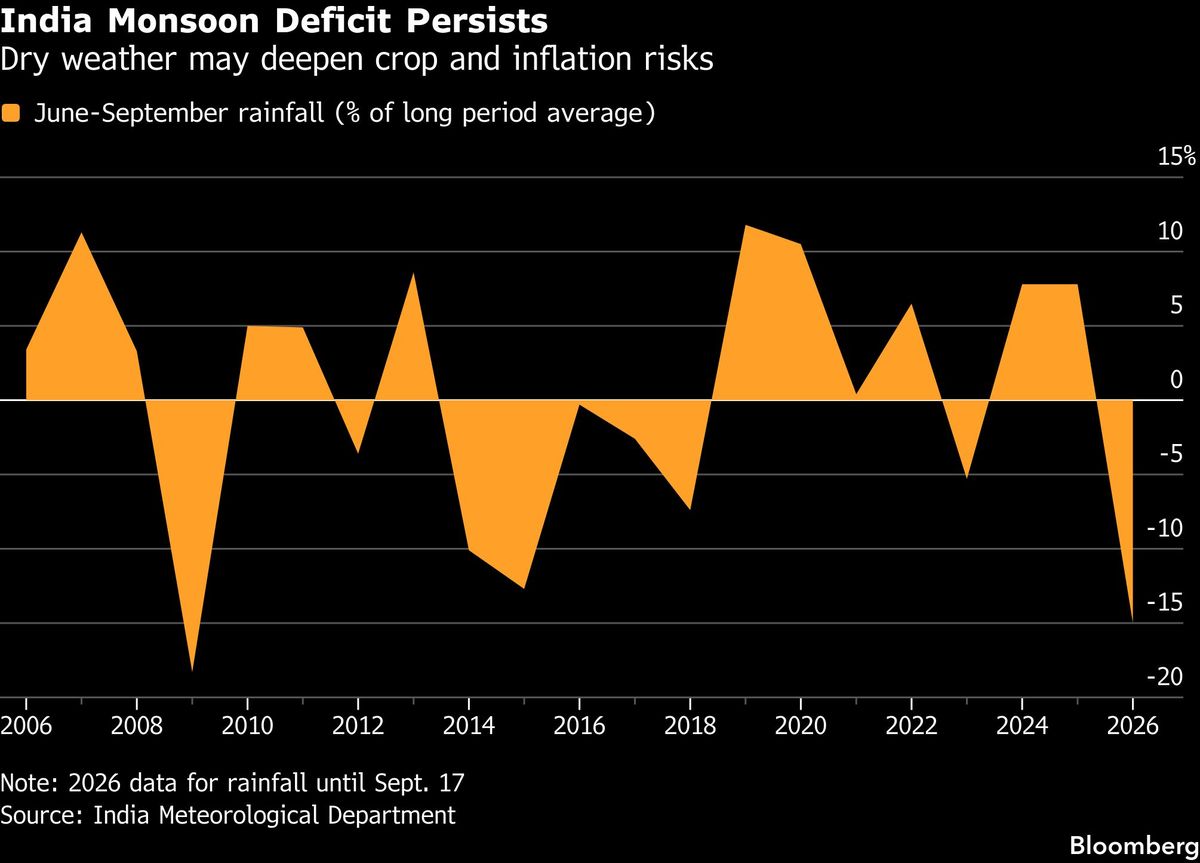
By contrast, rains have been below normal in India. The world’s second-biggest producer just capped its weakest monsoon rains since 2015, reducing projected sugar output to about 30 million tons.
There are signs that stocks that built up because of the glut are starting to tighten, meaning India has little cushion for another disappointing crop, said Green Pool’s Vieito.
Thai producers are also struggling. Rainfall in northeastern Thailand, the country’s biggest sugarcane-growing region, has been running at about two-thirds of the 30-year average, according to Vaisala.
That’s likely to cut sugar output by at least 17% to less than 10 million tons in the coming season.
“The situation on my sugarcane farm is very terrible, affected not only by drought but also by sugarcane diseases,” said Suntorn Nongkhunsarn, a farmer in the Kalasin province.
Even in beet-producing regions in the Northern Hemisphere, El Niño is adding to the risks. Drought in the US has delayed beet harvesting in some regions, potentially exposing the crop to adverse weather as El Niño intensifies through the end of the year, according to Expana’s Andraia Torsiello.
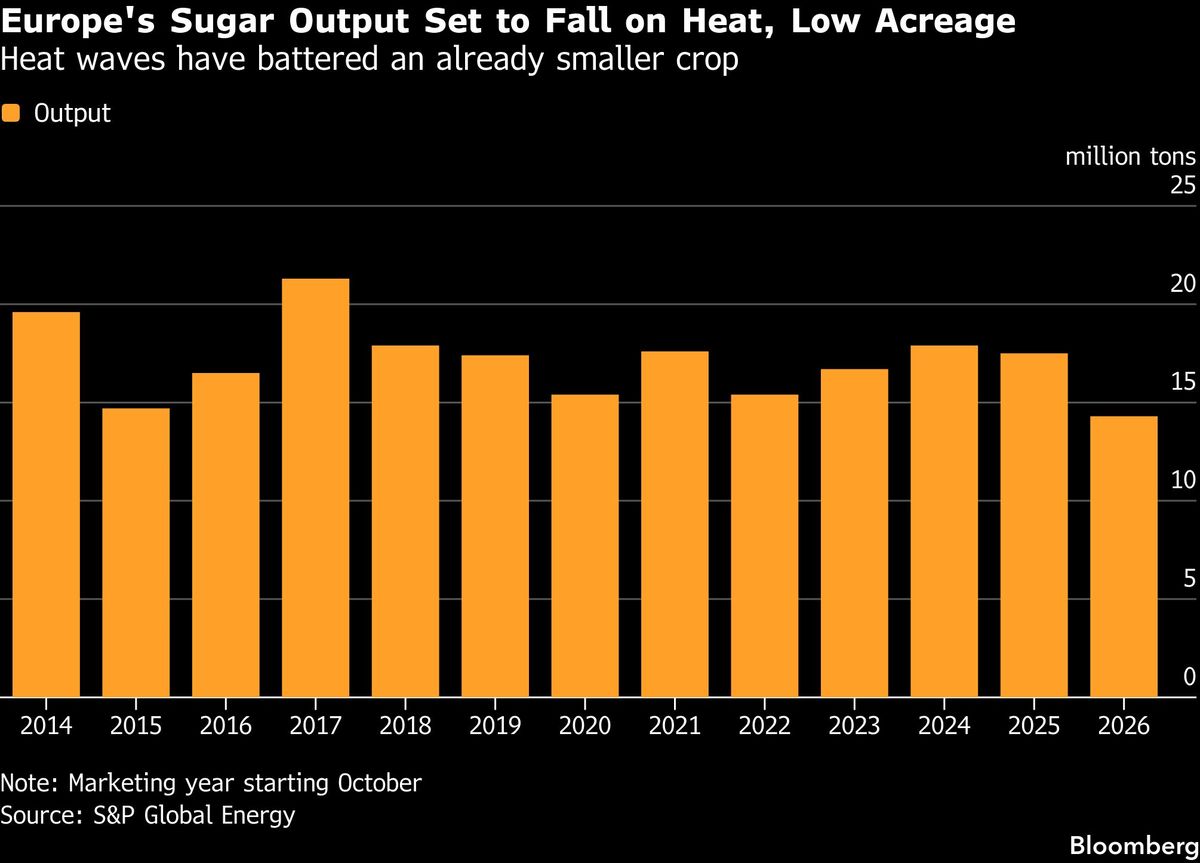
In Europe, El Niño likely amplified a series of heat waves that seared sugar beet fields, cutting output to the lowest in at least a decade and helping prices rebound from multi-year lows. Output in France, Europe’s No 1 producer, is on track to be the worst since at least 1980, after the region’s hottest ever summer.
Global sugar costs have climbed 18% this year, more than any other component in the United Nations’ gauge of food commodity prices, bar vegetable oils.
The intensity of the potential El Niño disruption has caught the attention of traders. Open interest in sugar futures hit record highs this year, and hedge funds have amplified price gains by building their most bullish position in years.
“There’s a lot of money betting on El Niño effects,” said Carlos Mera, the head of agricultural commodities markets at Rabobank. Speculative positioning may have pushed sugar prices higher than justified by fundamentals, he added.
More broadly, that price rally may be capped by slowing demand growth as health-conscious consumers cut intake, food-makers reformulate products and the growing use of GLP-1 weight-loss drugs raises questions about longer-term demand for sweet foods, according to Stephen Geldart, the head of analysis at sugar trader Czarnikow.
Still, some analysts think prices could go higher as El Niño strengthens and supplies are strained further.
Citi research analysts led by Arkady Gevorkyan expect prices to climb about 20% over the next 12 months due to adverse weather, alongside inventories that are “substantially tighter than officially reported”.
“Stocks have been going down and down and down, and it gets to the point where if there’s some unexpected hiccup somewhere, then where’s the sugar coming from?” said Judy Ganes, the president of J Ganes Consulting. “It leaves the market vulnerable.”
Uploaded by Tham Yek Lee