


This article first appeared in The Edge Malaysia Weekly on October 5, 2026 - October 11, 2026

United Plantations Bhd
Sustainability has long been at the heart of United Plantations Bhd (KL:UTDPLT), or UP, across its plantations, mills and refineries in Malaysia and Indonesia.
The group, which received the world’s first Roundtable on Sustainable Palm Oil (RSPO) certification in 2008, has clinched The Edge Billion Ringgit Club’s (BRC) best corporate responsibility (CR) initiatives award for the third time, following wins in 2016 and 2023.
It took this year’s award in the RM10 billion to RM40 billion market capitalisation category.

A key part of UP’s environmental approach is improving yields without expanding its land footprint.
Its in-house high-yielding planting materials, combined with disciplined plantation management, enable average yields per hectare at least 80% above the global average. Producing more from the same area reduces the need for plantation expansion, helping preserve forests and biodiversity.
UP has also exceeded its publicised targets in reducing its carbon footprint. Its latest Life Cycle Assessment showed a 69% reduction in greenhouse gas (GHG) emissions per kg of palm oil produced between 2004 and 2025, above its 60% reduction target for 2025.
The group is now targeting a 70% reduction by 2030, supported by further innovation and its collaborations and networks in Scandinavia.
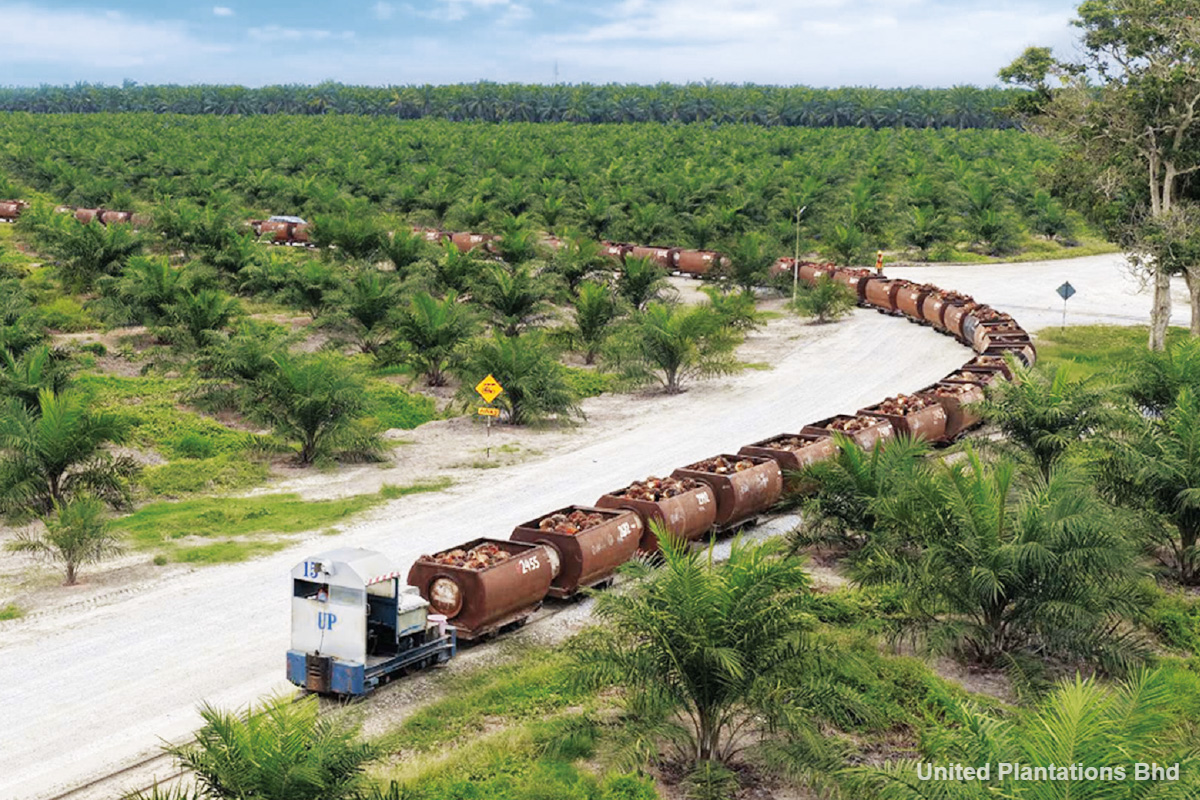
In 2025, UP expanded its light railway network, which uses just one-tenth of the fossil fuel required by tractors and lorries to transport fresh fruit bunches from the fields to its mills. The network grew from 479km in 2015 to 613km as at Dec 31, 2025.
“We also invested in upgrades to biomass boilers and biogas plants to increase renewable energy generation, with further investments planned for 2026 and beyond,” UP’s vice-chairman and chief executive director Datuk Carl Bek-Nielsen said in the group’s 2025 annual report.
Biodiversity protection is another part of UP’s environmental efforts. Through its partnership with the Copenhagen Zoo, UP has built an in-house biodiversity team to manage about 7,500ha of jungle reserves within its Indonesian land bank. The team oversees wildlife sanctuaries, jungle corridors and other conservation initiatives, while integrating biodiversity considerations into the group’s agricultural practices.
On the social front, UP continues to advance human and labour rights, particularly regarding the recruitment of foreign workers. Working with global labour and human rights organisation Dignity in Work for All, as well as customers Mars and Fuji Oil, the group has strengthened its recruitment practices and efforts to identify and address labour risks.
All recruitment is now conducted under UP’s Ethical Recruitment Procedures, which include the Employer Pays Principle, ensuring guest workers do not pay recruitment fees to secure jobs.
In 2025, the group established a centralised Onboarding Centre to provide new guest workers with targeted briefings. UP is also improving its call centre to provide recruitment information directly to candidates in their home villages and reduce the risk of exploitation by middlemen.
“While this has helped us close many of the gaps identified over the years — not least because guest workers are clearly informed on several occasions not to pay anyone — strengthening human rights is about continuous improvement,” said Bek-Nielsen. “Though we are not perfect, we are trying to do our part by taking ownership.”
Alongside its focus on recruitment and labour rights, UP prioritises workplace safety. Its five-member safety division regularly reports to the executive committee, while training, risk assessment and control programmes, along with impromptu audits across its assets, help reinforce safety practices. These efforts contributed to zero fatalities in 2025.
Beyond its workforce, UP also supports surrounding communities and smallholders.
The group provides employment and business opportunities, and engages smallholders through field days. In Indonesia, land-rights issues are addressed through transparent grievance procedures. UP also continues to upgrade employee housing, amenities and educational facilities for the children of its workers.
UP remains committed to RSPO, Malaysian Sustainable Palm Oil (MSPO) and Indonesian Sustainable Palm Oil (ISPO) standards, with all its Malaysian mills and estates certified to the latest MSPO 2022 standards.
Its two Perak refineries, Unitata Bhd and UniFuji Sdn Bhd, also obtained MSPO Part 4-2 Supply Chain certification in 2025. The group also improved its score in the Zoological Society of London’s Sustainable Palm Oil Transparency Toolkit (SPOTT) assessment, ranking No 2 globally with a score of 97.1%.
Additionally, UP has strengthened its supply chain traceability, with 100% of its palm oil and more than 90% of its palm kernel oil traceable back to the plantation level.
The Bek-Nielsen family is UP’s largest shareholder with a 43.69% stake held via UIE plc and the family’s holding company, Maximum Vista Sdn Bhd, followed by the Employees Provident Fund with a 7.36% stake.
Save by subscribing to us for your print and/or digital copy.
P/S: The Edge is also available on Apple's App Store and Android's Google Play.