

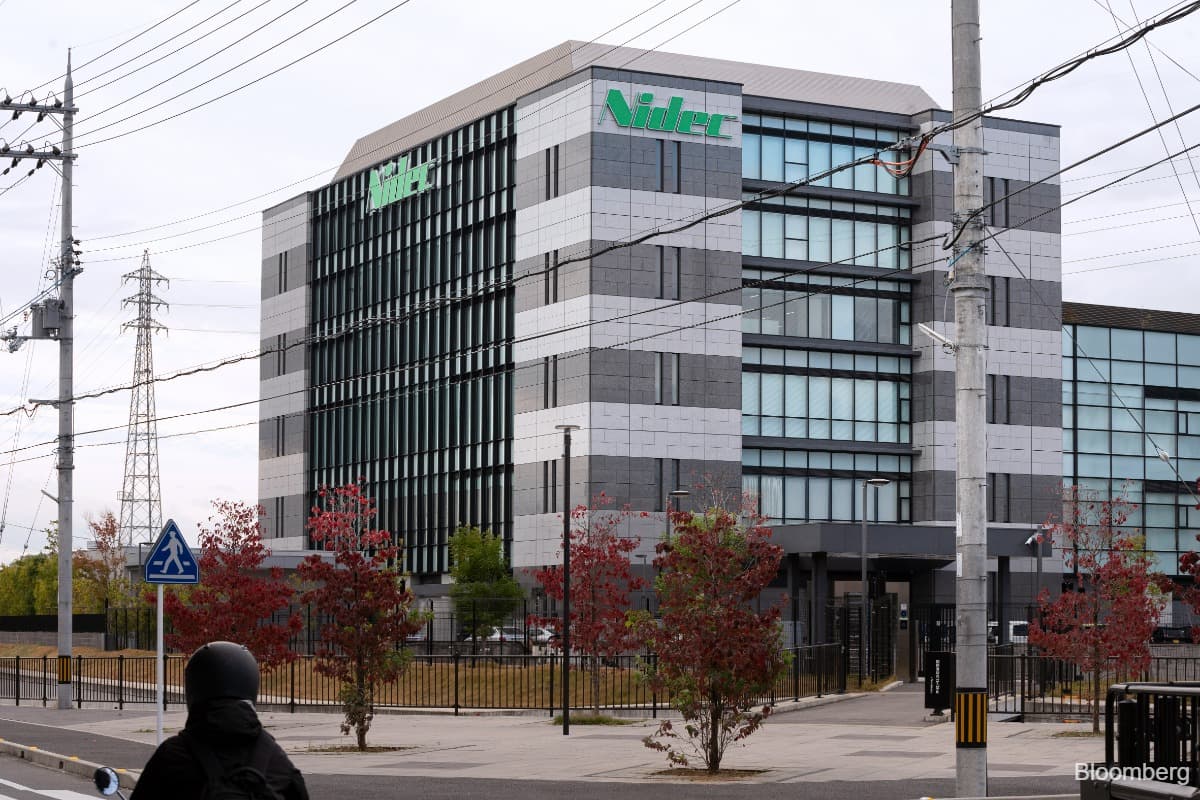
(Sept 30): Nidec Corp reported deep impairments and accounting restatement charges in the first detailed look at the cost of a long-running accounting and governance crisis that’s engulfed one of the world’s top makers of electric motors and raised questions about its survival.
The manufacturer booked ¥632 billion (US$4 billion or RM16.42 billion) in writedowns for the fiscal year that ended in March and charges of ¥482.5 billion related to accounting irregularities leading up to the prior period, according to a filing Wednesday. It also issued an operating profit forecast of ¥200 billion for the current period, falling short of analysts’ average projection for ¥247 billion.
The disclosures, outlined in a 251-page document, give a clearer picture of the financial fallout of an accounting scandal that spans subsidiaries in Italy, Switzerland and China, as well as its car inverter business. The crisis saw Mitsuya Kishida resigning as chief executive officer this week and has put a spotlight on founder Shigenobu Nagamori’s demanding leadership style, which has been blamed for the turmoil.
Put together, the numbers total the ¥1 trillion impact reported earlier this week by Diamond magazine and the Nikkei newspaper. Nidec’s release now shifts attention to what comes next for the world’s largest maker of precision motors under new chief executive officer Michio Kaida.
Nidec posted a restated net loss of ¥564.6 billion for the latest fiscal period, adding that its auditor had withheld an opinion on the financial statements.
It said in the filing that it breached covenants on loans of ¥600 billion from Mitsubishi UFJ Financial Group Inc and Sumitomo Mitsui Banking Corp, but that the banks agreed to waive their rights. The covenants required that net assets as of March 2026 remain at least 75% of the level at the end of the previous fiscal year.
The company needs to focus on restoring its financial reporting and resolving a delisting warning from the Tokyo Stock Exchange, Aspex Management wrote in a letter to Nidec’s board a day before Kishida’s resignation was disclosed. The hedge fund says it owns 7% of Nidec, which would make it the third-largest shareholder, behind Nagamori and activist investor Oasis Management Co, according to data compiled by Bloomberg.
Oasis has also been vocal about the need for Nidec to improve governance and restore its corporate value.
The involvement of the two hedge funds, as well as the stock rout stemming from the scandal, has sparked speculation that Nidec is now vulnerable for a breakup or takeover. The company is in advanced talks to sell Nidec Components Corp for more than ¥100 billion to Carlyle Group Inc, the Nikkei newspaper reported, without saying where it got the information. That would mark the first time Nidec has sold off a major subsidiary, the paper said.
It’s also unclear how quickly Nidec can move beyond the crisis. The TSE delisting warning could potentially take years to resolve, while the firm may find it challenging to overhaul the entrenched pressure-cooker culture Nagamori created over his five decades at the company.
While the founder relinquished his last remaining title in February, he still has sway through his 8.3% stockholding. He stepped down as CEO in 2024, before the accounting scandal came to light.
The company has acknowledged years of improper balance sheet practices, including overstating raw-material and inventory values, misstating customs declarations, booking government grants as revenue and capitalising labour costs to defer expenses. In May, the scandal expanded beyond improper bookkeeping and into its products, involving the quality control of the motors and components it supplies to other companies.
Uploaded by Chng Shear Lane