


This article first appeared in City & Country, The Edge Malaysia Weekly on September 28, 2026 - October 4, 2026
It was a scorching afternoon when Country Garden Pacificview Sdn Bhd (CGPV) executive director and chief of regional industrial business development Kevin Li and regional vice-president Syarul Izam Sarifudin arrived at The Edge’s office in Petaling Jaya, Selangor. The pair had flown in from Johor Bahru to give an update on Forest City, a high-profile project in Johor that has dealt with some hot issues since its inception.
“What we achieved [since 2015] up to 2025 was merely concentrating more on our operational stability, resource integration and preparing for our next phase of growth,” says Syarul. “In the early years, we were primarily viewed as a residential real estate developer. But we are now embarking into a new sector — managing townships and driving actual economic nodes of financial and industrial development in southern Johor.”
The master developer of Forest City is a joint venture between China-headquartered developer Country Garden Holdings Co Ltd and Esplanade Danga 88 Sdn Bhd.
Operating as an independent local management unit under Country Garden Malaysia’s executive umbrella, CGPV is responsible for Forest City’s master plan development and management, industrial park development and Special Financial Zone (SFZ) operation.
Officially launched by the Malaysian government with duty-free island status in 2016, the 7,500-acre integrated development covers four reclaimed man-made islands over 5,000 acres and 2,500 acres on the mainland. Located in Iskandar Puteri, it sits along the Straits of Johor near the Malaysia-Singapore Second Link, just 2km across the water from Singapore.
The ambitious development has made international headlines over the years, some of them for the wrong reasons, especially since it has fallen short of market expectations in terms of progress, sales and occupancy rates. These challenges were compounded by the Covid-19 pandemic and the well-documented financial restructuring of its parent company amid China’s broader real estate liquidity crisis.
“When China’s property market faced a systemic downturn, amplified by global supply chain disruptions, macroeconomic shifts and strict pandemic controls, Country Garden — once China’s top property developer — was caught in the crossfire, just like many other big players in the country. However, late last year, our parent group successfully executed onshore and offshore debt restructurings in China,” says Li, who is also the chief financial officer of Country Garden Malaysia.
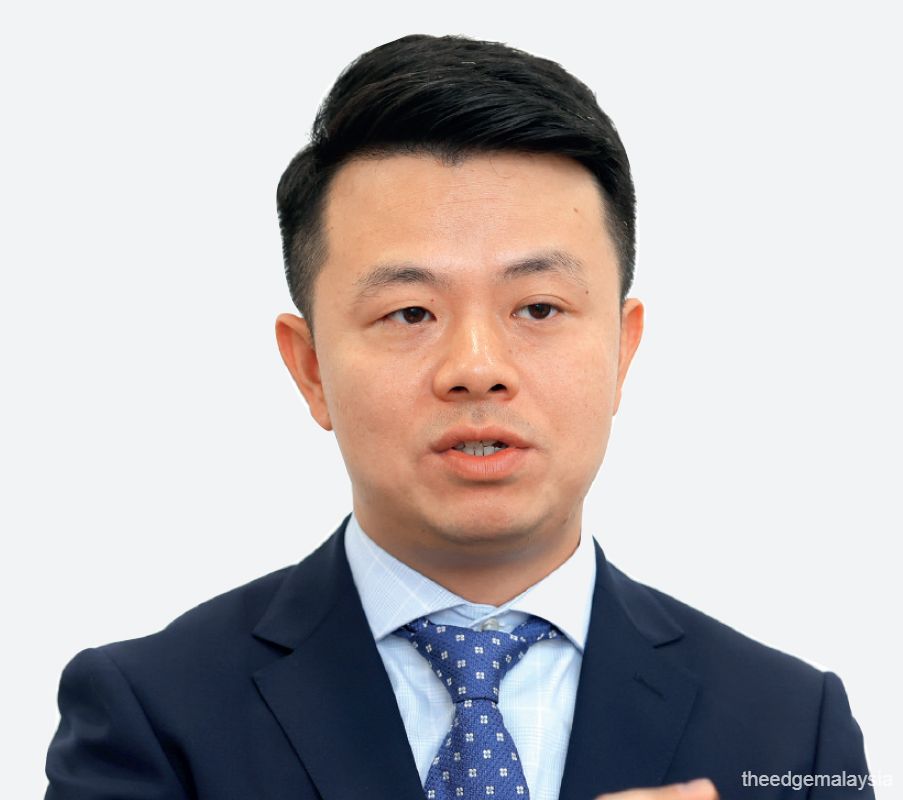
Regardless of the situation faced by its parent company, he highlights that Country Garden Malaysia operates with complete operational and financial independence.
“Since Country Garden entered Malaysia as its first overseas destination back in 2010 and 2011, the local operation has relied on an independent management team. For the past three years, our cash flow has been generated entirely within the country, allowing us to remain self-sustaining in terms of liquidity and debt servicing,” he says, adding that all five of its projects in the Klang Valley and Johor are performing steadily.
According to Li, Country Garden Malaysia’s sales and cash collection was RM1.3 billion in 2023, more than RM1.1 billion in 2024, and RM1.3 billion in 2025.
“More crucially, we utilised our local cash flows to fully settle bank borrowings and capital market obligations worth about RM2 billion over the past three years, including a RM1 billion sukuk … As at earlier this year, the remaining outstanding amount [of the sukuk] was only RM150 million. We pre-repaid them as our cash flow was comfortable.”
With most of its debts cleared, local rating agency RAM upgraded Country Garden Malaysia’s outlook rating from negative to stable in March, reflecting its balance-sheet resilience despite global sector volatility.
That financial stability has been supported by developments on the legal front. Malaysian courts have recently upheld the validity of sales and purchase agreements in favour of the developer. Dismissing buyer suits seeking to void contracts for reasons such as media portrayals of the project as a “ghost town”, the courts established that market downturns and post-purchase regret do not constitute grounds for breach. The decisions shield CGPV against speculative contract cancellations and protect its revenue base.
“Forest City has completed 26,000 residential units so far. We understand that we cannot make every single person happy, and it is normal to receive feedback or complaints. We respect the buyers’ legal rights,” Li says.
“But we also have our internal KPIs [key performance indicators] to meet. We are pleased to share that customer satisfaction consistently hits above 95% in our surveys and polls. Generally, the majority of our 20,000 residents are happy to live here, or they wouldn’t choose to continue staying. This is evidenced by our growing population.”
A city waking up
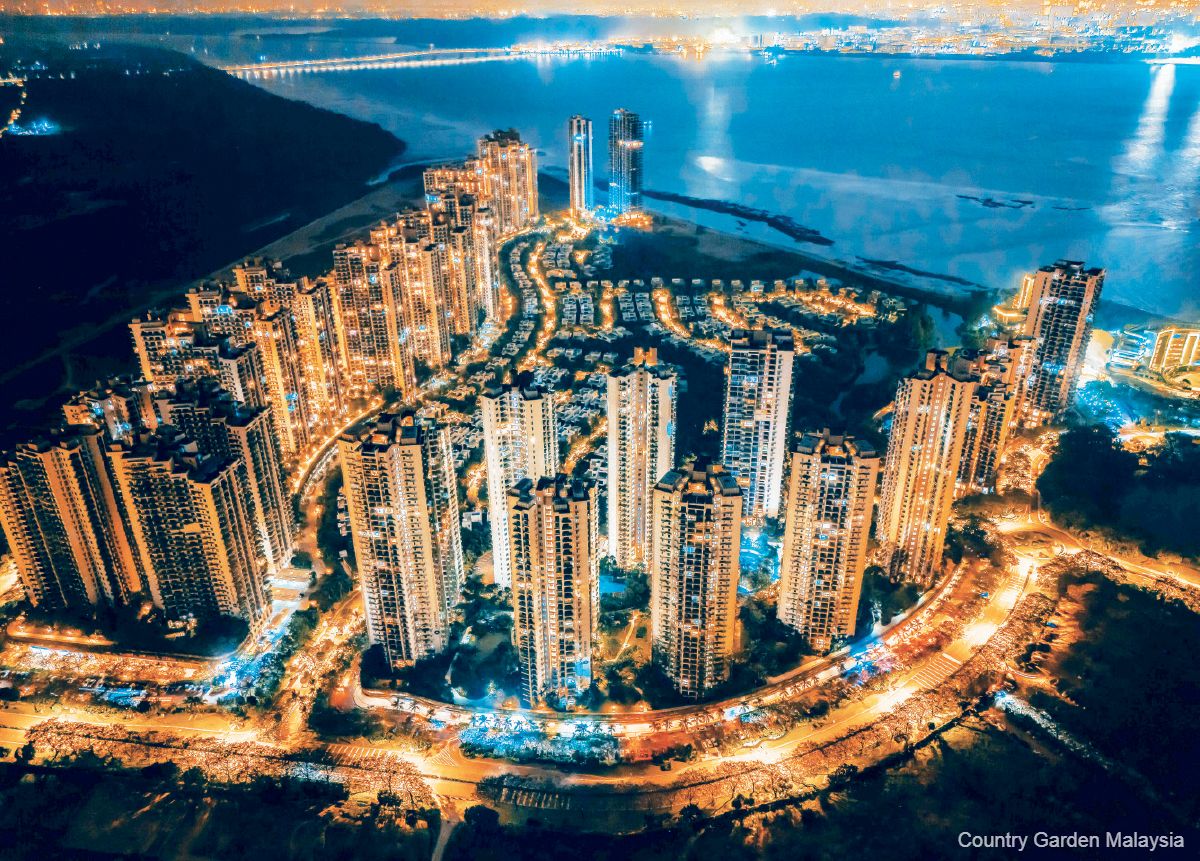
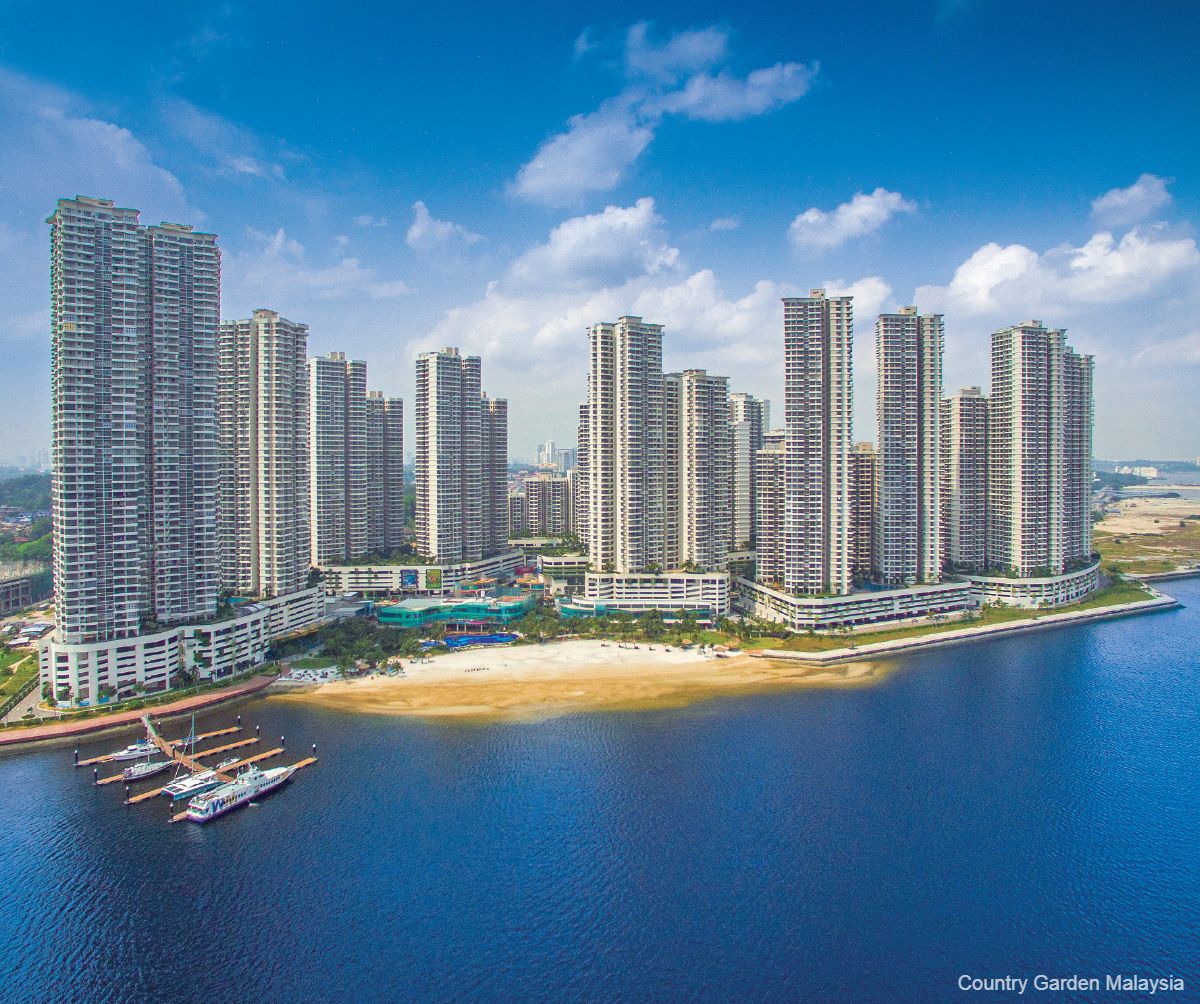
Today, Forest City is home to around 20,000 people living in 66 completed blocks, over 770 acres of the approved 5,000-acre reclaimed island land bank.
“If you pass by from Iskandar Puteri towards Batam, you can see the lights on across the residential towers at night,” Syarul says. “It is a night-and-day difference compared with what people experienced immediately after the pandemic in early 2021.”
Demographics have shifted significantly, he adds. While buyers were once predominantly mainland Chinese, the current resident base is largely local Malaysians, many of whom commute daily to Singapore or work in nearby industrial parks, as well as expatriates of different nationalities.
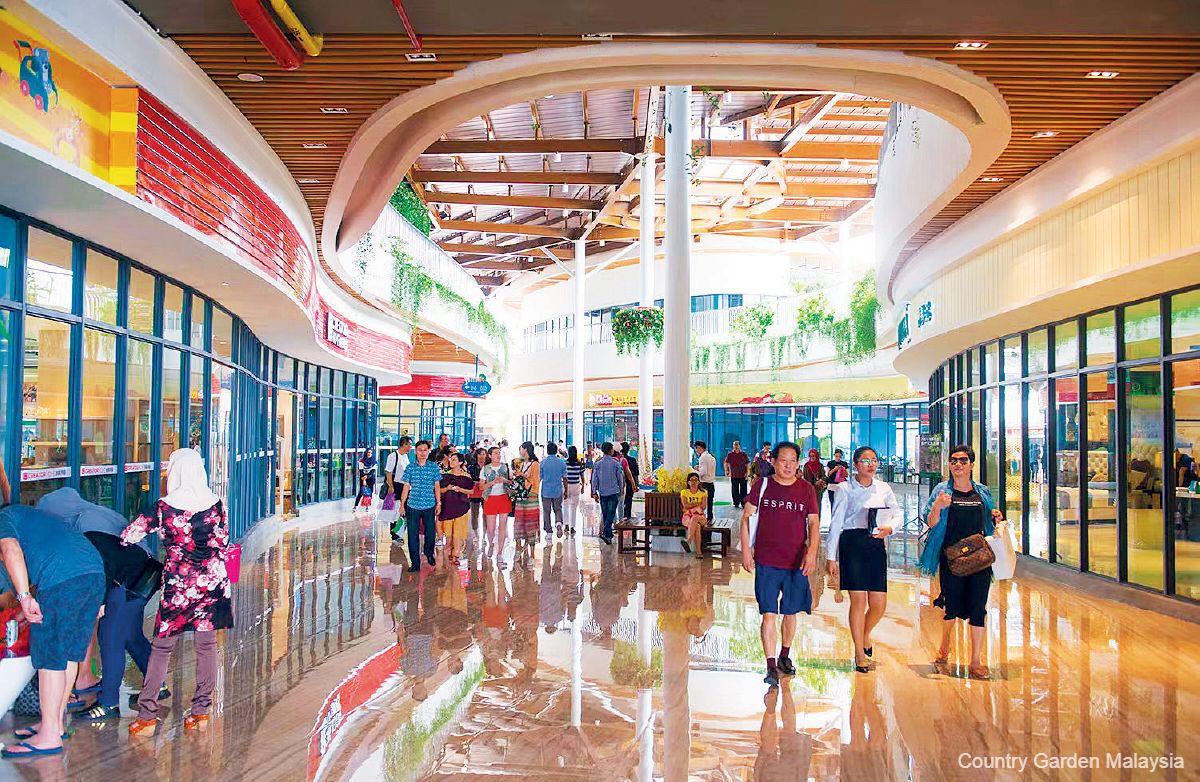
“The township’s commercial pulse is also quickening,” says Syarul. “The Fisherman’s Wharf commercial street has seen steady footfall, with duty-free shops, eateries and premier banking facilities, including branches of Maybank and CIMB, with Affin Bank and AmBank joining the fold soon.”
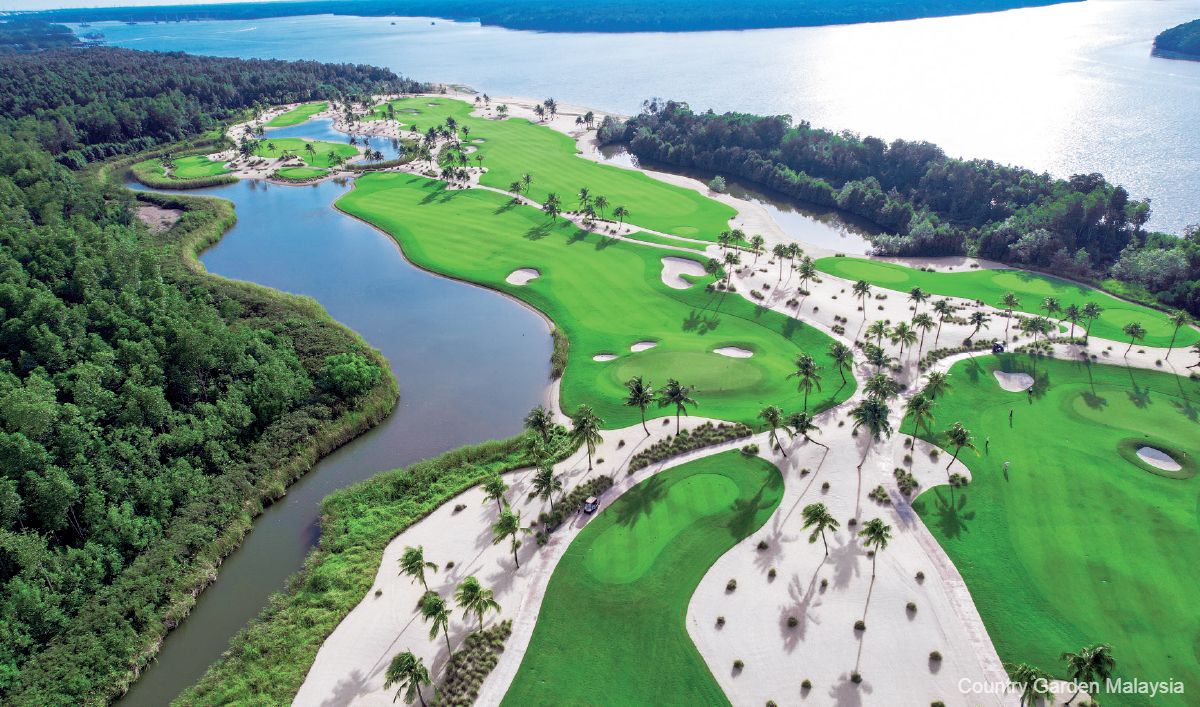
Forest City attracts between 1.5 million and two million tourists annually. Its crown jewel is Forest City Golf Resort, located on the mainland about 9km from the man-made islands. Featuring two 18-hole international championship courses, it draws golfers from Japan, South Korea and Singapore.
There is also an affordable beachfront water park that offers weekend entertainment for visiting families.
“Forest City is probably the only sandy beach in Johor Bahru. Otherwise, you have to go to Desaru, which is an hour away. To draw more visitors, we are also collaborating with some watersports academies on courses for adults and children. The beach and water park are very popular during school holidays and weekends, contributing to our growing annual tourist and visitor numbers,” Syarul says.
Meanwhile, Network School, a start-up society and experimental community based on Silicon Valley entrepreneur Balaji Srinivasan’s book The Network State, was set up in the township in October 2024.
Balaji’s private co-living and co-working hub at Marina Hotel drew hundreds of international digital nomads, crypto enthusiasts and tech workers.
However, in July 2026, the Iskandar Puteri City Council (MBIP) revoked the Network School operator’s business licence for breaching local licensing conditions. The management of the school clarified that CGPV operates solely as a commercial landlord, and that the developer is fully cooperating with the local authorities to ensure all commercial tenants adhere to the regulatory framework.
Strategic shift
Li says while Forest City’s master plan is unchanged, CGPV is shifting its focus towards commercial and industrial developments, in alignment with the government’s broader economic development plan for the state.
“We maintain the master plan as it is because, to us, it is still a very fantastic plan even after a decade. Of course, for such a mega development, you have to do it in phases, and there will be small twists and adjustments in between. But overall, we do not have plans to review the master plan. Now, we are embarking on the third phase of development,” says Syarul.
The biggest “twists and adjustments” to the master plan were its integration into the Johor-Singapore Special Economic Zone (JS-SEZ) and designation as an SFZ.
In August 2023, the government announced that Forest City would be designated as an SFZ to boost foreign investment, with incentives such as a 15% income tax rate for skilled workers and lower business operating costs. A year later, the government launched the tax incentive framework for the SFZ, which includes a zero tax rate for single family offices (SFO), a 5% corporate tax rate for fintech and global business services, and concessionary income tax rates.
In early 2025, Malaysia and Singapore signed a bilateral agreement to establish the JS-SEZ. Under the agreement, Forest City was formally incorporated as Flagship G, one of nine primary flagship zones within the 3,505 sq km economic zone.
“We started [the master plan] with residential and, maybe, this made people misunderstand that Forest City is focusing on high-rise residential developments. The SFZ designation puts us right back on track to [industrial projects],” says Li.

“Under the SFZ blueprint, the development is divided into two distinct functional zones, where the island component acts as a core financial services hub, focusing on single-family offices, fintech, foreign payment operating systems and back-office financial services. Meanwhile, the mainland focuses on smart logistics, high-tech manufacturing and global business services.”
To encourage direct investments in Forest City, the Malaysian government established the Iskandar Malaysia Facilitation Centre Johor (IMFC-J) at Forest City’s 42-storey primary office tower, Menara Delima Satu, to streamline the investment process. The centre houses 18 government agencies under one roof and acts as a single processing point for foreign investors.
“A key cornerstone of the SFZ is attracting family offices. The SC (Securities Commission) set an AUM (assets under management) threshold of RM30 million for family offices setting up in Forest City, a far more accessible entry point compared with Singapore’s S$15 million (RM47.9 million) requirement or Hong Kong’s HK$240 million (RM124.7 million) benchmark,” Li says.
Syarul stresses, however, that Malaysia is not competing with Singapore or Hong Kong in the SFO segment but is instead complementing them.
“It is about synergy. Under the SFZ rules, family offices in Forest City can invest up to 90% of their AUM globally. This means that investors can set up their operational base here in Forest City at one-third to one-fourth of the operational cost, while still leveraging Singapore’s capital markets just across the strait. It is very attractive to many family offices,” he explains.
Under the SFO Incentive Scheme guidelines issued by the SC, it is mandatory to establish a physical office in Forest City to qualify for and maintain SC approval and the accompanying 0% tax incentive.
According to Li, over 40 SFOs have secured physical office space in Forest City, with nine having formally received SC approval to date.
“We are very positive about this, though we do not have an actual target of having many of them in Forest City in the near future because it is beyond our control and SC has its plan. But it is a strong catalyst in helping to add vibrancy to Forest City because when the offices come, they bring in their professional teams — accountants, lawyers and finance and investment experts,” he adds.
Forest City is also targeting global business services. CGPV is in advanced discussions with two major international banking institutions — one looking to relocate its back-office operations from Singapore, and another expanding its operational footprint from Kuala Lumpur.
Forest City 2.0
Despite the tailwinds from the SFZ, Li and Syarul acknowledge that transforming the mega project into a self-sustaining regional economy is not without immediate, real-world hurdles. The most pressing challenge currently is cross-border physical connectivity and accessibility.
“While the project is geographically proximate to Singapore, seamlessly moving people, goods and daily commuters across borders remains a complex, multi-jurisdictional effort,” says Li. “Furthermore, regional competition from peers like Thailand, Indonesia and Vietnam means that Malaysia must continually sharpen its execution speed and policy delivery to stay ahead.”
To close this connectivity gap, Country Garden is taking interim measures while lobbying government authorities for long-term infrastructure approvals.
“Before all the major government infrastructure projects are completed, we are bridging the gap ourselves. We currently run daily direct shuttles transferring residents and workers to the Sultan Abu Bakar CIQ Second Link complex,” Li says.
For the long term, the developer has submitted plans to the joint Malaysia-Singapore ministerial committee under the Iskandar Regional Development Authority (IRDA) for a dedicated ferry terminal. Once approved, ferry routes will connect Forest City directly to Raffles Marina in Singapore and Batam in Indonesia.
“We are also asking the government for assistance to permit a direct highway connection linking straight to Tuas, and to integrate Forest City into upcoming regional rail routes like the RTS [Rapid Transit System], ART [Automated Rapid Transit] and transport corridors heading to Kulai and Senai,” he adds. “Moving people efficiently is crucial to unlocking the full value of the JS-SEZ but because these are country-to-country matters, we have to keep pushing and following up continuously.”
Simultaneously, the master developer is pivoting to boosting population density and creating high-value local jobs, away from traditional residential property sales, towards what the team calls “Forest City 2.0”.
“We are not launching any more residential projects in the near future, but focusing on clearing the inventory. We will advance commercial and industrial land development earlier than originally scheduled to inject immediate economic vibrancy,” Li says. “Our next focus is to bring in companies and industries to invest or establish their presence here.”
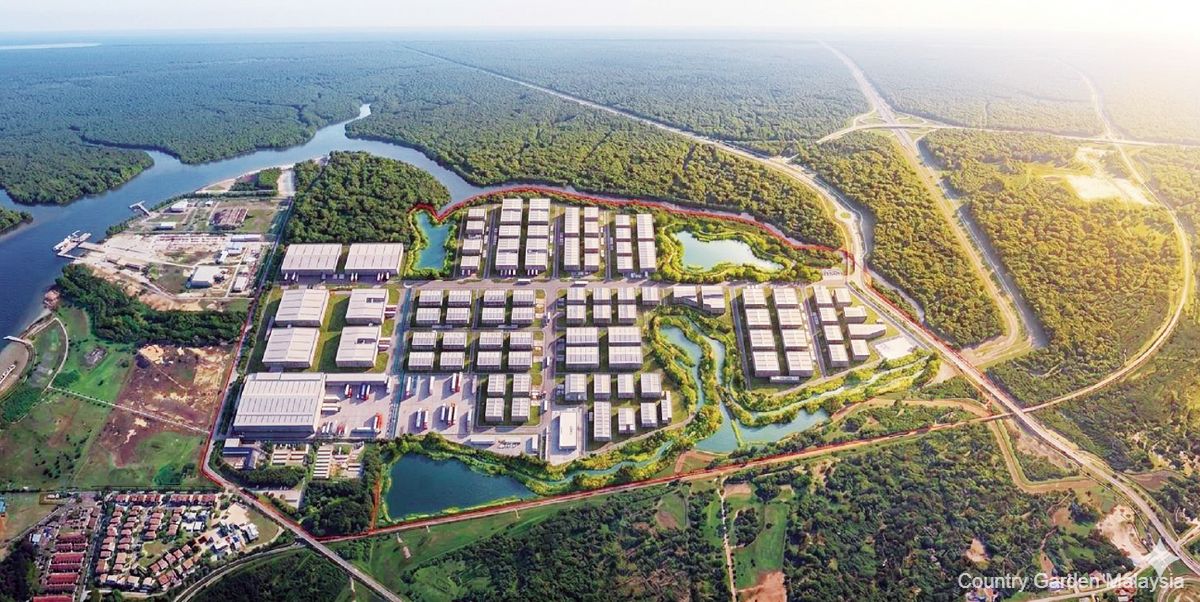
Acknowledging the importance of generating sufficient jobs to increase Forest City’s population, CGPV is actively trying to draw data centres, logistics players and manufacturers to its upcoming 418-acre industrial park.
“We need to create real economic dynamics. If you don’t generate jobs and economic substance, you cannot sustain a population,” Li stresses.
The response to this industrial shift has been positive. In the first half of this year alone, the developer logged over 300 company enquiries and secured a 40-acre industrial land deal with a manufacturer in Phase 1 of the industrial park, paving the way for ready-built factory developments in Phase 2 should market demand sustain.
In another strategic partnership, Country Garden recently signed a term sheet with Penang-based Oriental Holdings Bhd (KL:ORIENT) to develop a RM750 million healthcare hub in Forest City, anchored by a 500-bed hospital alongside comprehensive medical supply chain services.
“Internationally, we are actively introducing Forest City to big-name [multinational corporations]. It is not so much for their name, but the entire supply chain. We are looking to bring in ‘queen bee’ investors,” Li says. “We have been doing roadshows, especially in China, to introduce the JS-SEZ and Forest City SFZ. We went to Shenzhen and Suzhou, which have some of the most successful industrial parks in China.”
Apart from the industrial park, CGPV has also received enquiries from international investors interested in private island parcels.
“It is something that we are looking at. Instead of standard residential towers, we can custom-reclaim approved island plots, such as 1.5 to two acres, based entirely on an investor’s specific operational or residential requirements. It’s about being adaptive to what the current market actually demands,” he says.
Road to 2030 and beyond
Apart from Forest City, Country Garden Malaysia has four other major developments in Johor and the Klang Valley, executed largely through JVs.
“Out of our five projects in Malaysia, four are structured as JVs,” Li explains. “Only Danga Bay is 100% held by Country Garden Malaysia. We welcome JVs because local partners bring value to the table, though for master site design, we prefer to lead.”
In Johor Bahru, Country Garden Central Park has completed three phases comprising over 3,000 residential units that are nearly fully sold. The developer is now planning subsequent sub-phases over a 10- to 12-year development cycle.
In Kuala Lumpur, the initial two phases of township development Lake City in Taman Wahyu are completed and sold out, with Phase 3 scheduled for launch next year. The remaining four parcels have been earmarked for development over a 15-year period.
In Semenyih, Selangor, residential development Diamond City launched its final landed parcel in September 2025, which is expected to wrap up construction within two years.
With a substantial land bank in its existing portfolio, the developer will focus its resources on executing its active pipeline over the next decade.
As the interview draws to a close, both Li and Syarul reflect on the long-term nature of master township development.
“Rome was not built in a day,” Li says. “When we first came to this coastal area in Johor, it was completely rural. Today, the infrastructure is firmly established. Development never moves in a straight upward line; it moves in spirals, but it always moves forward.
“We wish the public to know that since the first day Country Garden has been here in Malaysia, we have wanted to be here long term. Of course, there are twists and turns over the years, but we cannot deny the contribution of the company in Malaysia.”
He says Country Garden has invested RM32 billion in Malaysia, including RM20 billion in Forest City alone.
“We have created jobs, contributed to the country’s tax revenues and trained local skilled workers. Most importantly, after so many challenges and uncertainties, we were here, and we are still here today. The fundamentals are in place, and we have absolute faith in what Forest City will become.”
Save by subscribing to us for your print and/or digital copy.
P/S: The Edge is also available on Apple's App Store and Android's Google Play.