

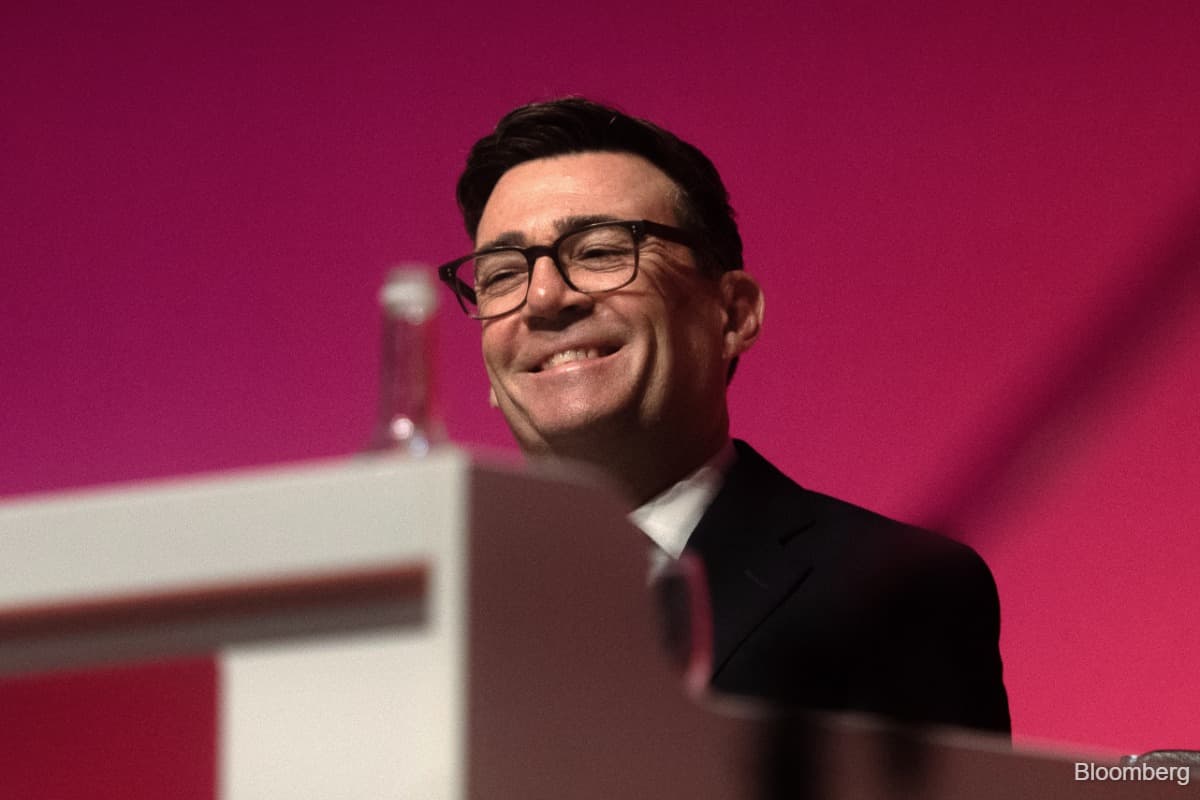
(Sept 30): Prime Minister Andy Burnham vowed to reopen some of the UK’s most vexing debates, from Brexit to pensions to the electoral system, in a sweeping and at times tearful call for change that resets British politics.
Burnham laid out the agenda in a speech to the Labour Party’s annual conference in Liverpool that sought to counter critics who accused him of prioritising style over substance. Instead, he promised a “new economy and a new politics”, pledging to curb the soaring cost of pensions, repeal the Thatcher-era ban on public ownership of water companies and explore options for a closer relationship with the European Union (EU).
“I will make a break with the direction of the past 40 years,” he said on stage at the Labour Party’s annual conference at Liverpool, taking aim at a loss of “control” over the UK’s borders and public services, which he blamed on Brexit and privatisation.
Burnham made no mention of his chief political rival, Reform UK’s Nigel Farage, in a speech that instead attempted to offer a state-driven antidote to the right-wing populism that’s frayed the UK’s two-party system. The only political opponent he mentioned by name was the separatist Scottish National Party’s First Minister John Swinney, who he recollected threatening recently that Burnham would be the last prime minister of a united kingdom.
The prime minister hit back in an emotional retort, in which he invoked his the aspirations of his father, who died two weeks ago. Burnham said he would instead be “the first to rewire it to make it work for all people and places, driving power out of Whitehall and into every postcode of Wales, Scotland, Northern Ireland”.
The gilt market had a limited reaction to Burnham’s address. While yields on longer-term government bonds rose slightly from the day’s lows, the moves were driven more by a rise in US Treasury yields. At 5.38%, benchmark UK 10-year yields were four basis points lower on the day.
UK swap spreads, which measure the difference between UK government bond yields and risk-free rates and act as a proxy for sentiment about UK fiscal risk, were little changed.
“Gilts should find comfort in Burnham’s Labour conference speech today (Tuesday), but external forces continue to be the bigger force,” said Michiel Tukker, a rates strategist at ING Bank. “Plans to reform the pension triple lock shows a dedication to fiscal credibility and a willingness to review difficult and controversial topics. Meanwhile, no obvious inflationary policies were presented.”
The centrepiece of Burnham’s new plan was a pledge to build a new National Care Service, modeled on the country’s National Health Service, which is free at the point of use. He explained that his government would change the mechanism by which pension payments are increased, to help pay for the plan.
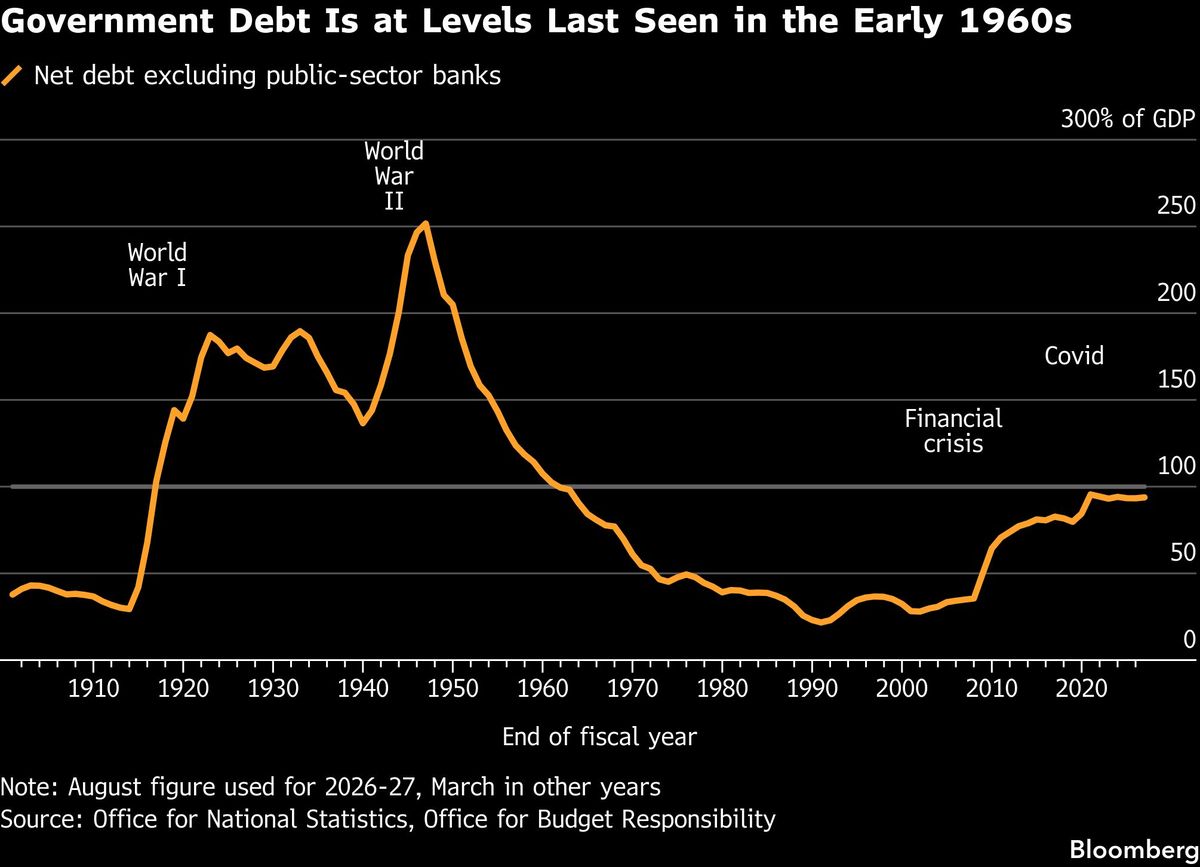
He vowed not to fund the change through an increase in borrowing, which has soared in recent decades.
The so-called pensions triple lock has been in place since 2011, and guarantees that the benefit rises annually by the highest of inflation, wage growth or 2.5%. It’s helped to reduce pensioner poverty, but many economists warned the policy is increasingly unaffordable given other pressures on the public purse.
The move opened him up to criticism from both right-wing opponents and the left-wing of his own party. “I doubt it will save that much, but it’s such a gift to Reform,” John McDonnell, a former shadow chancellor under Jeremy Corbyn, told Bloomberg. “There are so many alternatives to funding social care without cutting pensions. It’s a pity this was included as it has spoiled a good speech.”
Farage, the leader of Reform, tweeted simply: “I will cut foreign aid, migrant welfare, welfare fraud, and mad net zero spending. Andy Burnham will cut your pension.”
In his speech to Labour, the prime minister vowed to bring water, energy and housing under greater public control. He told the party’s annual gathering that he would “break the mold” and tackle issues his predecessors had failed to address. To that end he pledged to repeal the ban on public ownership of water companies instituted in the 1980s.
“We rely on them, we pay for them, and once again we will have power over them,” Burnham said. He said regional mayors would have new powers to hold water companies to account, that loopholes used to pay bosses “excessive bonuses” would be closed, and that there would be “tougher consequences” for firms which “repeatedly fail”.
But he rejected the criticism that it was anti-business. “It’s the opposite. Businesses need the basics to be functional and affordable too, as does the wider economy.” Aiming most of his ambitions at the longer-term, the prime minister steered clear of revealing anything about the budget that’s taking place in a month’s time, and which has the City of London wary about potential tax increases that could target banks and capital gains.
Burnham used his speech to argue Brexit had done more harm than good to the UK, and hinted he wants the country to move closer to the EU.
At a UK-EU summit planned for later this year, Burnham said he would “lay out to the country what I believe the different options are for Britain’s long-term relationship with our European partners”, and said he would seek to find consensus about the best path forward.
Ahead of his appearance, Burnham was seeking to move away from the cheaper, feel-good policies that have characterised his first two months in office and flesh out his longer-term vision for tackling some of the biggest challenges facing the UK, in a bid to turn the page on the country’s political instability.
He said he is prepared to take political risks, even if it meant harming his own career, to do so and said he wouldn’t shy away from “the things politicians usually avoid”.
“I would love to go quicker, but I have to be honest about what the country can afford. I will stick to our fiscal rules, to get our borrowing and debt down,” he said, a day after his Chancellor of the Exchequer John Healey vowed fiscal discipline.
Burnham said he wants to take on the thorny topic of electoral reform, something historically avoided by the main parties who could lose out from changing the voting system to favour a proportional representation approach.
His senior ministers, including Healey, used their conference appearances this week to roll the pitch for more difficult decisions to come, including plans to cut spending on benefits for working-age Britons. Labour rebels forced Burnham’s predecessor Keir Starmer into a damaging U-turn last year on relatively modest plans to trim spending.
“If you agree with enough of what I’ve said, get behind this plan and get behind each other,” Burnham told his party. “It’s time to draw a line, to move beyond a decade of drift and division, to bring a spirit of unity and positivity back to our country.”
Uploaded by Tham Yek Lee