


(Sept 30): South Korea expects its national tax revenue to soar to a record high this year, underscoring the scale of a semiconductor-driven windfall underpinning President Lee Jae Myung’s ambitious investment agenda.
Tax receipts are forecast to reach 478.6 trillion won (US$353 billion or RM1.44 trillion) in 2026, up 28% from last year, according to the Ministry of Finance and Economy. That would exceed the estimate used in this year’s supplementary budget by 63.2 trillion won, or 15.2%, as chip profits, special dividends and stock trading generate more revenue than anticipated.
The projections would put annual collections above 400 trillion for the first time, and roughly 21% higher than the previous record set in 2022. The 104.7 trillion won increase from last year illustrates how the artificial intelligence boom is reshaping South Korea’s state finances as well as its export-driven economy.
The windfall is central to Lee’s plans to channel the chip boom into longer-term investment. The government has proposed raising spending by a record 12.8% to 820.9 trillion won next year, with funding for AI, chip infrastructure and programmes aimed at spreading the benefits of growth.
Under that proposal, the so-called new Future Response Fund would receive 162.3 trillion won, largely reflecting tax revenue expected to exceed its long-term trend. Of that, 45.4 trillion won would finance programmes already included in next year’s spending plan, while the rest would help reduce new bond issuance and build reserves for future needs.
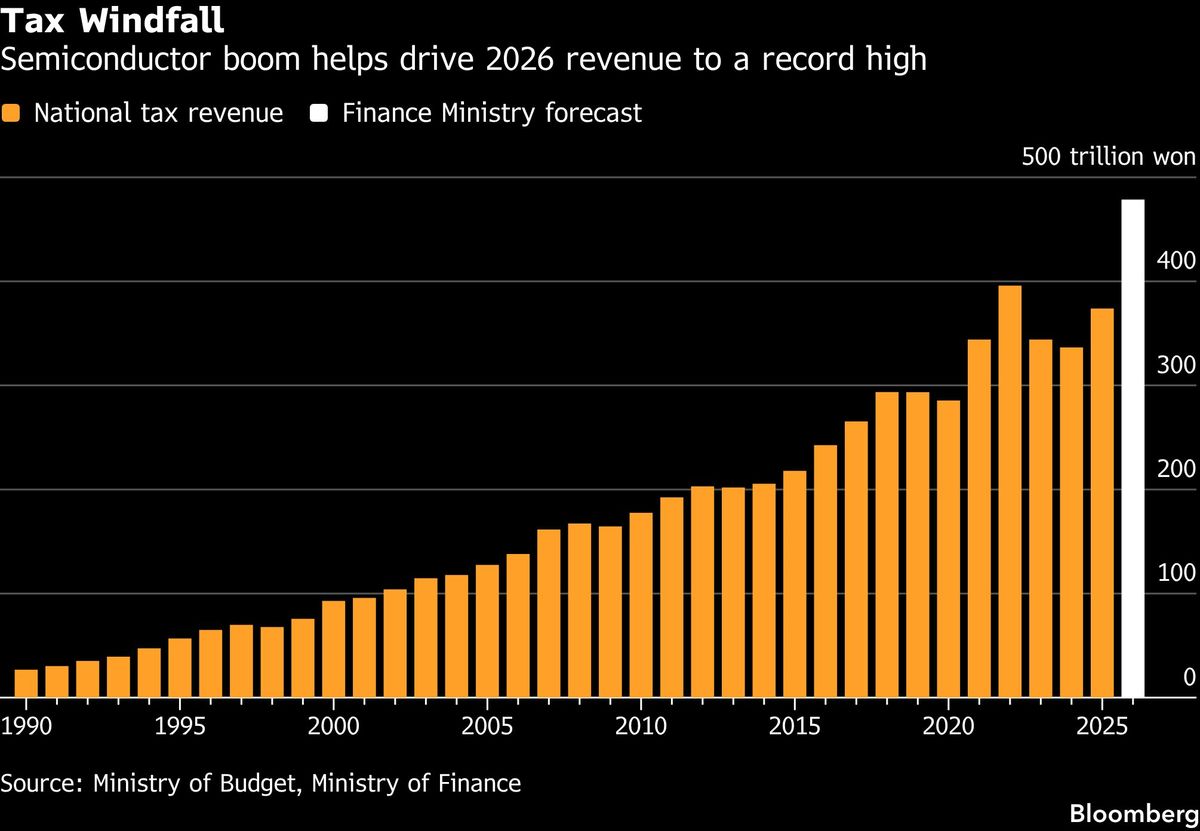
The latest revision shows how quickly chip earnings have outpaced the government’s assumptions. The impact extends beyond corporate taxes. Bigger bonuses in the semiconductor and financial sectors are boosting income-tax receipts, while Samsung Electronic Co’s announced plan to pay 30 trillion won in third-quarter cash dividends is adding to dividend-tax revenue.
Stronger stock trading has increased tax receipts from securities transactions, while recovering private consumption and rising imports have supported value-added tax receipts, the ministry said. Increased home transactions are also boosting capital gains tax revenue.
The surge also highlights the importance of semiconductor earnings to the government’s fiscal ambitions. Its proposed expansion of spending and investment rests in part on an exceptional increase in tax receipts from an industry prone to sharp swings in profitability.
Uploaded by Chng Shear Lane