

(Sept 29): The Canadian economy is tracking for weaker growth in the third quarter after roaring back to life between April and June.
Statistics Canada's preliminary estimate for real gross domestic product points to a 0.2% expansion in August, according to industry-based data, as increases in mining and quarrying were partially offset by decreases in oil and gas extraction.
That follows flat growth in July, with both the goods-producing and services-producing sectors essentially unchanged.
StatCan also revised up monthly growth in June to 0.4% from 0.3%.
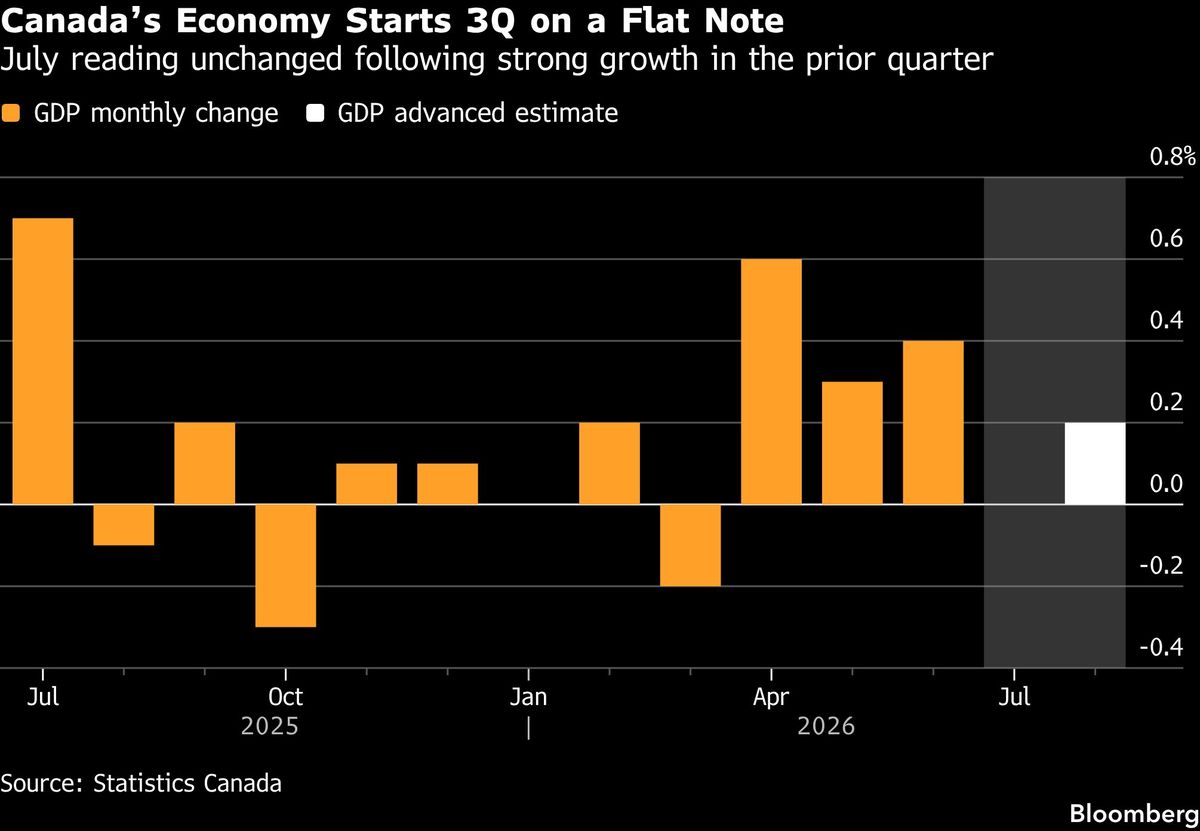
Economists surveyed by Bloomberg expected the economy to remain flat in July, in line with StatCan's own estimate.
Tuesday's report confirms the economy started the third quarter on a softer footing, after posting 3.3% annualised growth in the second quarter, according to expenditure-based data.
The Canadian dollar kept its modest loss and Canadian bonds remained steady after the release of the GDP data. The loonie had lost more than 2% against the US dollar in September so far and was trading at 1.4181 per US dollar, the weakest level since early July.
“Overall, the GDP number suggests the Canadian economy remained robust over the summer. However, with the escalation of the trade war with the US in recent months, we should expect weaker growth, possibly starting in September,” said Servus Credit Union chief economist Charles St-Arnaud in an email.
Additional US tariffs and import bans are expected to create economic headwinds in the second half of the year. Bank of Canada governor Tiff Macklem warned last week that the new levies could slash growth by roughly half to below 1% in the fourth quarter.
At the same time, the central bank has increasingly sounded the alarm over inflationary risks from the Iran war. Macklem has warned if the central bank is too slow to raise rates, it would likely need to raise them even faster and higher.
Traders in overnight swaps placed the odds of a rate hike in October at about 50% prior to the GDP release.
Construction rose by 1.3%, rising for a fourth consecutive month. The expansion was driven by all subsectors, with the construction of a new hospital in Ontario contributing to growth in non-residential buildings.
Utilities also increased by 1.7%, as a heatwave in many parts of Canada drove up demand for electricity.
Meanwhile, manufacturing fell by 0.9%, marking the first decline in four months. A 5.7% decrease in petroleum and coal product manufacturing contributed the most to the contraction amid unplanned downtime at a southwestern Ontario refinery.
The mining, quarrying and oil and gas extraction sector also fell by 0.5%, recording declines across its subsectors. Lower oil and gas extraction, except in oilsands, drove the decline as exports of both commodities fell.
Retail trade also decreased by 1%, with declines posted across all subsectors, except building material and garden equipment and supplies dealers.
Uploaded by Arion Yeow