

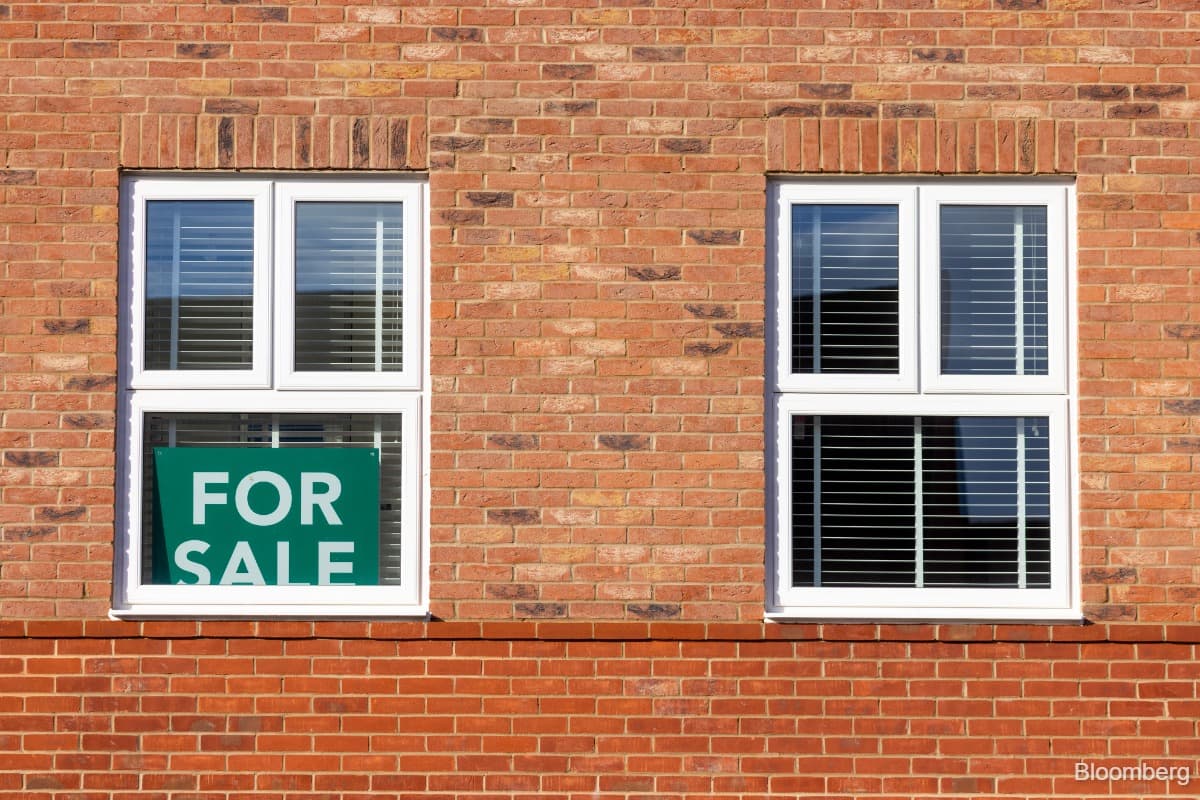
(Sept 29): Demand for home loans unexpectedly fell in August as higher borrowing costs triggered by the Iran war put off prospective homebuyers.
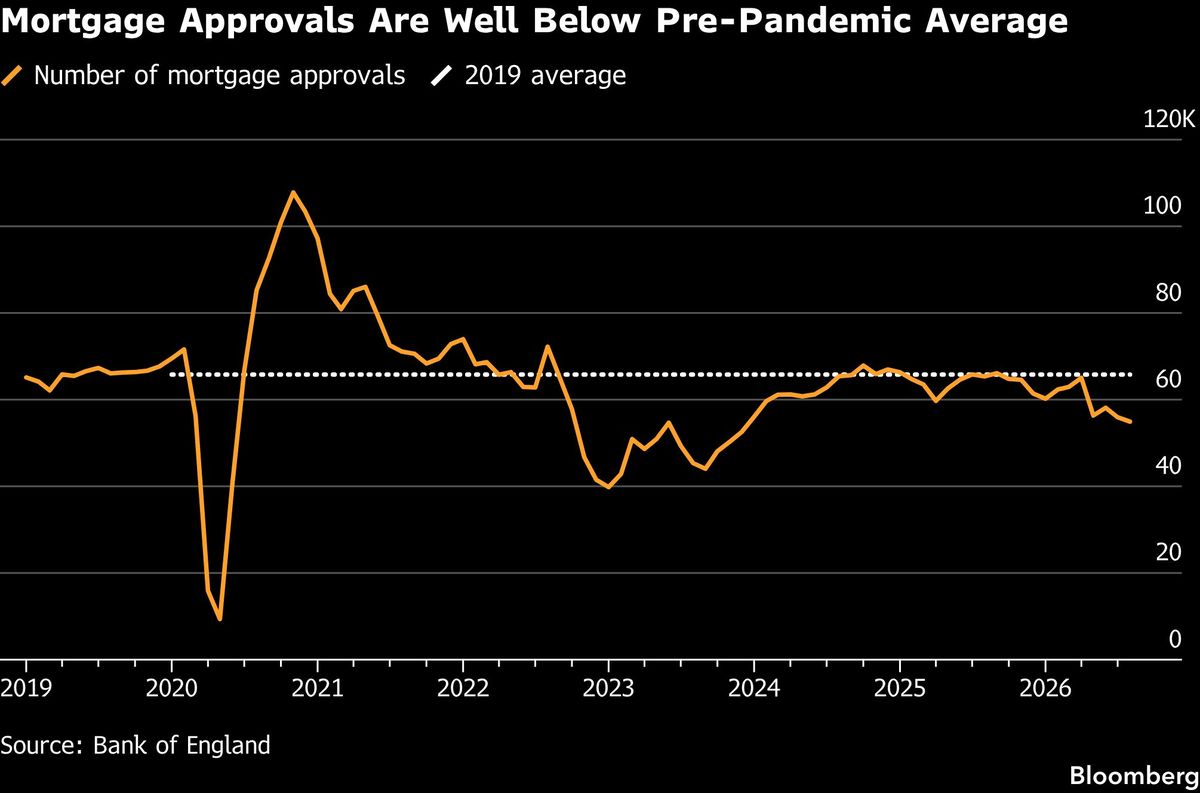
The number of mortgage approvals fell for a second consecutive month to 54,918 from a downwardly revised 55,928 in July, the Bank of England said Tuesday. It was the lowest figure since December 2023. Economists expected no change.
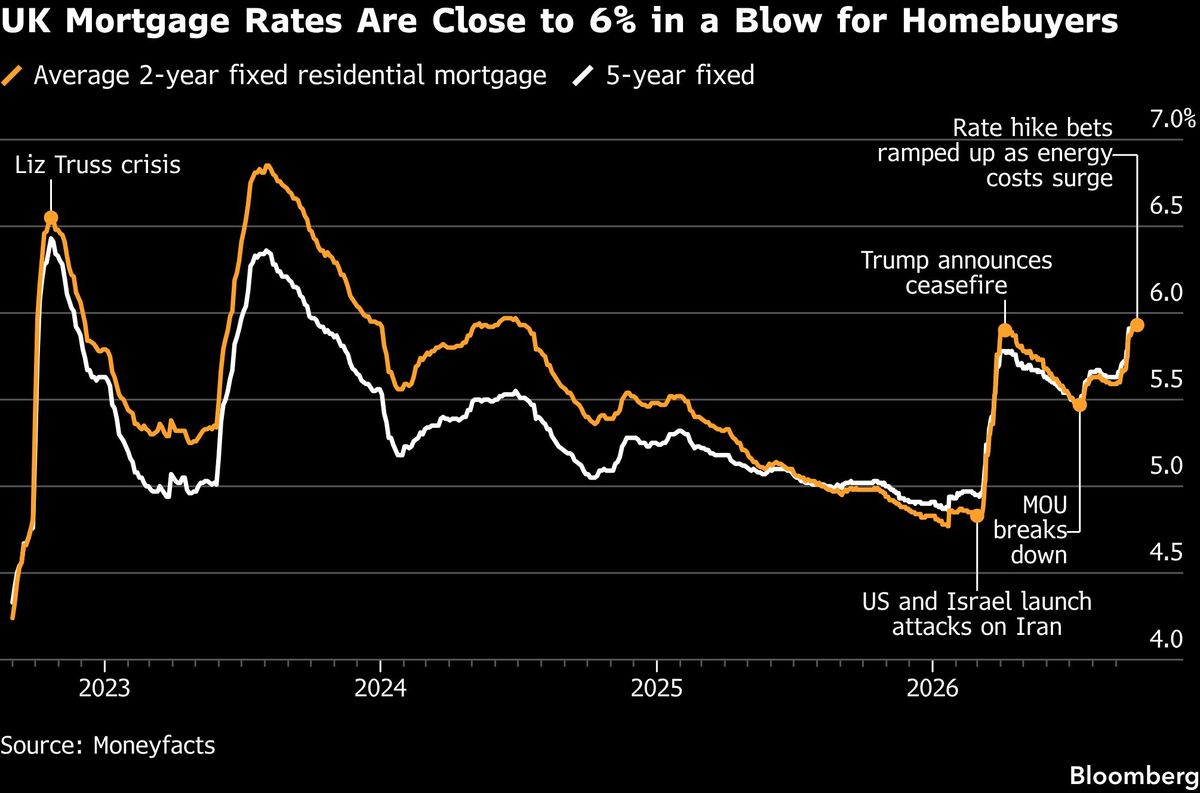
The report suggests that borrowing costs are taking an increasing toll, with key mortgage rates now close to 6% as the conflict in the Middle East continues. The housing market is also under pressure from growing speculation that Chancellor of the Exchequer John Healey will increase property taxes in his debut budget to stabilise public finances.
Property surveyors expect house prices to fall over the next three months. London, a market that’s especially vulnerable to potential levies on high-value homes, is looking particularly weak. Official figures showed average house prices in the capital declined by around £20,000 from their peak in mid-2025.
“Many prospective buyers have understandably been taking a more cautious approach and waiting to see what measures are announced in the Autumn Budget,” said Nathan Emerson, CEO at Propertymark.
Healey faces a tough balancing act between easing investors' worries around the UK’s growing debt pile and supporting households with the cost of living. The government has said it wants to introduce a new loan scheme to help first-time buyers purchase new-build homes, as it tries to sustain some of the confidence boost it delivered over the summer.
The Bank of England is expected to provide limited support going forward. Rate-setters have warned that an increase in interest rates is becoming more likely the longer the war in Iran continues, as elevated energy prices risk spreading across the economy.
While homebuyer demand is weakening, consumers have been relatively resilient since the start of the Iran war. Cushioned by a healthy savings buffer, households have been saving less and borrowing more to spend their way through the energy price shock.
The latest BOE figures showed consumers borrowed an extra £2.5 billion (RM13.5 billion) in August, up from £2.1 billion in July and well above the six-month average of £1.9 billion. Net borrowing on credit cards rose to £1.2 billion from £900 million. Other forms of credit, such as car dealership finance and personal loans, also increased.
“The rise in borrowing comes alongside a two-year high in consumer confidence, driven by a better outlook for personal finances and economic conditions,” Katie Clinton, head of financial services advisory at KPMG UK, said. However, she added that the figures also reflect more people taking credit “to get by".
“With inflation expected to rise in the coming months and as households head towards the traditionally busy pre-Christmas spending period, pressure on budgets could intensify,” Clinton added.
Uploaded by Arion Yeow