

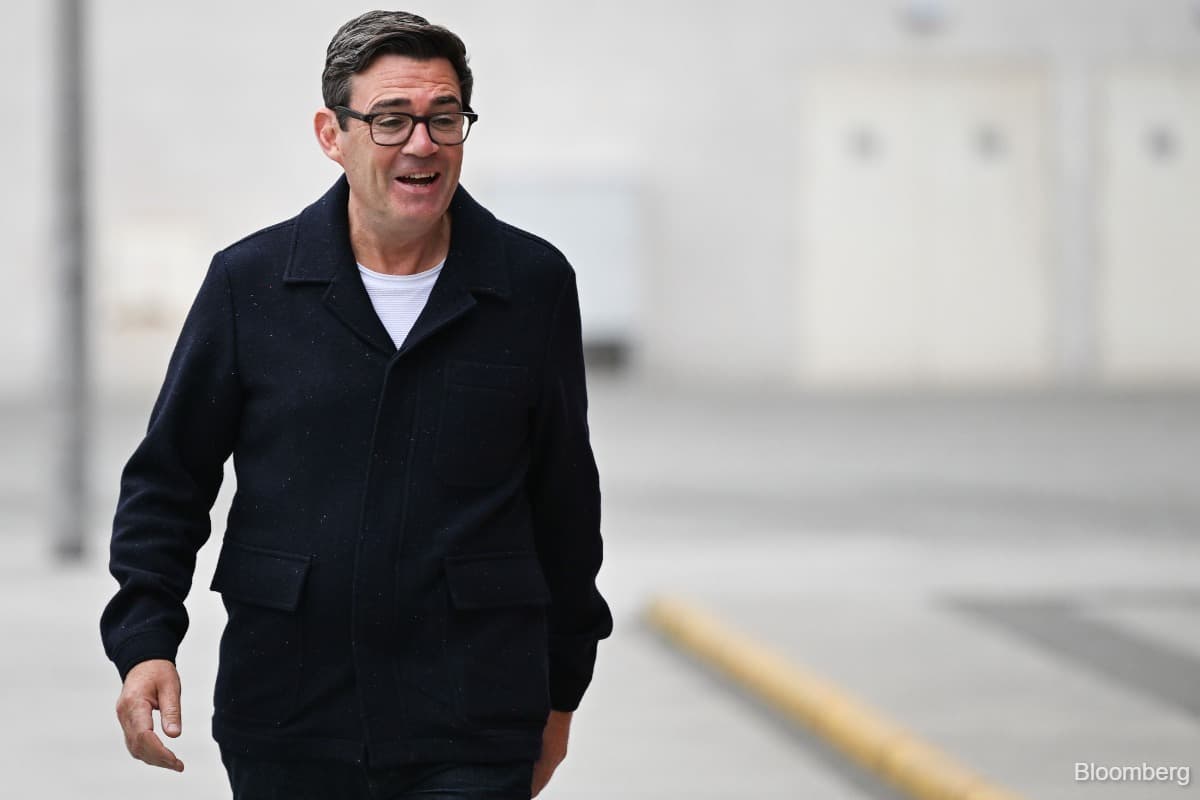
(Sept 29): UK Prime Minister Andy Burnham will pitch for honest political debate as the antidote to populism, as he reveals his plans for taking on thorny issues at his party’s annual conference.
He’ll say that involves spending money to address a crisis in Britain’s social care system, raising the prospect that he could pay for it by taking on the totemic triple lock that protects pension increases.
In his first speech as the prime minister to the governing Labour Party’s gathering in Liverpool, Burnham will make clear his willingness to take on the challenges he will argue predecessors have ducked, including plans to tackle rising youth unemployment and fix a crisis-hit care system. He’ll pledge to end the “drift” of recent years by providing more “direction” to the country.
Labour officials expect Burnham could signal he wants to begin a national conversation about reforming the state pension to help pay for social care. Many economists say the country’s so-called triple lock, which guarantees that the state pension rises by the highest of inflation, wage growth or 2.5%, is unaffordable.
No major political party has yet been willing to propose dropping the commitment, fearful of antagonising Britain’s older population. Ministers have also signalled this week that Labour’s longer-term ambitions are unlikely to be affordable without tax rises.
A Labour spokesperson declined to answer questions about whether the party would change the triple lock, saying only that the party was committed to keeping it until the next general election.
UK gilts opened higher on Tuesday, outperforming European and US counterparts, in a move driven by lower energy prices. Benchmark 10-year UK yields fell five basis points to 5.37%.
There was limited reaction to overnight reports on Burnham’s speech. However UK swap spreads, which measure the difference between 30-year UK government bond yields and risk-free rates and act as a proxy for sentiment about UK fiscal risk, have narrowed slightly.
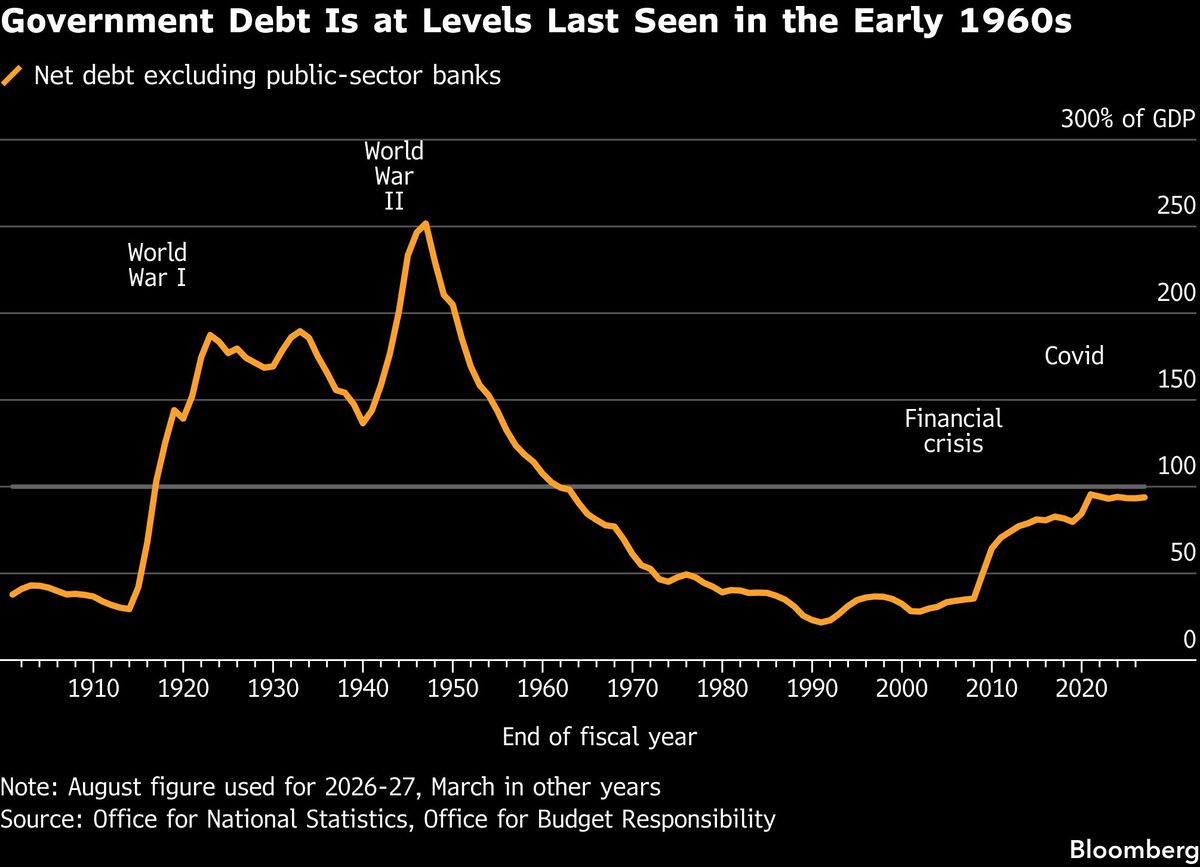
By turning to meaty and long-standing issues, Burnham is seeking to counter criticism from opposition parties that he’s relied on announcing relatively cheap, feel-good measures to lift sentiment during his first two months in office. The challenge is that the larger policies come with a price tag, and bond investors will be watching closely for any new spending that could increase the country’s debt burden.
Burnham will tell delegates in Liverpool: “We can’t carry on as we are,” according to remarks briefed in advance by his office. “Politics-as-usual has taken Britain backwards. More of the same isn’t good enough and isn’t going to get us where we need to be.”
Some in Labour are nonetheless wary of the political risk of going into a general election, which Burnham has said will take place in 2029, pledging to dent pensioners’ income and raise taxes. Sharon Graham, the general secretary of the Unite trade union, told the BBC it would be “morally wrong” to end the triple lock and that doing so would be “electoral suicide”.
The start of Labour’s four-day conference in Liverpool was dominated by Burnham’s promise to revamp the care system for the elderly and infirm to make it universally free at the point of use, like Britain’s National Health Service. While he has hinted at new taxes to pay for the policy he has not yet set out what form these will take, prompting accusations from opposition parties he has no concrete plan to pay for it. Reforming the triple lock could get him part of the way there.
Burnham on Sunday promised to outline his planned overhaul of the system and put it to the public in a vote at the next general election, due in 2029. Pressed on how it would be funded, Burnham told LBC a day later: “I will reveal detail tomorrow.”
He said he couldn’t move faster because of the constraints imposed by Labour’s 2024 election manifesto, which pledged not to put up three key levels of tax, the Treasury’s biggest revenue raisers. He also said it “will take time, I’m afraid, to get the detail right.”
As well as social care, Burnham’s office promised “a raft of policies and commitments” in his speech, including on energy, water and housing. There was little detail beyond that, but there have been hints in recent days, with the prime minister saying last week that he would lay out a plan to reset the water industry — a sector he has repeatedly hinted should be under public control.
The Labour government will offer “a more serious prospectus for Britain than people have been offered in a generation”, the prime minister will say. “I accept people will not agree with every part of it, but I believe it can turn Britain around.”
Social care is probably the thorniest issue Burnham is seeking to resolve. He tried to take it on as the health secretary 17 years ago, with a plan to tax estates after people had died. That was branded a death tax by Conservatives. The Tories in 2017 attempted reforms of their own that were branded a dementia tax.
“This has been highly contentious: all parties have used this for point-scoring purposes, dementia tax, death tax, you name it,” he said in the interview. “The problem with that is, it’s put politics before people, and that’s why it’s been unreformed for all of these years.”
Also on the prime minister’s to-do list is tackling the country’s youth unemployment crisis, with the out-of-work rate among 16 to 24-year-olds at 16.4%, the highest since 2014.
A review into the issue by former Labour health secretary Alan Milburn is due for publication imminently, and Work and Pensions Secretary Pat McFadden hinted on Sunday that it would make recommendations around tightening the criteria on benefit eligibility. That in turn would help to bear down on another pressing issue, Britain’s soaring benefits bill.
Another announcement planned by Burnham will be to establish a public body called Great British Grid to work with private electricity network companies in order to speed up grid connections. The government said it would expand the rights of businesses to build connection infrastructure themselves, with the option of co-investment from the new organisation.
Burnham will also lay out proposals to deliver on a pledge of asserting more public control over the country’s water industry, which has been plagued by leaks and sewage spills in recent years. Last week he promised his speech would contain details of the planned reset, saying “privatisation has failed and people can see that very clearly in relation to water”.
Britain is currently “run for vested interests, not in the public interest, with power held in too few hands”, Burnham will say on Tuesday, according to his office. The country needs “more control of the basics so that we can make it more functional again”, he’ll add. He’ll also reiterate his view that successive governments have pursued “flawed thinking of the last 40 years”.
“Everyone wants less drift and more direction,” the prime minister will say, pledging to “answer that call”. “Hope comes from honesty and from saying the things politicians usually avoid.”
Uploaded by Tham Yek Lee