


This article first appeared in Wealth, The Edge Malaysia Weekly on September 28, 2026 - October 4, 2026
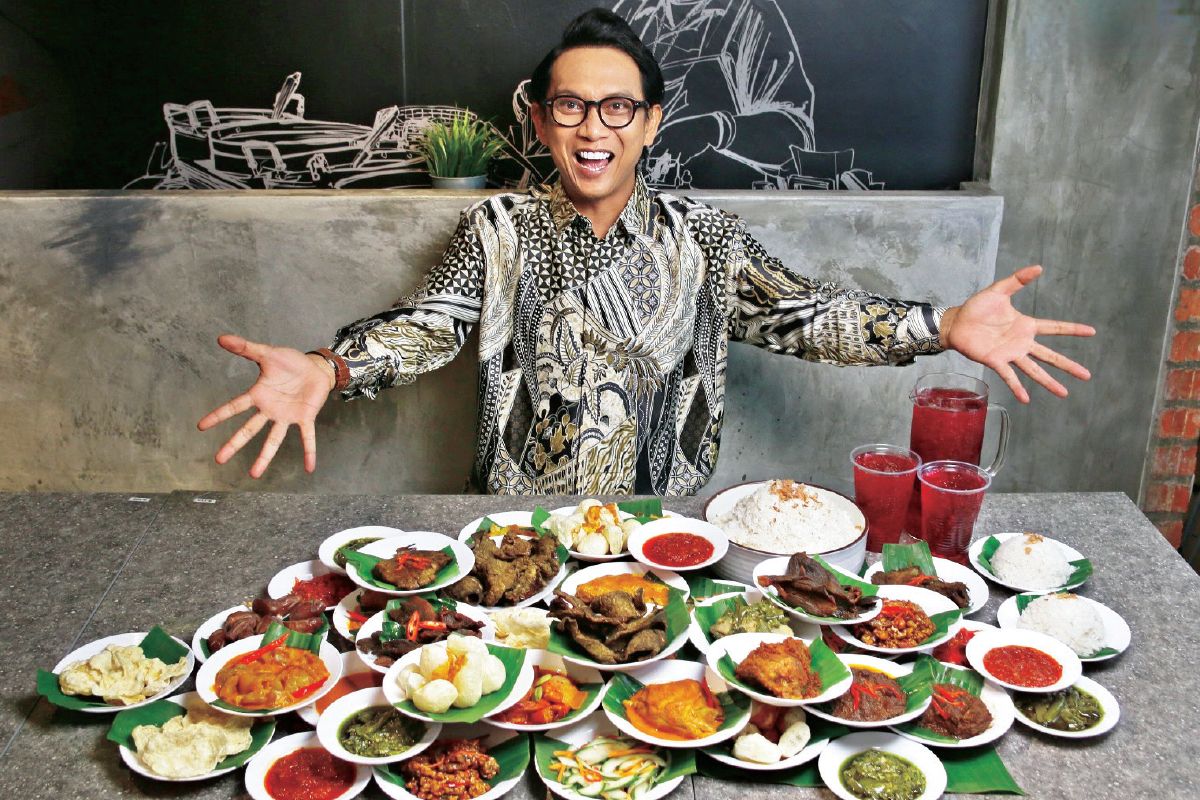
Transitioning from the entertainment industry to the food and beverage (F&B) sector is not easy, but when comedian Ajak Shiro heard his child express a desire to start a fried chicken business, he thought of making the idea a reality.
Ajak, whose real name is Mohd Hanaffi Razak, looked for a business partner. This ended up being Aliey Othman, an F&B industry veteran with 20 years of experience and involvement in many notable brands.
Starting with fried chicken as the foundation, their conversation gradually evolved into a discussion on nasi padang, a Minangkabau meal of steamed rice and a variety of side dishes.
“In Malaysia, nasi padang hasn’t become mainstream yet. Moreover, it is considered expensive, so we thought of coming up with a large-scale nasi padang brand, but with low prices,” says Ajak.
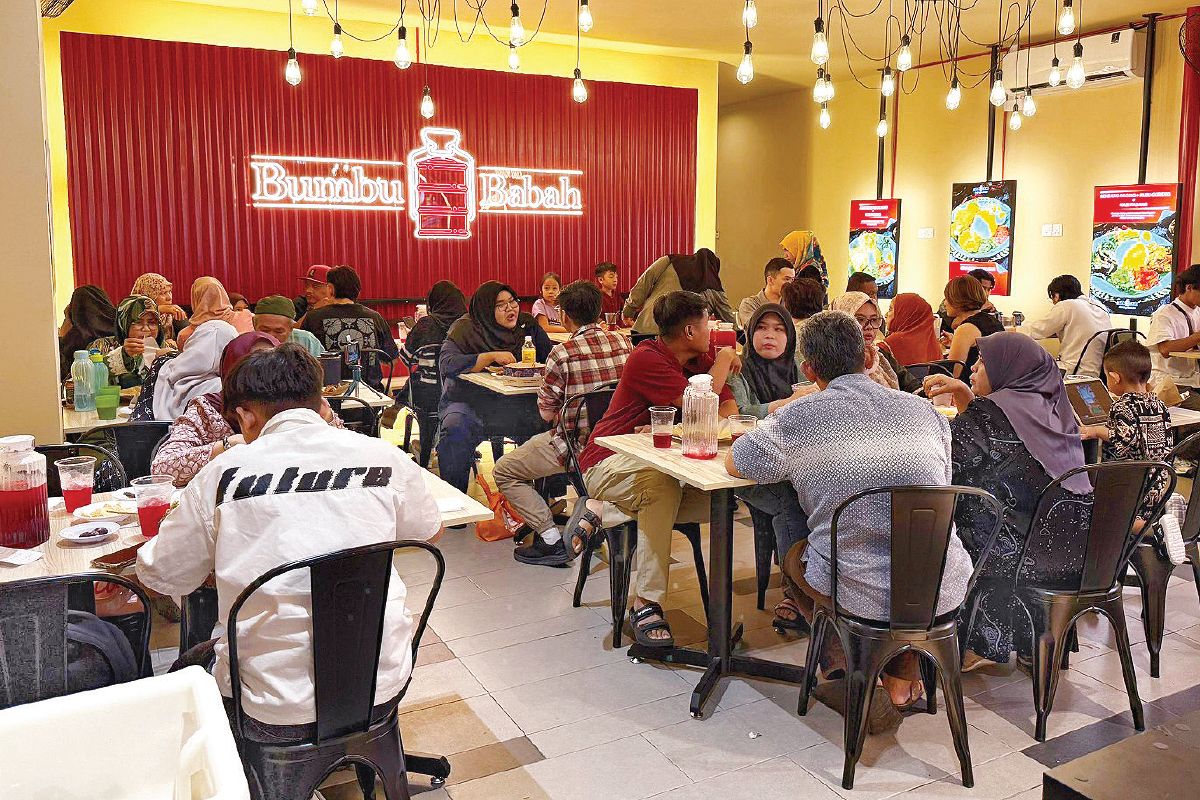
He went on to start Babah Ventures Sdn Bhd (BBV) and opened its first stall, named Bumbu Babah, at a food court in Giant Batu Caves in November 2024. There are now more than 50 outlets across Peninsular Malaysia and the company is on track to reaching 60 outlets this year.
Delivering affordable and accessible food is important to Ajak. So, a plate of nasi padang can be priced as low as RM9.90. The uncompromised value the company offers in terms of price point and flavour has become Bumbu Babah’s unique selling point, he says.
“At this time, we understand the current economic situation. If we look at the customers now, they value the experience of eating in restaurants more, they like good food, but they’re quite sensitive to price,” says Ajak.
To accelerate its next stage of growth, BBV will launch an equity crowdfunding (ECF) campaign on pitchIN to attract institutional investors with its numbers, create a fundraising exercise with customer engagement and possibly look at fast-tracking to an initial public offering (IPO) by 2028 at the earliest. On the ECF platform itself, the company aims to raise between RM5 million and RM20 million, with shares issued at RM10 each.
BBV plans to allocate 40% of the funds from the ECF campaign to acquiring its top-performing licensed outlets. Two activities, the setting up of corporate-owned outlets in malls and supporting the rollout of the new concept, will be allocated 25% each, while the final 10% will go to enhancing technology and its working capital.
Behind the quick expansion
The business has been able to expand quickly because its licensees have shown interest in opening more outlets.
“We call it a licensed-and-managed concept because we are very mindful that we don’t want licensees or franchisees to run the outlets their own way and steer away from the standard operating procedures (SOPs). So, we came up with a structure where they provide the funding and become a passive investor in the outlet,” says BBV corporate finance manager Chan Eu-Jinn.
This is how the system works: the licensee fully owns the outlet, but BBV continues to run it as if it belonged to the company. BBV also charges a management fee based on a percentage of the licensed outlet’s earnings before interest, taxes, depreciation and amortisation (Ebitda) on a monthly basis. “If the outlet is not profitable, we do not charge the management fee, so we have to ensure that it is run properly,” he notes.
There are currently seven corporate-owned Bumbu Babah outlets. The remaining outlets are owned by licensees.
BBV aims to continue expanding, but with a strategy centred more on mall outlets.
“Our MyTown, Melawati Mall and IOI City Mall outlets are doing well, but we are still not in a lot of the major malls in the market yet. With the funds raised, we can then invest in this,” says Chan.
BBV acknowledges that F&B brands have a tendency to overexpand, and Chan says the company has addressed this by setting a target number of outlets for Bumbu Babah restaurants so as to retain operational quality. “When we hit our target number [we may look more into] maintenance, but we will not be growing for the sake of opening and then cannibalising ourselves.”
Bumbu Babah was also able to grow quickly with the introduction of a centralised kitchen to ensure the quality of the food across its licensed outlets remains consistent.
Chan says the curry, sambal, proteins and sides are prepared in advance and sent straight to the outlets. This contributes to the efficiency of its operations, as the staff are able to run the basic equipment at the outlets by following the SOPs.
Ajak plans to develop more offerings beyond Bumbu Babah’s nasi padang menu. Reflecting this resolve is BBV’s recent collaboration with local music group KRU to open a fine-casual-dining restaurant called KRU Cafe.
“We will also have stalls where we will have food menus that include Chinese and Indian food. This is one of the projects that we will implement in time to come, and I think this is one of the reasons why Bumbu Babah will continue to grow in the F&B industry for many more years,” he says.

On solid operational and financial ground
Based on its audited financial statements, BBV is in a strong financial position. The company has four income streams: retail sales at corporate-owned outlets, central kitchen supplies, monthly management fees and turnkey outlet set-ups involving the building and selling of completed outlets to licensees.
For its financial year 2025 (FY2025) ended on Dec 31, the parent company made RM10.4 million in revenue, while the consolidated group revenue came up to RM25.9 million. As for net profit, the parent company recorded RM2.5 million, while the group registered RM3.2 million.
This gives the group a net profit margin of 12.5%, which Tradeview Capital research analyst Tan Jia Hui says sits at the higher end of the F&B industry norm of 5% to 12%. “The normalised margin is more likely to settle at around 10% in the upcoming years, given the margin mix [of all four income streams],” she adds.
The margin is also anchored by a low marketing spend of roughly 1.3% of its revenue due to the marketing pull of Ajak.
The group’s FY2025 earnings quality can be considered clean with only RM24,000 coming from one other source of income, which is the interest from its fixed deposits.
Tan notes that liquidity was BBV’s clearest improvement in FY2025, with the current ratio moving from 0.21 times to 1.71 times and the quick ratio from 0.20 times to 1.70 times. Working capital swung from -RM560,000 to RM1.52 million, while its return on assets rose sharply from 6.6% to 74%.
The company has also fully repaid shareholder advances in FY2025, leaving the group free of debt or borrowings.
“In FY2024, the business leaned on RM600,000 of shareholder and director advances and stretched trade payables to fund itself, so its total liabilities-to-equity ratio stood at 13.9 times. In FY2025, those advances were repaid, so there are no borrowings and no non-current liabilities. The group holds net cash of RM1.47 million, taking the liabilities-to-equity ratio down to 0.97 times,” he says.
Gordon Low, founder and managing partner of management consulting firm PiValue Strategy, agrees with Tan. He notes that the company’s financial improvements are backed by positive cash flow rather than being just profit on paper.
“This is a company entering its next fundraising round from a position of real financial substance, which is a reasonable and encouraging starting point for the growth questions that follow,” he says.
On the operational aspects, Low sees that BBV is signalling a strong early product market fit, although the goals set alongside its projected pace of growth may pose a challenge if not met with a grounded strategy.
The affordability and everyday-meal positioning allow Bumbu Babah’s nasi padang to be embedded in local eating habits and food that consumers can enjoy regularly. “This naturally supports higher purchase frequency and repeat sales than non-local or occasion-based cuisines,” he says.
Zooming in on the numbers
Supported by its milestones, such as the record for selling the highest number of nasi padang servings sold in a day (23,674 plates), the business’ traction is generated by genuine consumer acceptance rather than hype alone, says Low.
However, to maintain a returning customer base amid the competitive F&B space, the company must be able to align its marketing and promotional activities with its forecast growth.
BBV’s projections show its system-wide revenue jumping to RM102 million in FY2026 from RM50 million in FY2025, with a forecast of 80 outlets. It also expects the figure to rise to RM232.4 million in FY2027.
Low says this implies a growth of roughly 104% in FY2026, then a further 128% jump in FY2027. He notes that reaching the FY2027 target would require the group to double its footprint again in a single year.
“Using the FY2026 target of 80 outlets as a base, a rough per-outlet run rate of around RM1.3 million suggests BBV would need somewhere in the region of 150 to 180 outlets to support the 2027 projected figure at a similar productivity level,” he says.
“This indicates nearly doubling the outlet count again within a single year, an even faster pace than the 50 to 80 outlets planned for 2026. It is a mildly aggressive projection, and the credibility of the entire plan rests heavily on the growth strategy behind it.”
Looking at its valuation for the ECF campaign, BBV currently has a reasonable trailing price-to-sales ratio of 3.09 times, based on a valuation of RM80 million against the FY2025 group revenue, which will drop to 1.11 times if its FY2026 forecast of RM72 million is met.
However, the trailing price-earnings ratio (PER) of 24.7 times, based on its FY2025 net profit, reflects a premium valuation as it comes in higher than peer Oriental Kopi Holdings Bhd’s (KL:KOPI) trailing PER of 20 times at IPO.
“This could ease as outlet count and sales scale, giving operating leverage and central production efficiencies room to lift net margins and bring the multiple down over time,” says Low.
Tan cautions investors that BBV is materially smaller than the entire system. The audited FY2025 group revenue of RM25.9 million is roughly half the cited system-wide revenue of RM50 million because licensed outlets only contribute to the group through management fees and supply payments, rather than their full retail turnover.
This means a huge chunk of the RM50 million earned by its network of 52 stores belongs to the individual licensed store owners rather than the company issuing the shares. The group revenue of RM25.9 million reflects the actual audited revenue recorded on the parent company’s books, which is the pool of money that generates profit for shareholders.
Also seen in the financial statements is the parent company’s operating profit for FY2025, which appears to be cushioned from non-operational income.
“The parent company’s profit after tax of RM2.5 million is flattered by RM1.5 million of intra-group dividends and a RM280,000 disposal gain. Strip out both and the standalone operating profit is closer to RM900,000,” says Tan.
Put simply, intra-group dividends are distributions of profit paid by a subsidiary company to its parent company or another related entity in the same corporate group.
Chan offers an explanation for the disposal gain, saying that BBV began reorganising its activities into two new subsidiaries established in the second quarter of FY2025. The subsidiaries are BBV Restaurants Sdn Bhd (BBVR), which handles store management, and BBV Trading Sdn Bhd, which is in charge of supply, trading and store set-up.
This internal restructuring led to a transfer of assets and businesses related to the Melawati Mall and TF Value outlets from BBV to BBVR, and created a one-time gain on disposal on BBV’s standalone financial statements.
“These dividends are eliminated upon consolidation because they represent intercompany transactions between entities of the same group. Accordingly, these dividend payments have no impact on BBVs consolidated revenue, profit or profit margins. The same principle applies to the one-off gain arising from the disposal of assets,” says Chan.
Another accounting flag lies in the brand’s intangible assets that fell from RM590,000 in FY2024 to RM530,000 in FY2025. The figure, which equates to 12% of its total assets, had its amortisation period shortened from 60 years to 10 years and reclassified, posing a potential impairment risk.
Key-figure risk
Tan also cautions that BBV’s reliance on Ajak as a key figure of the company could potentially be a risk as the marketing spend of roughly 1.3% of its revenue can fluctuate depending on public sentiment on a celebrity’s status.
“A reputational event or attention shift affecting the founder would remove that structural cost advantage and force a step-up in marketing spend, compressing margins, and the concentration is compounded by reliance on a single brand and cuisine, as the newer concepts remain unproven,” he says.
Furthermore, the F&B space has a low barrier to entry and is fashion-sensitive, which can influence the performance of same-store sales over time.
Seasonality is another factor, with business during the Ramadan and Hari Raya Aidil Fitri festive periods running about 50% and 30% respectively below typical months. Tan indicates that the quarterly figures vary too much to be simply multiplied and predict the full year’s results.
Nevertheless, Chan says momentum is picking up, especially after the RON95 petrol subsidy cap was restored to 300 litres a month from 200 litres, improving sentiment and driving a spike in revenue.
Additionally, Bumbu Babah recently began listing on Grab exclusively and saw an increase of almost 20% at most of the outlets on the food delivery side without cannibalising dine-in traffic.
“Last year, we were focusing a lot on dine-in. We didn’t want to have an additional delivery business affect our operations. So we’re confident that even with all these challenges, we’re on track to hitting our target this year,” says Chan.
BBV’s ECF campaign is currently at the pre-live stage. Investors can visit pitchIN’s website to find out more information and make an investment.
Save by subscribing to us for your print and/or digital copy.
P/S: The Edge is also available on Apple's App Store and Android's Google Play.