

This article first appeared in The Edge Malaysia Weekly on September 28, 2026 - October 4, 2026
MUCH has changed at Chemical Company of Malaysia Bhd (CCM) since it was acquired by Batu Kawan Bhd (KL:BKAWAN) in 2020 and privatised in February 2021 after a mandatory takeover offer.
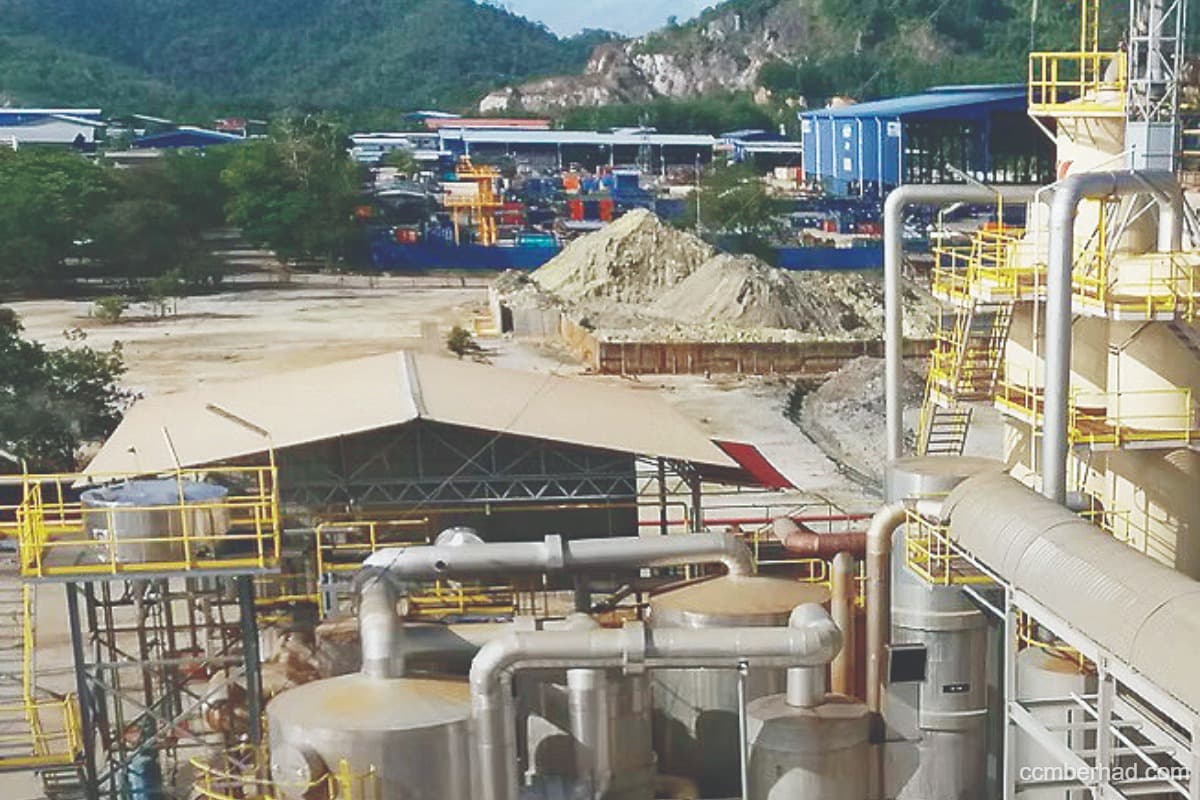
CCM is substantially larger today after Batu Kawan undertook a strategic corporate restructuring in 2024 that brought Malay-Sino Chemical Industries Sdn Bhd and See Sen Chemical Bhd under CCM, consolidating their industrial chemical operations.
Malay-Sino Chemical is Malaysia’s largest chlor-alkali manufacturer. Its key offerings include caustic soda, potassium hydroxide, sodium hypochlorite, chlorine, hydrochloric acid, ferric chloride and methyl chloride, which serve a wide range of industries including paper, textiles, detergents and electronics.
Meanwhile, See Sen Chemical produces various grades of sulphuric acid, a vital chemical building block widely used in fertilisers, batteries, metal processing and chemical manufacturing.
When CCM was sold to Batu Kawan by Permodalan Nasional Bhd in 2020, its last available financial results showed a net loss of RM115,000 for the nine months ended Sept 30, 2020, compared with a net profit of RM12.95 million in the previous corresponding period. This was mainly due to margin squeeze arising from lower average selling prices for its chlor-alkali products.
Even in 2019, its net profit had fallen to RM16.02 million from RM25.7 million in 2018.
As CCM grew in scale, however, its net profit rose — reaching RM76.58 million in the financial year ended Sept 30, 2025, from RM74.77 million the year before, mainly driven by higher caustic soda sales volume. During the year, CCM was affected by softer demand from the glove industry, pricing pressure for certain chemical products and elevated raw material costs, according to Batu Kawan.
Following the issue of a letter of intent in June this year, TMK Chemical Bhd (KL:TMK) last week agreed to acquire CCM from Batu Kawan for RM939.9 million, in a related-party transaction. Given CCM’s transformation into a more integrated chemical platform, the transaction is not simply TMK buying the same CCM that Batu Kawan acquired in 2020.
CCM’s profitability was comparable with TMK’s net earnings of RM97.53 million for the financial year ended Dec 31, 2025. About 40% of TMK’s sales came from overseas, with Singapore and Vietnam being its key markets.
Higher production costs, however, weighed on CCM’s profitability in the latest nine months ended June 30, 2026, with net profit falling 20.7% to RM44.33 million from RM55.88 million a year ago.
TMK, meanwhile, saw its net profit jump 68.6% to RM70.95 million in the first six months of 2026, from RM42.09 million the year before.
In total, Batu Kawan has invested RM861.22 million in CCM since 2020, including the initial acquisition cost. Industrial chemicals, which include CCM’s operations, and oleochemicals are currently housed under Batu Kawan’s manufacturing segment, which posted a pre-tax loss of RM95.7 million for the year ended Sept 30, 2025, against a pre-tax profit of RM169 million a year ago, on compressed margins in the oleochemicals business.
Analysts believe the acquisition price for CCM, which represents a price-earnings multiple of 12.9 times, is reasonable compared with the valuations of peers such as Ancom Nylex Bhd (KL:ANCOMNY), Luxchem Corp Bhd (KL:LUXCHEM) and Techbond Group Bhd (KL:TECHBND).
In reply to queries from The Edge, TMK says it has not set formal integration key performance indicators (KPIs), pending full access to CCM’s operations and an assessment of the opportunities available.
“While the detailed KPIs will be determined following the post-completion review, we expect the key areas of focus to include plant and asset utilisation, procurement and cost efficiencies, improvements in key operating metrics, and opportunities to deepen relationships with the combined customer base by offering a broader range of products and solutions,” it notes.
TMK says it will strive to retain CCM’s key management personnel and continue to attract and retain qualified employees while putting in place an appropriate management framework and implementation plan to facilitate the integration of the two groups.
“From TMK’s perspective, execution risk is low as we are familiar with the industry, the nature of the business and the operating environment. TMK is already an established player in the inorganic chemicals industry and has an existing business relationship with CCM. This familiarity with the business and operating environment gives us a strong foundation and advantage as we move into the integration phase following completion,” it says.
TMK is confident that the continued expansion in manufacturing and industrial activity will continue to support demand and prices for inorganic chemicals, pointing to the expansion of Malaysia’s manufacturing sector gross domestic product at a compound annual growth rate of 4.34% between 2023 and 2025, while approved manufacturing investments grew 8.98% year on year to RM131.3 billion in 2025.
Many of TMK’s and CCM’s key end markets are tied to Malaysia’s broader industrial and manufacturing activity.
TMK also notes that TMK and CCM currently serve different subsets of the regional chemical market. The integration of both groups could therefore introduce a wider range of products to existing customers, deepen customer relationships and pursue new business opportunities across both domestic and regional markets.
“CCM brings significant manufacturing scale, an established position in chlor-alkali and a diversified customer base across industries such as rare earth, water treatment, rubber gloves, oleochemicals, oil and petrochemical, electronics and textile,” says TMK.
It adds that enhanced procurement could be achieved through the consolidation of raw material purchases, lower intermediate costs, improved logistics efficiency, more streamlined product distribution and better asset utilisation.
The deal is targeted for completion in the first quarter of 2027, subject to the relevant approvals and conditions being satisfied. Recognising that integration takes time and sustained effort, TMK expects the benefits of the combination to be realised progressively rather than immediately.
Benefits outweigh share dilution impact
Analysts expect the benefits to TMK from the enlarged chemical entity to outweigh the dilution impact from the new share issuance to fund the acquisition.
“As commodities remain in an up cycle, we believe the chemical sector’s profitability could improve over the next few quarters. Potential benefits from the acquisition include improved production, knowledge transfer, and the ability for CCM products to reach TMK customers,” an analyst covering TMK tells The Edge.
The acquisition will be funded through a combination of RM438.5 million in cash and the issuance of new TMK shares, with Batu Kawan expected to emerge as the second-largest shareholder of TMK with a 20.8% stake.
TMK’s largest shareholder, Datuk Lee Soon Hian, will see his shareholding diluted to 31.3% from 39.5% currently. He is the youngest brother of Batu Kawan chairman Tan Sri Lee Oi Hian, who owns 56.54% of Batu Kawan.
The RM438.5 million cash component will be funded through TMK’s initial public offering proceeds (RM99.1 million) and bank borrowings/internally generated funds (RM339.45 million). As at end-June 2026, TMK had cash and cash equivalents of RM265.32 million, against RM206.83 million in borrowings.
The disposal of CCM is expected to yield a nearly RM600 million gain for Batu Kawan, which is expanding its plantation footprint through the acquisition of MKH Bhd (KL:MKH) and its plantation arm, MKH Oil Palm (East Kalimantan) Bhd (KL:MKHOP). Batu Kawan’s 48.38%-owned Kuala Lumpur Kepong Bhd (KL:KLK) is the third-largest listed planter in Malaysia.
TMK, helmed by managing director Wong Kin Wah, has seen its share price increase 75% since its listing in December 2024 at RM1.75 per share. At last Thursday’s closing price of RM3.06, TMK was valued at RM3.06 billion.
Based on Bloomberg data, the consensus target price for TMK is RM3.52, implying an upside potential of 15%.
Save by subscribing to us for your print and/or digital copy.
P/S: The Edge is also available on Apple's App Store and Android's Google Play.