

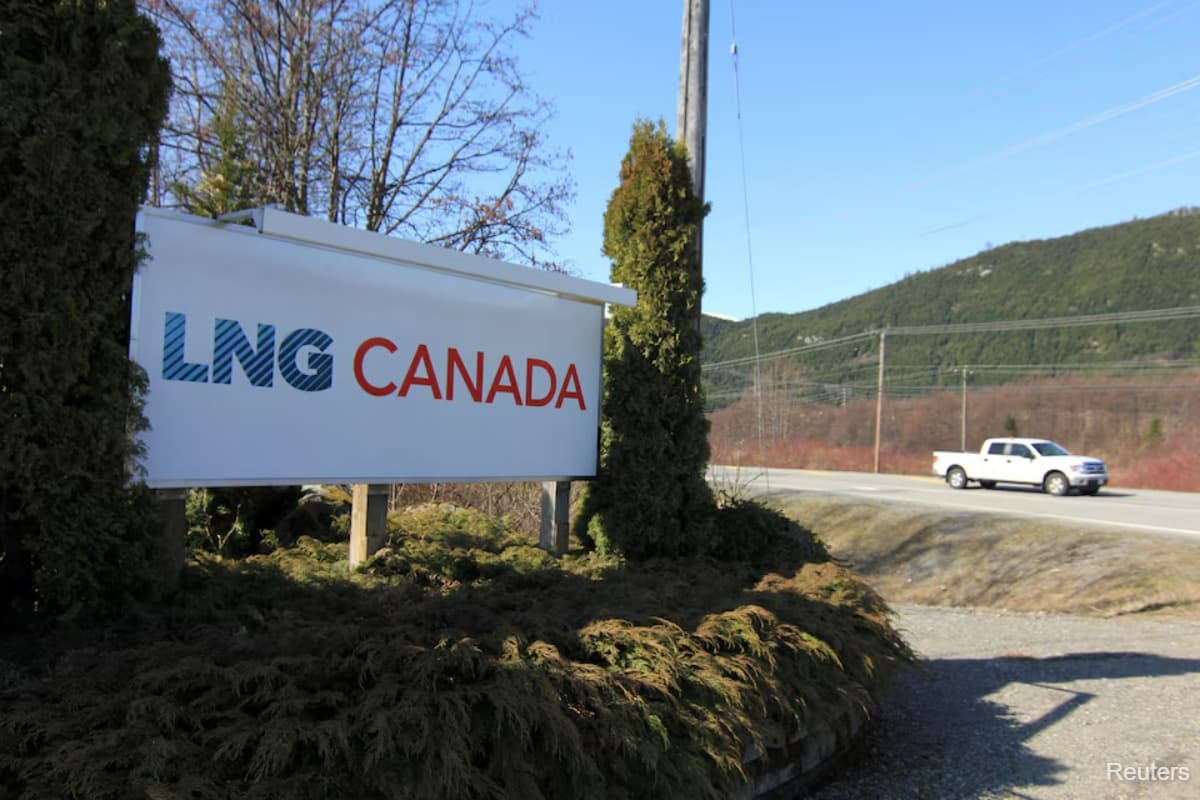
KUALA LUMPUR (Sept 29): LNG Canada, a massive liquefied natural gas project backed by Malaysia’s PETRONAS, will be expanded to double its capacity amid rising global demand.
The joint venture partners have taken a final investment decision on the expansion that will increase the capacity to 28 million tonnes a year, according to a statement on Tuesday. The project involves the addition of two processing units, known as trains, within LNG Canada's existing facility.
LNG Canada is now on track to become one of the largest natural gas processing facilities in the world following the final investment decisions, said Chris Cooper, president and chief executive officer of LNG Canada.
A final investment decision in the oil-and-gas industry typically takes years and is a sign that a project will proceed following extensive studies and planning. The project owner then approves the budget, allowing contractors to acquire materials as well as equipment to begin work.
The cost of the expansion was not disclosed. Earlier, Canadian newspaper The Globe and Mail reported that the project could cost C$30 billion or RM86 billion.
The expansion includes an additional storage tank for the superchilled gas also known as LNG, condensate tank, loading berth, expanded utility and process systems. Also in the works is capacity expansion of the existing 670km pipeline with five new compressor stations.
Shell owns the largest stake in LNG Canada at 40%, followed by PETRONAS at 25%. PetroChina Co Ltd and Mitsubishi Corp each own 15% while Korea Gas Corp has the remaining 5% in the project that aims to supply LNG to Asia to meet the region’s rising demand.
LNG Canada will continue to operate under an equity lifting structure, where each of its five joint venture partners is responsible for the offtake of its proportionate share of LNG produced. Phase 1 of LNG Canada began shipping LNG on June 30, 2025.
Shell expects commercial operations of Phase 2 to begin in the "early 2030s."
“The final investment decision for Phase 2 is a significant step forward in our shared ambition to deliver reliable and responsibly produced LNG to the world,” said Adif Zulkifli, who heads PETRONAS’ gas and maritime businesses.
For Mitsubishi, benefits include short shipping distances to key Asian LNG markets such as Japan.
LNG shipments from Canada to Asia travel directly across the open Pacific Ocean and do not require passage through major maritime chokepoints such as the Panama Canal, boosting reliability of supply at a time of geopolitical conflict in the Middle East.