

(Sept 28): Saudi Arabia has started exporting oil using a key cross-country pipeline after the link was repaired following drone strikes earlier this month, a person with direct knowledge of the matter said.
Flows through the line have reached about 3.5 million barrels a day, another person said. Both asked not to be named because the information isn’t public. The pipeline has a total capacity of about seven million a day, with about five million typically earmarked for exports.
Aramco and the Saudi energy ministry didn’t immediately respond to requests for comment.
The resumption will restore Saudi Arabia’s access to the alternative export route that it had been using during the Iran war, even as the kingdom has ramped up shipments through the Strait of Hormuz this month. It will bring relief to buyers who have been clamouring for supply, with some customers in Europe being told they won’t be allocated any barrels next month under term contracts.
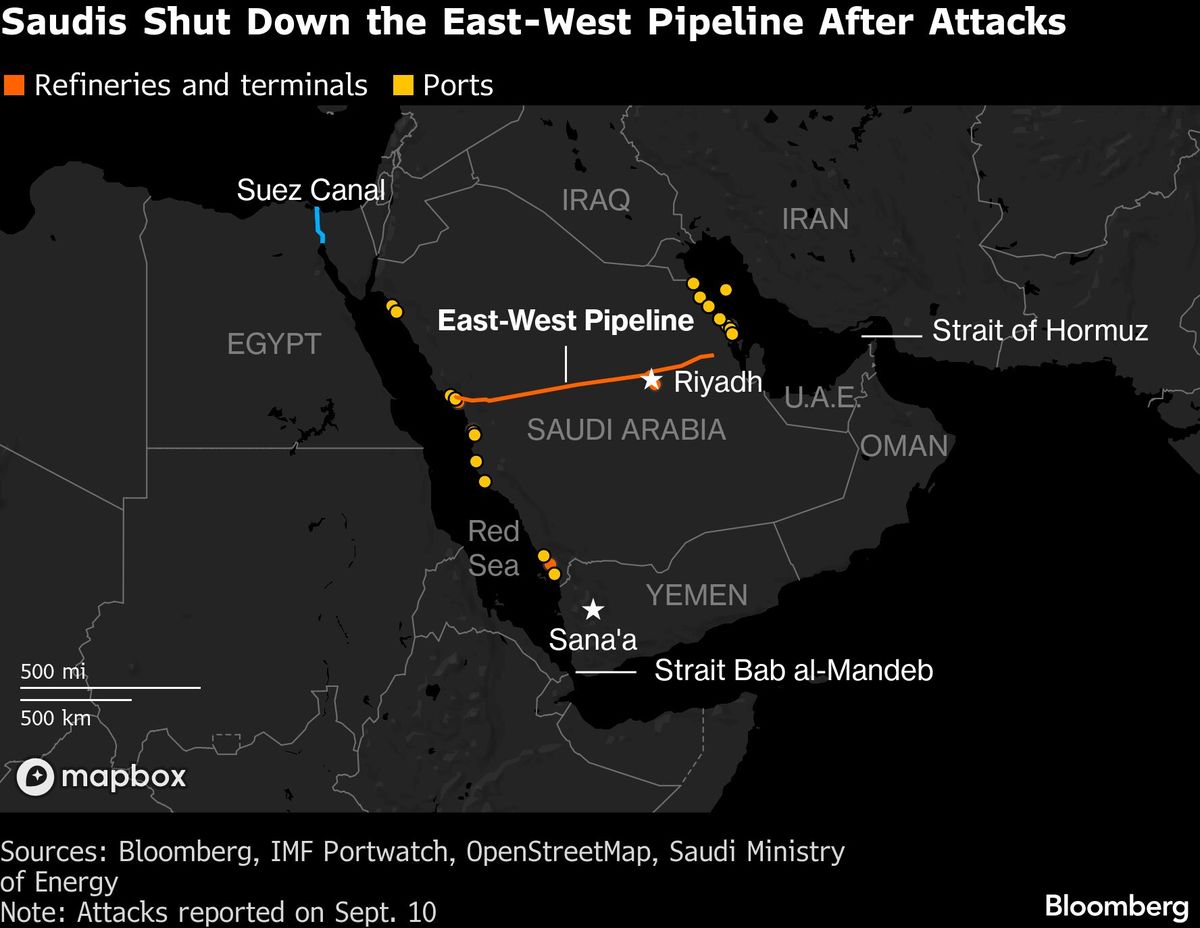
Traders will be watching how much oil Saudi Arabia keeps pushing out through Hormuz when the East-West pipeline returns to full capacity. A person familiar with the matter said earlier this month that a full resumption could take about six weeks. The Persian Gulf route is still fraught with risk, with ships occasionally getting attacked as the Iran war approaches seven months.
The kingdom has used the Hormuz route to push up its overall oil exports to a war-time high of over five million barrels a day in September, with most of the supply heading toward Asia.
At the same time, the Red Sea route along the kingdom’s western border has come under threat from Yemen’s Houthi militants. The group has stepped up attacks this month with energy infrastructure in Saudi Arabia’s southwest and at Yanbu, the Red Sea port where the East-West line terminates, being targeted. Saudi Arabia has issued multiple warnings for cities including Riyadh, Jazan and the holy Islamic site of Mecca.
Of the pipeline’s seven million barrels a day capacity, about two million a day typically goes to refineries along the kingdom’s west coast and the remainder is available for exports. Those overseas shipments had become a lifeline for the market during the Iran war, helping keep oil-price surges in check.
Oil in London was trading above US$107 a barrel on Monday, driven higher as Iran and the US appear far apart on a deal that would end the conflict in the Middle East.
Uploaded by Arion Yeow