

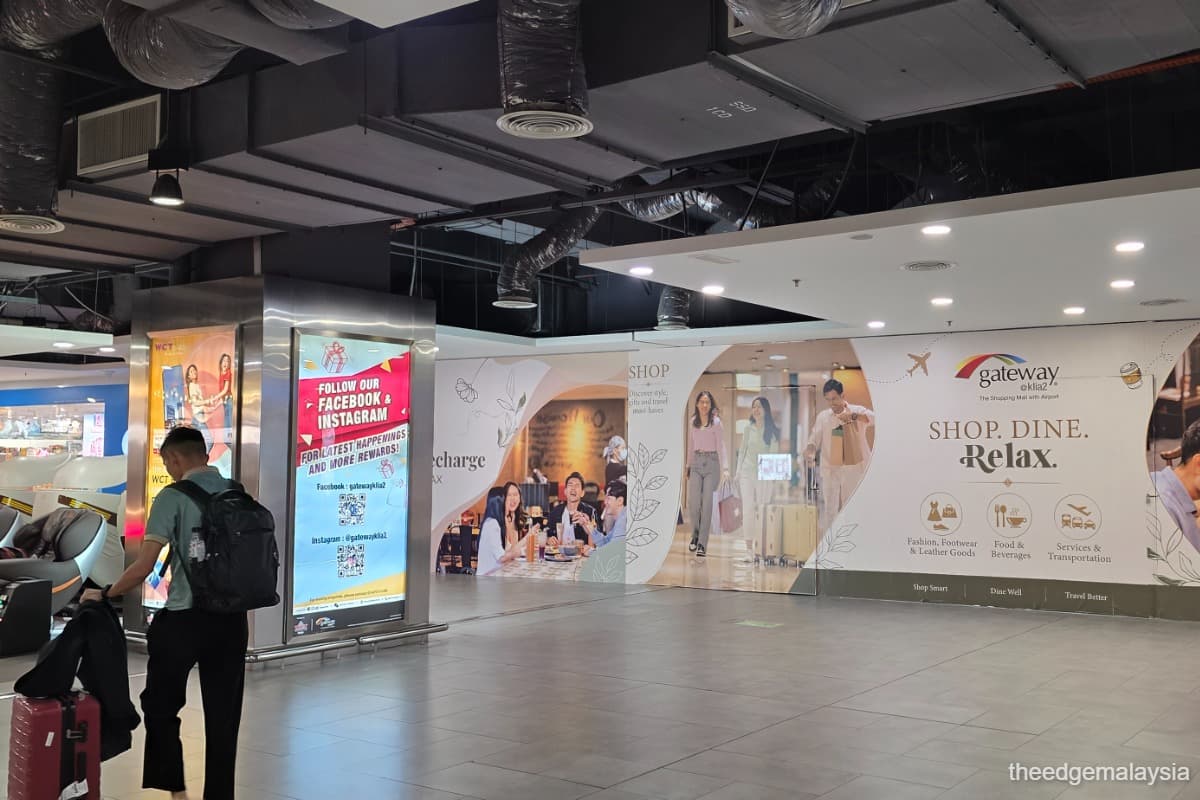
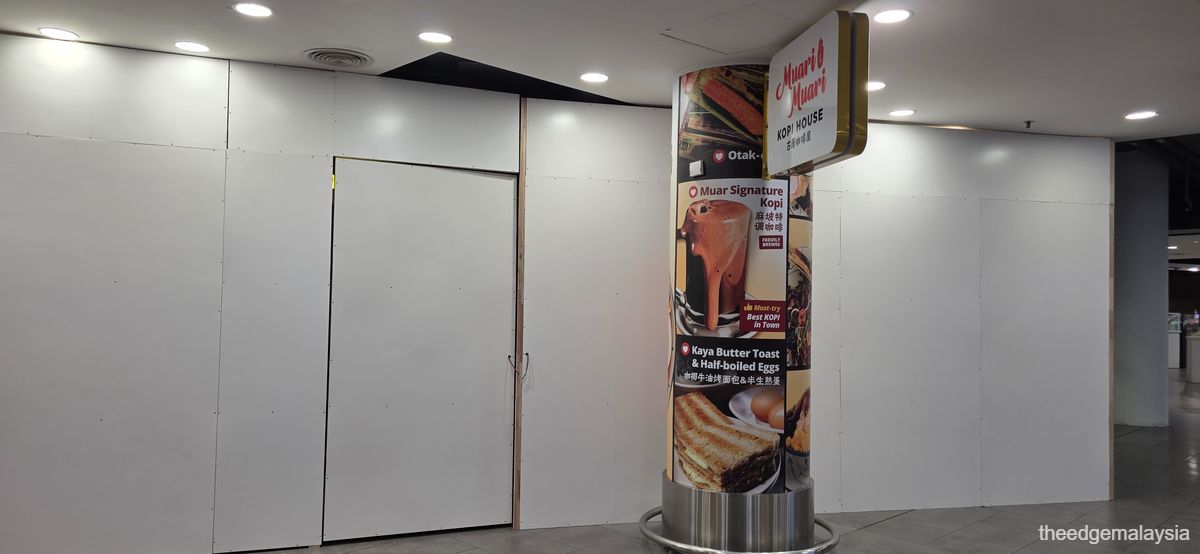
KUALA LUMPUR (Sept 29): Visitors walking through Kuala Lumpur International Airport's Terminal 2 (KLIA T2) will notice hoardings — temporary boards and barricades put up around shops that are empty or under renovation — at several areas of its retail section.
While these appear just as airlines trim flight capacity to counter soaring fuel costs, the boarded-up spaces do not necessarily signal a broader downturn in the terminal's retail performance.
Malaysia Airports Holdings Bhd (MAHB), which operates KLIA and 38 other airports in the country, said tenant occupancy at KLIA T2 remained resilient despite a decline in passenger traffic. Commercial occupancy stood at 93% currently, up from 92% a year earlier.
“Some of the hoardings currently visible within the terminal are part of a planned reconfiguration of space to improve passenger processing and circulation,” MAHB said in an email response to questions from The Edge Malaysia.
The airport operator said some commercial areas were being repurposed for this purpose, with several outlets in the affected areas scheduled to be progressively phased out by the end of the year.
MAHB declined to disclose tenant level sales or passenger spending, citing commercial sensitivity. It said commercial performance depended on factors beyond passenger volumes, including passenger profiles, outlet locations, retail categories and the performance of individual businesses.
The comments come as airlines operating from KLIA T2 contend with a sharp rise in fuel costs and weaker capacity on some routes since the US and Israel launched strikes against Iran in February.
Global average jet fuel prices reached US$194.90 per barrel in the week ended Sept 18 — up 116.5% from a year earlier — according to data from Platts and S&P Global.
Airlines have been particularly exposed to the increase because fuel typically accounts for between 30% and 50% of their operating costs. Budget carriers such as AirAsia Group Bhd (KL:AAGB) and Batik Air Malaysia, which remain largely unhedged, have been hit by the volatility in the jet fuel market.
In response, some airlines have cut capacity by as much as 30% since April to limit fuel consumption and contain costs.
AirAsia is the largest airline tenant at KLIA T2. Other carriers operating from the terminal include Scoot, Spring Airlines, Cebu Pacific Airways, Lucky Air, Qingdao Airlines and Shandong Airlines.
On Sept 18, AirAsia said it had reduced capacity by 20% to 25% in the third quarter, traditionally a weaker travel period. It expects to restore capacity towards pre-Iran war levels in the fourth quarter, when year-end travel demand typically strengthens.
The impact of the capacity cuts have been reflected in KLIA T2's footfall.
While total passenger traffic across KLIA rose 2.1% year-on-year to 41.95 million between January and August this year, the headline growth masks a clear divergence between its two terminals. Traffic at Terminal 1 climbed roughly 8% y-o-y to 24.46 million passengers, but T2 saw numbers fall 5% y-o-y to 17.48 million over the same period.
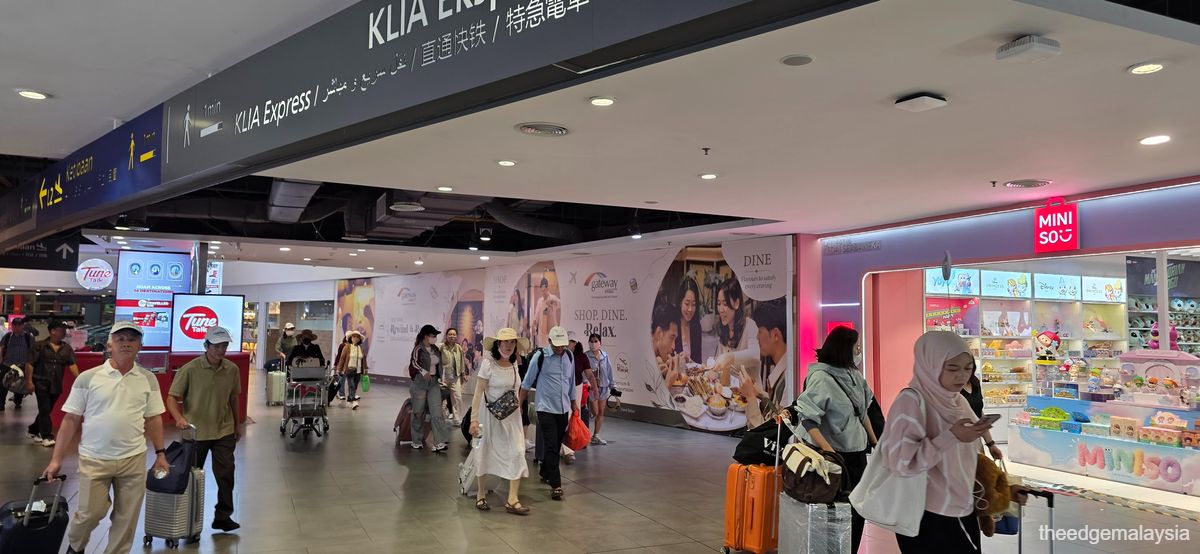
Still, MAHB said traffic had begun to recover from June.
Total KLIA passenger movements increased from 4.7 million in June to five million in July and 5.2 million in August, with both terminals recording improvements.
At T2, passenger numbers rose from 1.83 million in June to 1.86 million in July, and 1.98 million in August.
“While T2 traffic remains below the corresponding period in 2025, the recent trend shows a gradual recovery following the capacity reductions experienced during the middle of the year,” MAHB said.
The airport operator said it would continue to monitor airline capacity, passenger traffic and commercial performance.
It added that the recent recovery in passenger movements provides a more balanced picture of conditions at both KLIA terminals than the weaker traffic figures recorded earlier in the year.
For airlines, however, fuel remains a significant pressure point.
In a Sept 21 report, Maybank Investment Bank Research estimated that every US$1 increase in the price of jet fuel could reduce AirAsia’s earnings by RM75 million.
AirAsia shares closed half a sen or 0.94% lower at 52.5 sen on Monday, valuing the group at RM1.76 billion. The stock has fallen about 70% since the start of the year.