

_20260512220236_Bloomberg_8.jpg&w=1920&q=75)
(Sept 28): A sell-off in Treasuries resumed on Monday as oil rallied after US President Donald Trump rejected Iran’s latest proposal to reopen the Strait of Hormuz, intensifying inflation concerns.
Rate-sensitive US short-end bonds and their global peers fell sharply. US two-year yields rose five basis points to 4.91%, while those on German and UK counterparts jumped five basis points to 3.33% and 4.89% respectively. Similar moves were seen in Japan and Australia.
Bonds have been selling off around the world as rising energy prices threaten to boost inflation. In the US, surging business activity, concerns about government debt levels and the prospect of interest rate hikes have provided additional momentum. Last week, Treasury borrowing costs on 10-year debt hit the highest level since 2007.
“The ongoing hawkish Fed (US Federal Reserve) messaging and oil above US$100 (RM408) are pivotal to the bearish impetus,” said Damien McColough, the head of fixed income research at Westpac Banking Corp.
Brent oil gained around 2.5% to US$106.90 a barrel on Monday as Iran said it wouldn’t soften its conditions to reopen the Strait of Hormuz, adding pressure on the Fed to hike rates to rein in inflation. Trump said he expects negotiations to resume this week despite rejecting Tehran’s latest offer, Axios reported.
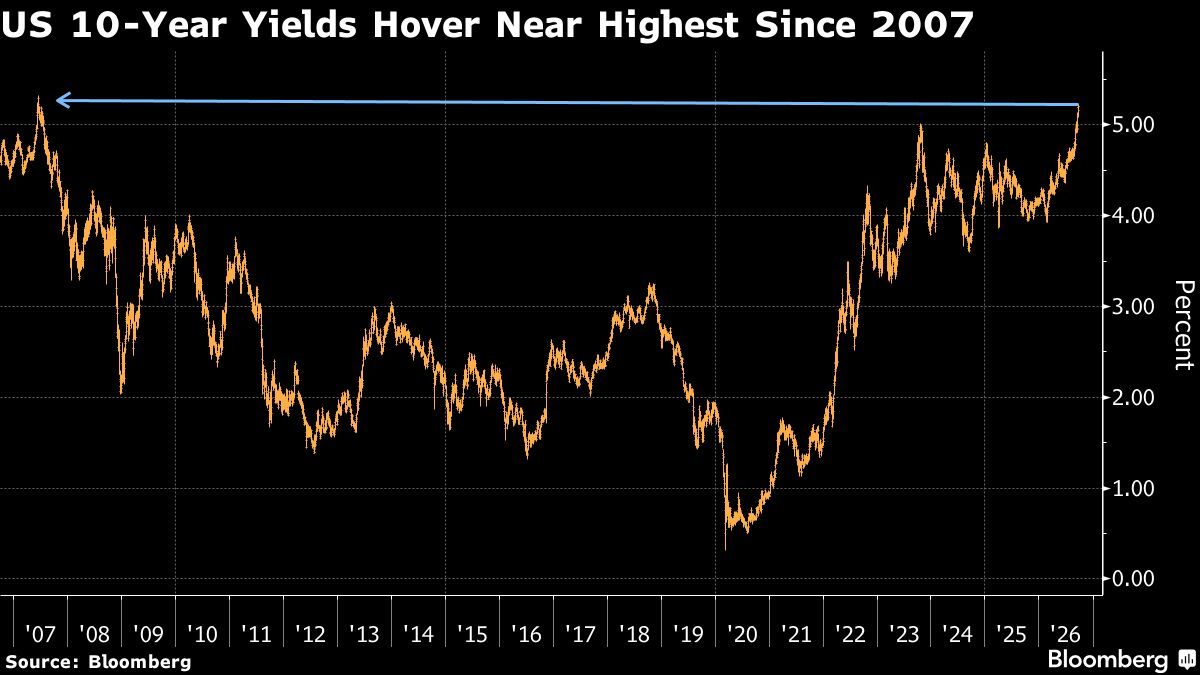
Swap markets are pricing in three more interest rate hikes from the Fed next year, with the potential for a fourth. Treasury Secretary Scott Bessent has urged Fed policymakers to keep an “open mind” on interest rates, arguing that productivity gains from artificial intelligence and deregulation will help keep US inflation in check.
The latest moves come as the bond market is on the brink of signalling that a series of Fed rate increases will start shifting the narrative towards the risk that the US economy stalls out.
The extra yield investors demand to hold 10-year Treasuries over two-year notes shrank to as little as 17 basis points last week, the slimmest gap since early 2025. This so-called flattening of the curve increases the possibility that the 10-year will soon yield less than shorter maturities, a closely watched phenomenon known as a curve inversion.
The unfolding developments surrounding the Strait of Hormuz will be pivotal to determining the bond market’s next move. The Wall Street Journal reported that negotiators are pressing Iran to make concessions on its nuclear programme to revive the peace talks and placate Trump on an issue he has made a top priority.
“President Trump knocking back Iran’s offer for diplomacy is driving a renewed rise in oil prices and is weighing on US Treasuries,” said Prashant Newnaha, a senior Asia-Pacific rates strategist at TD Securities in Singapore, adding that the Middle East gridlock is likely to remain the market’s focus until US economic data later in the week.
Uploaded by Tham Yek Lee