

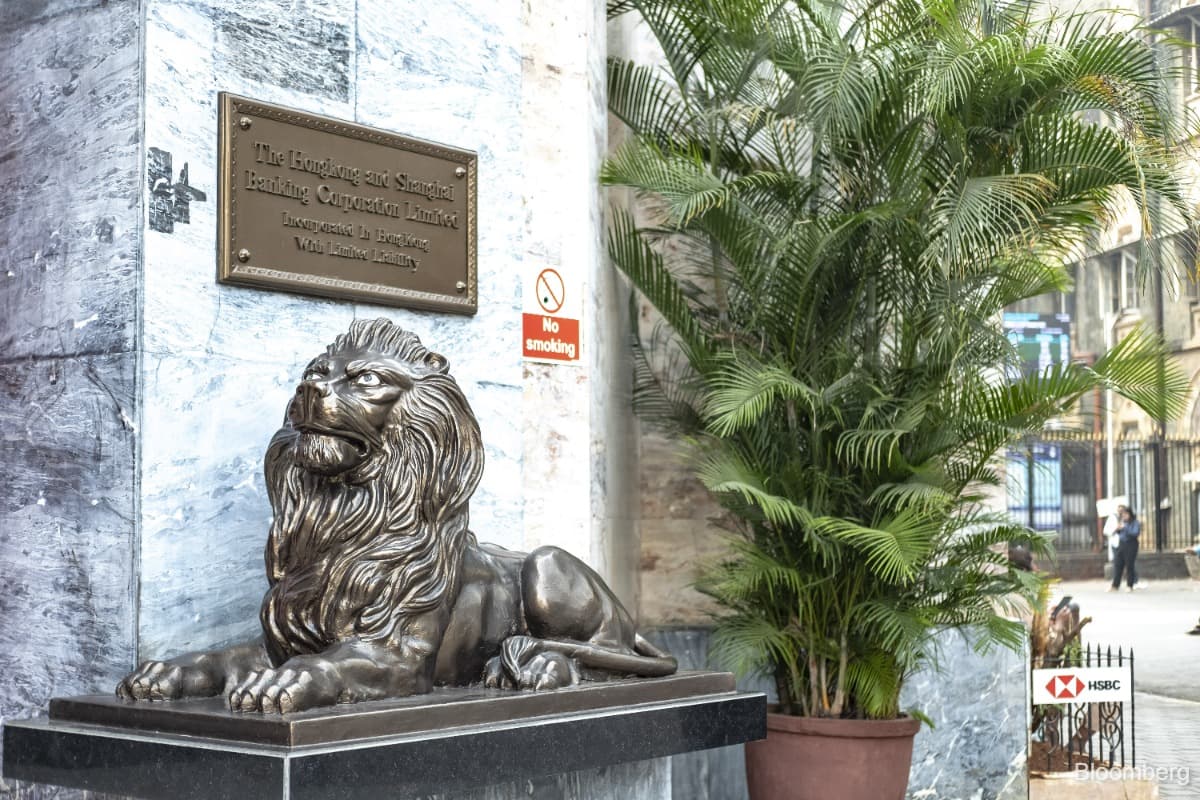
(Sept 28): HSBC Holdings plc is aiming to challenge India’s private-sector banks, betting that the country’s swelling pool of affluent customers and globally connected citizens can fuel its next phase of growth as it pushes deeper into smaller cities.
The London-based lender is doubling down in the world’s fastest-growing major economy across three areas — wealth, transaction banking and what Hitendra Dave, HSBC’s India chief executive officer, calls “globality”, — using its international network to cater to clients whose businesses and wealth span borders.
“Our ambition is to become one of the top four or five private banks in India by 2030,” the Mumbai-based executive said in an interview, referring to the wealth management business.
The growth drive puts HSBC in more direct competition with larger local rivals including ICICI Bank Ltd and Kotak Mahindra Ltd for a slice of India’s fast-expanding wealth pool. Still, the market is tricky to navigate as domestic banks are scaling up while firms founded by senior bankers are fighting for clients and talent, helping drive pay for relationship managers to record highs.
HSBC, Standard Chartered plc and Barclays plc are among a relatively small group of foreign banks building out their wealth management businesses in India, even as some global lenders have pulled back. Citigroup Inc sold its Indian consumer banking unit to Axis Bank Ltd, while Kotak agreed this year to acquire Deutsche Bank AG’s retail and wealth management businesses in India. Foreign lenders also face tighter restrictions on opening branches than their domestic rivals, making it harder to build nationwide networks.
The UK lender’s push comes as group chief executive officer Georges Elhedery said in a recent interview that the bank plans to increase investments in India, with a growing focus on affluent customers.
The firm plans to expand to 46 branches across 34 cities in India over the next two years, from 34 branches currently, taking it further in smaller places. New locations include Bhubaneswar in the east, Rajkot in the west, Jalandhar in the north and Mysuru in the south. Standard Chartered has the largest network among foreign banks in the country, with 80 branches.
“We are building a wealth franchise beyond India’s metro cities,” said Dave, pointing to the growing number of wealthy individuals in smaller centres. HSBC’s private bank generally targets customers with at least US$2 million (RM8.17 million) in investable assets.
Dave described the next generation of Indian wealth as increasingly ‘global’, as more Indians study and work overseas, build international businesses and invest globally. “We can be especially valuable to customers whose financial lives, businesses and wealth cross borders,” he said.
The firm’s expansion is already paying dividends. HSBC recently emerged as the biggest lender to India’s vast diaspora under a special foreign-exchange swap programme, disbursing US$10.9 billion from GIFT City in three months. ICICI Bank ranked second with US$8.4 billion.
HSBC is also using premium credit cards and large-ticket mortgages to deepen relationships with wealthy customers. Annual fees on its premium cards can run as high as 110,000 rupees (US$1,147 or RM4,685), while its mortgage book has tripled over the past four years.
Outstanding mortgages rose 25% from a year earlier to 257 billion rupees as of March 31, according to the bank as it focused on larger loans for premium homes. Transaction banking is another pillar of the strategy, with the lender helping companies process payroll, make foreign-exchange payments, distribute dividends and manage liquidity, Dave said.
Uploaded by Chng Shear Lane