

This article first appeared in The Edge Malaysia Weekly on September 28, 2026 - October 4, 2026
One of the key takeaways from Prime Minister Datuk Seri Anwar Ibrahim’s recent official visit to China is that both countries have agreed to extend the East Coast Rail Link (ECRL) from Kota Bharu to Rantau Panjang in Kelantan, near the border with Thailand.
According to a Bernama report, Anwar, who is also finance minister, said the extension would not only stimulate economic activity in the remote areas of the state which had previously been left behind, but would also establish a direct transport link with Thailand. “Further discussions on the ECRL proposal will be held with all stakeholders before it is brought to the cabinet for consideration,” said the prime minister.
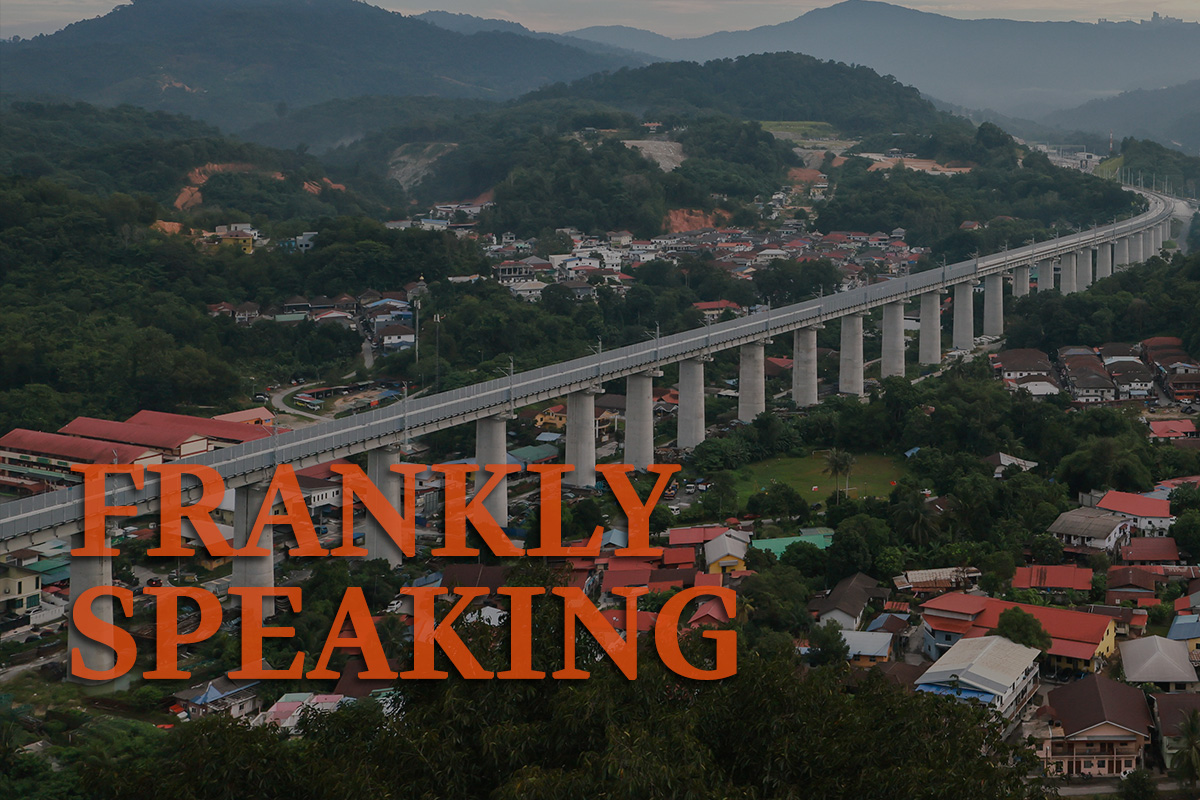
Malaysia has spent roughly RM75 billion, including RM24.7 billion on development costs, on the 665km ECRL project connecting Port Klang and Kota Bharu.
According to Minister of Transport Anthony Loke, the main contractor — China Communications Construction Co Ltd (CCCC) — will bear the operational risks by forming a joint venture with Malaysia Rail Link Sdn Bhd (MRL) to run the ECRL. If the ECRL operations are profitable, MRL will receive 80% of the profit while CCCC will get the remaining 20%. However, if the ECRL incurs losses, the two parties will share the losses equally, according to Loke.
However, some pertinent questions remain. How many tickets does it need to sell to cover the annual operating cost? How will MRL pay off the debt taken to build the ECRL?
MRL, a wholly-owned unit of Minister of Finance Inc, secured a RM37.4 billion term loan from the Export-Import Bank of China at an interest rate of 3.25% to fund the development.
Against this backdrop, is there an urgent need for the extension?
Save by subscribing to us for your print and/or digital copy.
P/S: The Edge is also available on Apple's App Store and Android's Google Play.