

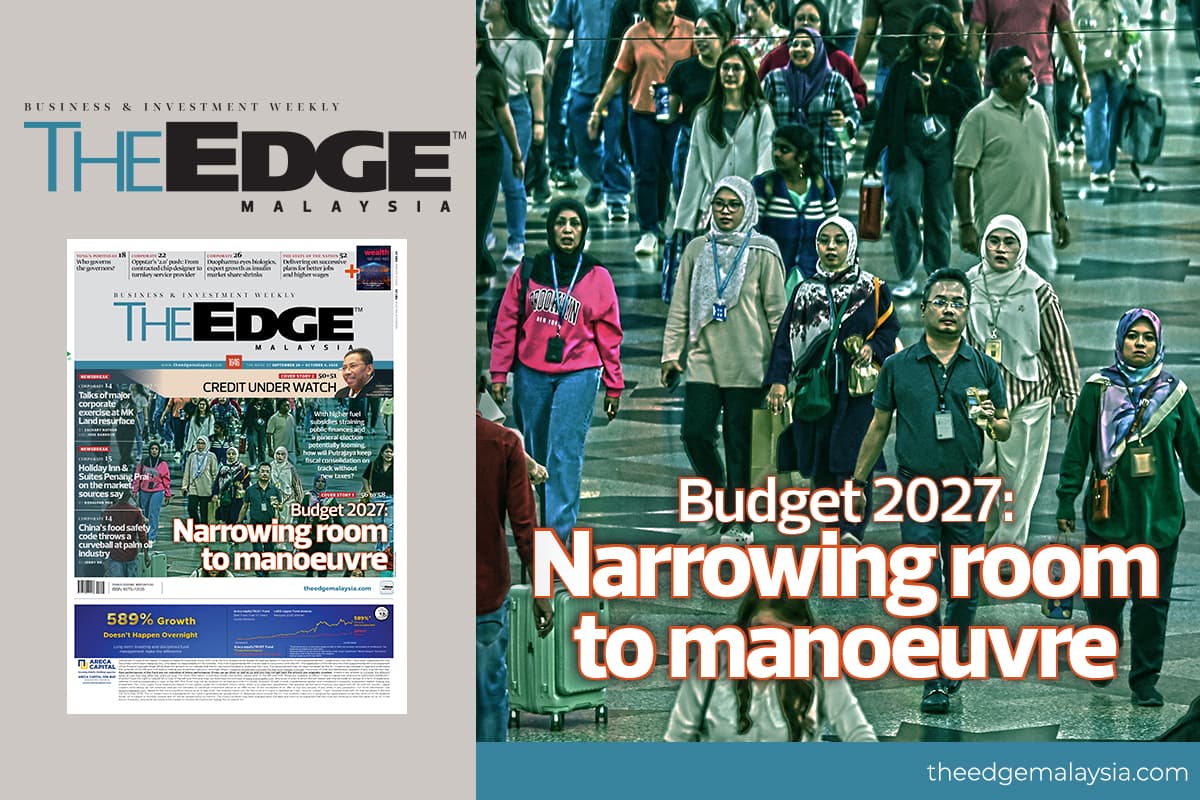
KUALA LUMPUR (Sept 26): Prime Minister Datuk Seri Anwar Ibrahim heads into the Budget 2027 announcement on Oct 9 facing narrowing fiscal room, as higher fuel subsidies, a growing debt-servicing burden and the possibility of an early general election complicate the government’s efforts to keep fiscal consolidation on track.
The Anwar administration has used its four federal budgets to progressively target subsidies and tighten expenditure following the Covid-19 pandemic, with Budget 2026 marking the first reduction in the overall federal allocation since Budget 2020.
But the war in West Asia has disrupted that trajectory. Higher global energy prices have turned fuel subsidies, which the government has spent years trying to rationalise, into a fresh fiscal burden, with the Ministry of Finance (MOF) now estimating that the bill could reach RM40 billion this year.
At the same time, the legacy of earlier deficits continues to weigh on the government’s finances. Federal government debt stood at RM1.3 trillion, or 64.7% of gross domestic product (GDP), as at June 2025, compared with 52.5% in 2019.
Budget 2027 could also prove to be the unity government’s last before the next general election if an early poll is called, increasing attention on measures that can provide more immediate relief to households.
Economists interviewed by The Edge point to four interlocking issues that will shape Budget 2027: the pace of fiscal consolidation, the growing cost of servicing accumulated debt, the double-edged impact of high global oil prices, and the political pressure to protect households from the rising cost of living.
With fiscal room increasingly constrained, the question is where Putrajaya can find additional revenue without adding to the burden on households and businesses. Tax experts believe the government can extract more revenue from the existing tax system without introducing new taxes.
Malaysia does not have a large tax base to work with. Deloitte Malaysia tax and legal leader Sim Kwang Gek puts the country’s tax revenue at about 12.4% of GDP in 2024, with the revised estimate for 2025 standing at 12.6%, which she says is relatively low compared with several regional peers.
The tax experts whom The Edge spoke to therefore believe Putrajaya should get more out of the existing system by fixing issues arising from the expanded sales and service tax (SST), using e-invoicing more effectively to close compliance gaps, simplifying administration and reviewing incentives that are outdated or underutilised.
Find out the details in Cover Story 1 in this issue of The Edge Malaysia weekly.
In the past few years, “buy now, pay later” (BNPL) gave shoppers a quick and easy route to credit. But the days when just about anyone could get instant approval are over.
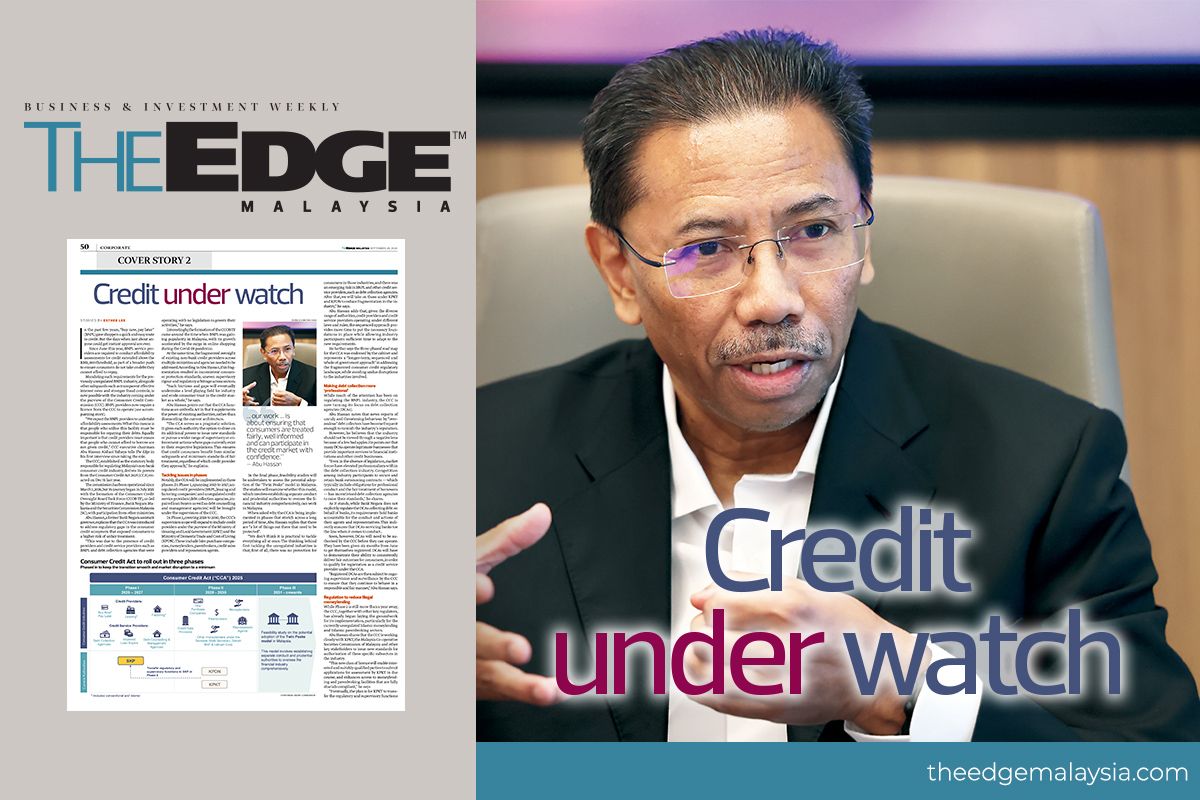
Since June this year, BNPL service providers are required to conduct affordability assessments for credit extended above the RM1,000 threshold, as part of a broader push to ensure consumers do not take on debt they cannot afford to repay.
Mandating such requirements for the previously unregulated BNPL industry, alongside other safeguards such as transparent effective interest rates and stronger fraud controls, is now possible with the industry coming under the purview of the Consumer Credit Commission (CCC). BNPL operators now require a licence from the CCC to operate.
“We expect the BNPL providers to undertake affordability assessments. What this means is that people who utilise this facility must be responsible for repaying their debts. Equally important is that credit providers must ensure that people who cannot afford to borrow are not given credit,” CCC executive chairman Abu Hassan Alshari Yahaya tells The Edge in his first interview since taking the role.
The CCC, established as the statutory body responsible for regulating Malaysia’s non-bank consumer credit industry, derives its powers from the Consumer Credit Act 2025 (CCA) enacted on Dec 31 last year.
The commission has been operational since March 1, 2026, but its journey began in July 2021 with the formation of the Consumer Credit Oversight Board Task Force, co-led by the Ministry of Finance, Bank Negara Malaysia and the Securities Commission Malaysia, with participation from other ministries.
The CCA was introduced to address regulatory gaps in the consumer credit ecosystem that exposed consumers to a higher risk of unfair treatment. It will be implemented in three phases. The three-phased road map for the CCA was endorsed by the Cabinet and represents a “longer-term, sequenced and whole-of-government approach” in addressing the fragmented consumer credit regulatory landscape, while avoiding undue disruptions to the industries involved.
Read more about the CCC and how it plans to protect the consumer in this week’s issue of The Edge Malaysia.
Save by subscribing to us for your print and/or digital copy.
P/S: The Edge is also available on Apple's App Store and Android's Google Play.