

(Sept 25): The dollar is headed for its best two-week stretch in six months in a reversal of fortunes that’s likely to support the currency through the rest of the year, asset managers and strategists say.
In recent weeks, a confluence of events have turned to the greenback’s favour even as a backdrop of massive government deficits, policy risk and an interventionist Treasury continue to cloud its long-term outlook. The Federal Reserve’s hawkish pivot, continued strength in the artificial intelligence boom and heightened global tensions have all combined to boost the dollar’s appeal.
“The US is still the place where there’s AI growth, they’re leading the capex spending, and margins and corporate earnings are good,” Andreas Koenig, head of global FX at Amundi, said. “So that dynamic is still there, which is positive for the US. There’s the rate differential, which is positive, so that is supportive for the dollar.”
The Bloomberg Dollar Spot Index has gained about 2% over the past two weeks, climbing to its highest level since July, while options pricing points to further gains. That’s as strong US economic data heralded more interest rate increases by the Fed after its first hike in three years and pushed Treasury yields to new multiyear peaks. At the same time, the technology-heavy Nasdaq 100 climbed to a record and oil prices resumed their advance.
“We now see the risk for the dollar strength to continue into year end,” said Alex Cohen, a strategist at the Bank of America.
It’s a departure from a narrative that has prevailed over the past two years as global tariffs spurred calls for de-dollarisation, while the US public debt surged towards US$40 trillion (RM162.4 trillion) giving rise to the so-called debasement trade — a shift into gold or other assets as loose fiscal discipline is eroding the value of money and government bonds.
This shift in focus has prompted Morgan Stanley to turn bullish on the US currency, flipping its long-held call for the dollar to weaken.
“We thought the USD’s descent would continue into 2H26. We were wrong,” FX strategists at Morgan Stanley led by David Adams said. “The USD’s outlook is rosier, not weaker.”
The dollar index has climbed 1.6% so far in September after falling in July and August, just as Treasury yields across maturities approached or exceeded 5%. Seasonality has helped, as the final full week of September has proved to be the dollar’s strongest over the past decade.
The gains came even after Treasury Secretary Scott Bessent in the past few months has boosted bond buybacks in a bid to tame borrowing costs, while supporting steps to shore up the Japanese currency. Both moves were interpreted as negative for the dollar.
For Daragh Maher, senior FX strategist at HSBC, the “ambiguous relationship” between Treasury yields and the dollar will remain due to the high US fiscal deficits, complicating the outlook for the currency. Koenig at Amundi agrees.
“We don’t think the dollar will knock it out of the park,” Maher told Bloomberg TV on Thursday. “It is going to be a modest dollar appreciation.”
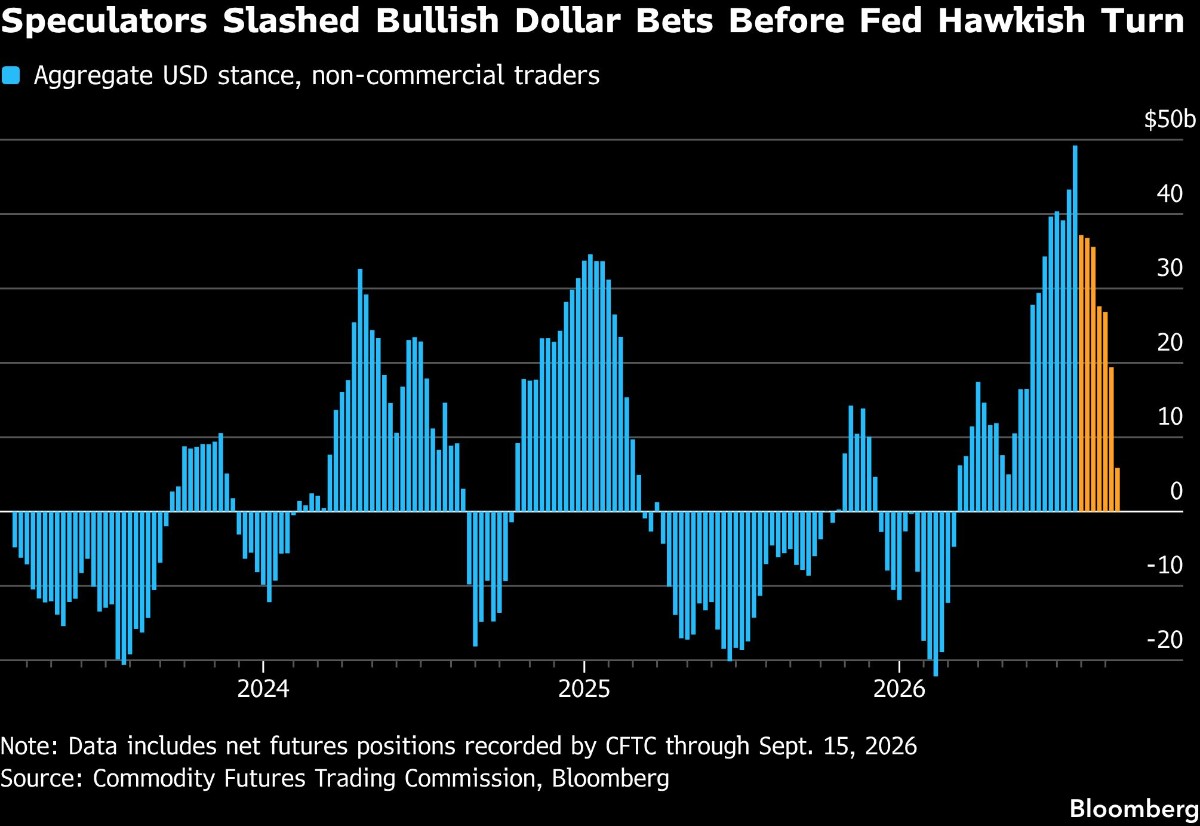
The Fed’s hawkish shift caught many in the market wrong-footed. Speculative traders, including asset managers and non-commercial players, had slashed their positive stance on the dollar heading into the policy meeting, according to the Commodity Futures Trading Commission.
The sceptics point to the market’s aggressive interest rate pricing that’s setting a high bar for the Fed. Traders see nearly 90 basis points of hikes in the next 12 months. It will be hard for the Fed to do more than that, putting a lid on the dollar rally, according to Nathan Thooft, a senior portfolio manager at Manulife Investment Management.
“If upcoming inflation, labour market or growth data show signs of cooling, the Fed may have room to dial back some of its hawkish messaging,” Thooft said. “That could ultimately limit further upside for the dollar.”
Other major economies can struggle to raise rates much further, too, as oil prices weigh on growth.
Citigroup Inc strategist Daniel Tobon said the European Central Bank could reach a point “that starts having negative knock-on effects, which might force them to have to reverse policy down the line” leaving the dollar in a better place relative to the euro. The market is pricing in at least one more ECB hike this year.
“The risk of new information skews more dollar positive than dollar negative in our view,” said Tobon, who had a short euro trade recommendation against the dollar since January.
The euro has lost more than 3% against the greenback this year. Tobon estimates the dollar index can rally another 1%.
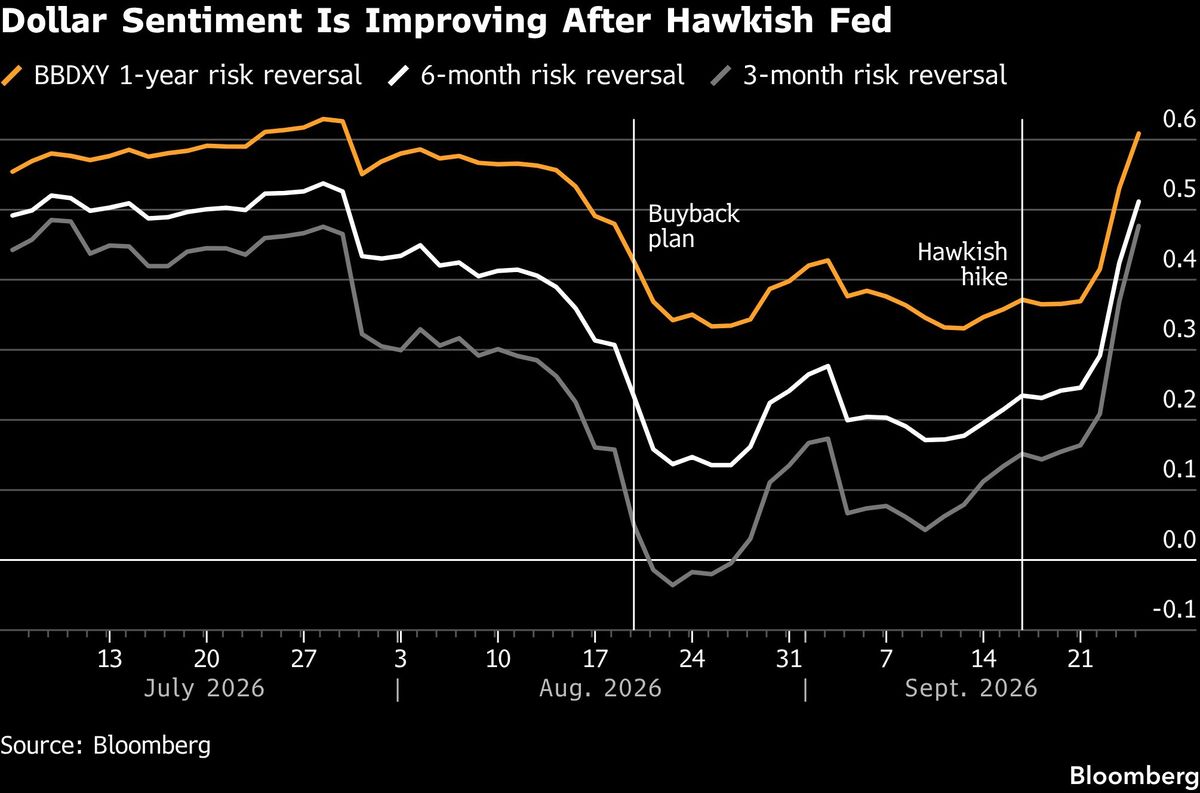
Other metrics are also pointing towards a resilient US currency even as some signs are emerging that it may be due for a pause. In the options market, so-called risk reversals, a measure of bullish versus bearish demand, show traders favour the greenback across tenors.
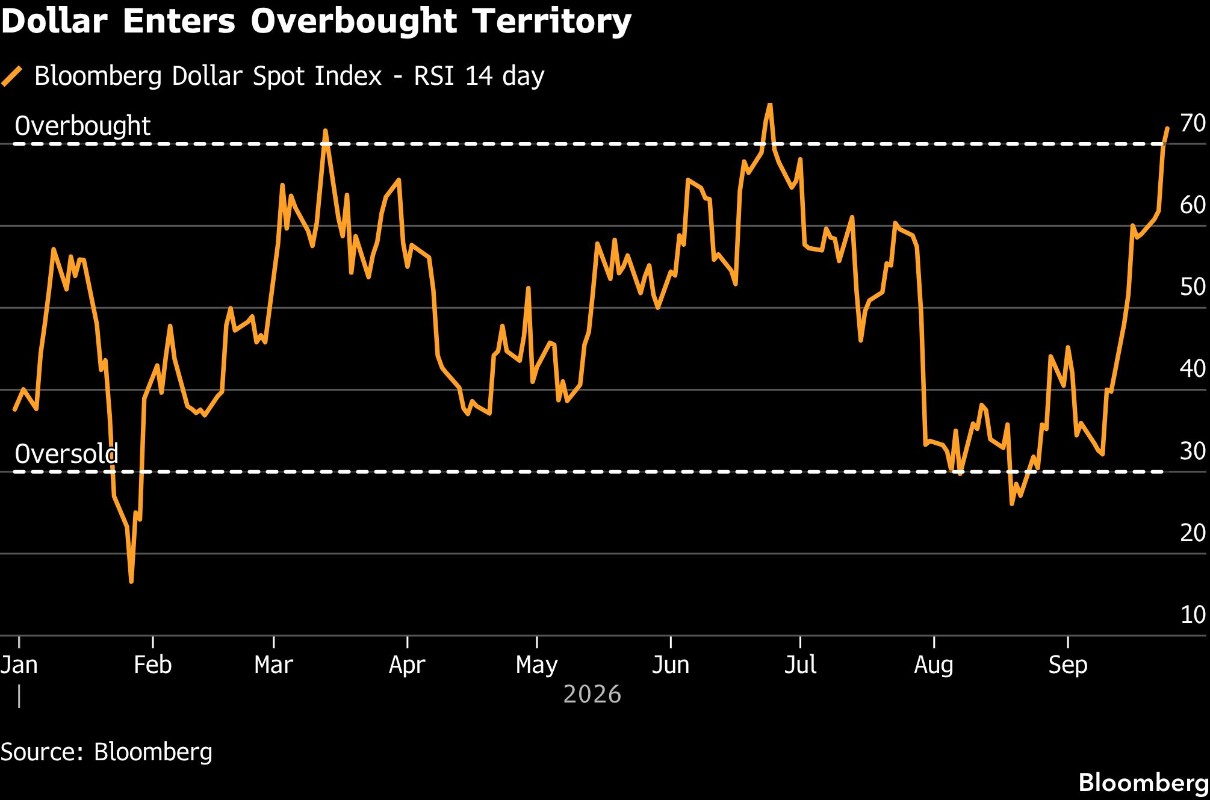
The relative-strength index for Bloomberg’s dollar gauge — a measure of momentum — climbed above 70 on Thursday for the first time since the end of June, pointing to the rally becoming stretched. The RSI indicator has been moving higher since Sept 9 in a sign of improved dollar sentiment.
Helping boost this sentiment is geopolitical risks, which have reaffirmed the greenback’s haven appeal, according to Maher.
“When the world once again seems to be falling apart — as we’ve seen in the past week — we’re all running into the dollar again,” he said. “So the debasement story gets completely sidelined. Some of the truisms in currency markets are holding solid: the dollar is your safe haven.”
Uploaded by Evelyn Chan