

For years, the conversation about helping Malaysia's small and medium enterprises (SMEs) has centred on financing for growth. A loan could translate into more inventory, new hiring, better revenue and profit.
Fortéfi Capital Sdn Bhd, a robo-advisory platform that went live commercially this year, says there is another part of the equation that is often overlooked, which is what businesses do with their excess cash.
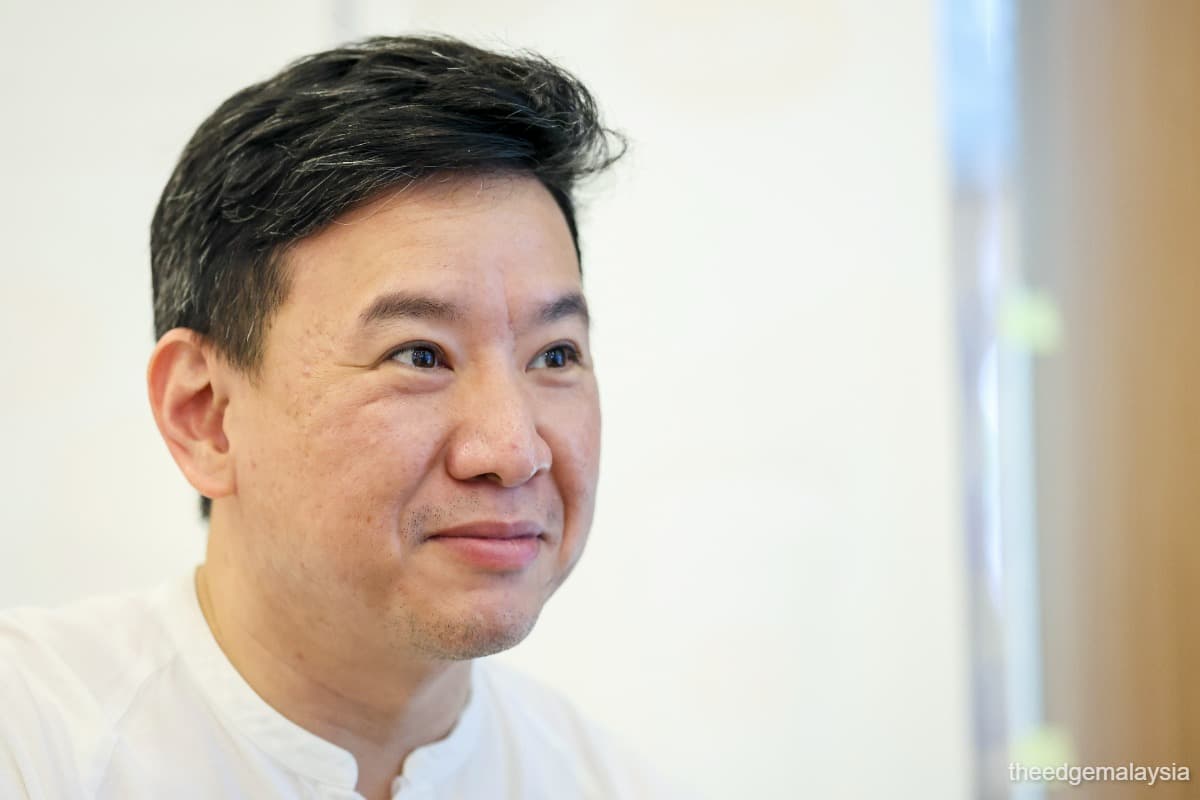
Its founder Irvin Kuan Wai Tuck, who spent 18 years in fund management, says large companies have long had access to treasury management and money-market products, while smaller businesses often do not.
"You always hear financing, financing, financing, and fair enough, because financing gets the business to grow. But people stop at that and don't ask the further question, which is, once the money comes in, how is it managed? That's where you get things like a lack of discipline, and a lack of understanding of how money management can generate additional income."
Fortéfi's pitch is to give SMEs access to cash management tools to invest their excess cash for extra returns, while keeping the process simple enough that it does not distract business owners from running the business.
"Treasury management is for all. Making your money work harder is for all," says Kuan in an interview with Wealth.
The firm operates under the Securities Commission Malaysia's Digital Investment Management framework, alongside others such as StashAway and Wahed.
Putting reserve and operating cash to work
In fact, Kuan says businesses do not necessarily need to wait until they have "excess" cash before investing.
"It's a misunderstanding that you only invest your excess cash. The truth is any cash you have, operating cash, can also be invested, as long as it's put into low risk investments."
He gives the example of a food and beverage business that receives payments throughout the day, but leaves the money sitting in a current account until it is needed. But under Fortéfi's model, that cash can be placed in a money market fund and withdrawn when the business needs it.
Unlike conventional investments, where clients are generally encouraged to leave their money invested, Fortéfi is built around liquidity. Depending on the portfolio, redemptions range from the next business day to about five business days.
A company paying salaries on the 25th of the month, for example, could potentially earn a return on the cash sitting idle before then, he says.
"It might not seem like a lot, but from a small business's perspective, even a few hundred ringgit will extend the lifeline, will ensure the business continues to run."
Fortéfi does not manage the underlying funds itself. It acts as a platform, placing clients' money into funds managed by other asset managers.
The platform has no minimum investment and is designed for businesses rather than individual investors.
Transactions use a maker-and-checker system, meaning one person initiates an action and another approves it.
'We aren't a black box,' says Kuan
Fortéfi operates as a robo-advisory firm, but this does not mean the platform is simply an automated system left to make investment decisions on its own.
The placement of money into funds, fund selection and portfolio rebalancing are algorithm-driven. However, human judgement is still used to decide how the system should respond to changing market conditions.
"You cannot remove the element of substantive judgement to determine whether or not certain market regimes will require us to, say, allocate into a different asset class."
The company has a multi-asset strategist with more than 25 years of experience, and a former chief investment officer of an insurance company as a strategic adviser, according to Fortéfi.
Kuan also rejects the idea that Fortéfi operates as a black box. "We aren't a black box, and I wouldn't want to put any investor of ours into a black box situation. For every input, there must be a corresponding output that can be explained."
He says the company is cautious about using artificial intelligence to manage clients' money, although AI could eventually be used to monitor market movements.
For Kuan, the bigger focus is consistency rather than chasing the highest possible return. "Investments is not about making you the highest returns. It's about helping you generate returns to achieve your goals."
Portfolios with different risk profiles
Fortéfi's projected return of up to 4% a year is for its conservative cash portfolios. Kuan says about 90% of a business's money should generally sit in the least risky portfolio, which invests mainly in fixed deposits and low-risk instruments, while money set aside for longer-term goals could be placed in higher-risk portfolios.
According to its pitch deck, the firm's balanced and aggressive portfolios show annualised returns of 11.45% and 15.11%, respectively, over a 36-month period, from March 2023 to March 2026.
Those are backtested figures. Fortéfi was incorporated in March 2024 and only began its commercial operations in 2026.
"Our model had run from March 2023 all the way until March 2026. Backtested. Our real track record starts from April."
The company's live track record is expected to be published from early next year.
Fortéfi's higher-risk portfolios also include equities and gold, which means returns can fluctuate. "When you expose yourself to those asset classes, the variability is there. 15% today can be five tomorrow."
Fortéfi invests clients' money in investment instruments, including money market funds. While these may invest in bank deposits, they are investment instruments that are not insured by Perbadanan Insurans Deposit Malaysia, or PIDM.
Transparency as the selling point
Fortéfi had about RM20 million in assets under management at the time of the interview, including investments from two Bank Negara Malaysia-licensed entities.
Kuan says early clients are not necessarily joining because they expect higher returns. Rather, transparency has been the bigger draw.
"They are coming to us because of transparency. The ability to have their authorised person view their balances is already something certain industries are not experiencing."
One feature, Group View, allows an authorised person to see the investments of several companies from one dashboard and approve or reject transactions. Every trade and transfer is recorded on the platform.
Kuan says this has attracted interest from a highly regulated industry that is looking at whether the same system could be applied to its operations.
The company has also tried to reduce the paperwork involved in onboarding SMEs. It requires a board resolution and a certified copy of an identity card, while other statutory documents are obtained through a data partner.
"A small business will not be able to get its statutory documents, pay for them, get them certified and send them to us. If our target market is SMEs, we have to absorb that cost.
"When people talk about accessibility, it actually comes from removing the friction to that access."
From managing cash to raising capital
Fortéfi's longer-term plans extend beyond treasury management. Kuan says digital assets and peer-to-peer lending were part of the company's original plans, but regulators encouraged it to begin with a simpler product for SMEs.
The next phase could see Fortéfi help businesses gain access to capital, although the company does not intend to become a lender.
"We come from a place of saying I want to support businesses to generate income with treasury solutions, to now giving them access to capital as a result.
"We are not in the business of financing, but we will provide the means for our clients to get financing," he says.
Kuan is targeting RM150 million to RM200 million in assets under management within six months of the interview.
Company filings show a business still in its early stages, with paid-up capital of about RM2.65 million and a profit after tax of RM3,544 for the financial year ended June 2025. Kuan holds about 74.6% of the company.
For now, the company is betting that the same demand for visibility and control exists among SMEs and larger organisations.
"Their original problem was not a returns issue; it was a transparency issue. That's the main goal."