

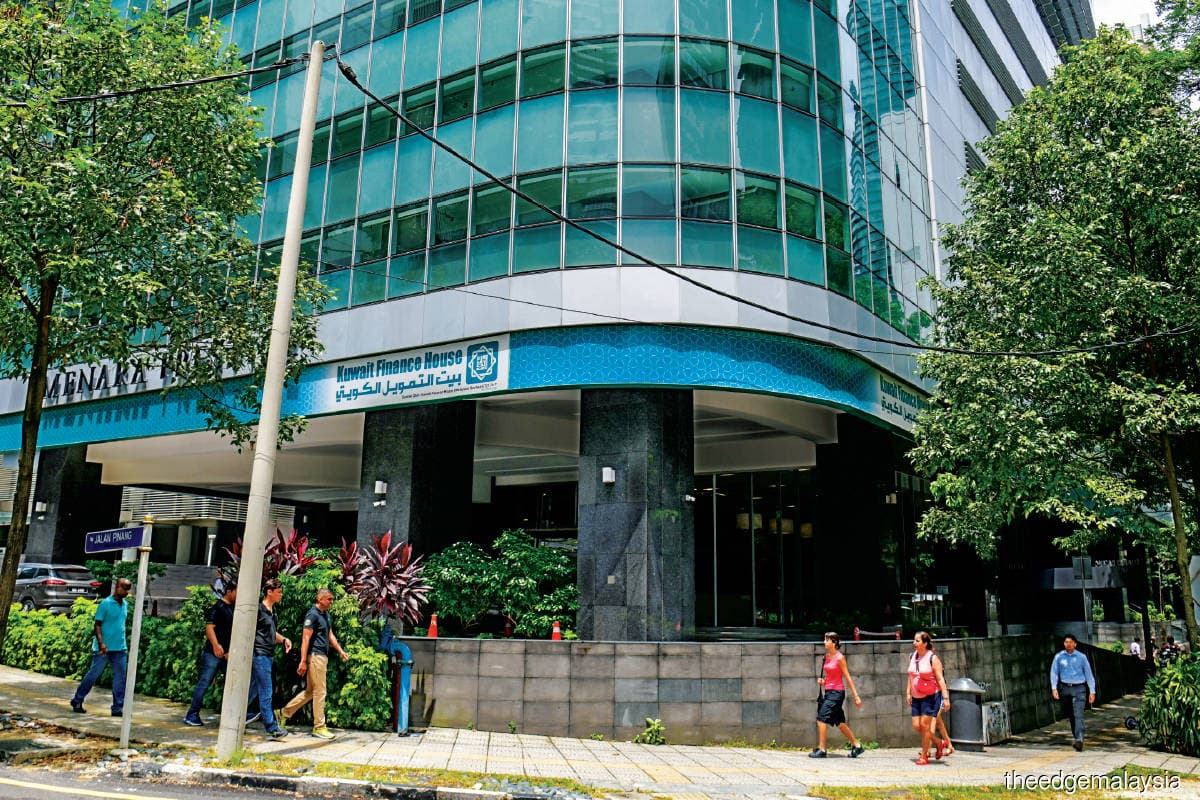
KUALA LUMPUR (Sept 24): Islamic bank Kuwait Finance House (Malaysia) Bhd (KFH) has won its legal battle against railway construction firm Emrail Sdn Bhd, former chief justice Tun Zaki Azmi, and two others, with the High Court dismissing Emrail's suit and awarding the bank RM39.09 million on its counterclaim for outstanding financing.
In his broad grounds of judgement delivered on Thursday at the end of a lengthy trial, High Court judge Datuk Quay Chew Soon ordered Emrail and its three joint guarantors — Zaki, Emrail shareholder Tan Sri Hari Narayanan Govindasamy, and Emrail chief executive officer Amrish Hari Narayanan — to jointly and severally pay KFH RM39,089,705.42 as of May 16, 2025.
The court also awarded interest at 5% per annum from the judgement date (Sept 24, 2026) until full settlement, along with RM100,000 in legal costs to KFH.
The suit, filed in December 2019, stemmed from a RM783.16 million contract awarded to Emrail by Prasarana Malaysia Bhd in November 2017, to construct trackworks and power conductor rail systems for the Light Rail Transit Line 3 (LRT3) project, supervised by project delivery partner MRCB George Kent Sdn Bhd (MRCBGK).
To support its working capital and performance bond requirements, Emrail secured an Islamic financing facility of up to RM320 million from KFH in January 2018, backed by joint and several personal guarantees from Zaki, Hari, and Amrish.
Emrail and the guarantors had taken KFH to court, seeking RM59.1 million in special damages for uncertified interim payment applications, RM7.9 million in expended costs, and general damages.
They alleged that KFH had breached its agreement and acted negligently by failing to issue a performance bond in a timely manner matching the exact template required by MRCBGK, thereby causing Prasarana and MRCBGK to withhold interim payments.
Quay: Bank retained right to approve guarantee format
In dismissing the suit, Quay held that the governing contractual documents did not compel KFH to issue a performance bond in whatever format the project delivery partner demanded.
Quay pointed out that as the issuing financial institution assuming legal and financial liabilities, KFH retained the contractual right to review the scope and wording of the instrument.
According to details of Emrail's suit, Prasarana had stipulated that Emrail must submit a “performance bond” for almost RM40 million in favour of Prasarana and MRCBGK, upon undertaking the contract worth RM738 million.
In January 2018, KFH granted Emrail a financing facility of up to RM320 million, which included the Murabahah Tawarruq General Working Capital Financing and Kafalah Bank Guarantee to part-finance Emrail's working capital and other requirements as the contractor of the works package.
Emrail alleged that KFH would have to issue a compliant performance bond as requested by Emrail and as required by MRCBGK and Prasarana, which guarantees due performance of work as stipulated in the contract between Prasarana and Emrail.
Emrail further claimed that a compliant performance bond was crucial to the project as it served as a pre-requisite for the project, and MRCBGK and Prasarana were entitled to terminate the contract if a compliant performance bond was not provided.
In August 2019, MRCBGK terminated the LRT3 contract given to Emrail.
In his judgement on Thursday, Quay agreed with KFH’s defence that they were under no obligation to issue the performance bond based on the format requested, and that it was not part of the terms under the Kafalah Bank Guarantee Agreement.
The bank also said that it would be contrary to shariah law if they issued the performance bonds based on the format requested by Emrail and MRCBGK, given that the performance bond made reference to an agreement that had not been executed and dated.
Quay said that Emrail’s argument that KFH is obliged to follow the performance bond template was not part of the deal between both parties. He said that Emrail had not stated this expressly before the contract was signed.
“In the premises the plaintiffs (Emrail and others) do not have any meritable case against KFH. The issue regarding the performance bond is baseless. On the other hand, the plaintiffs made various admissions regarding the debt owed to KFH, and KFH is entitled to such payment,” he said in awarding the payment to KFH as part of its counterclaim in the suit against Emrail.
In allowing KFH's counterclaim, Quay ruled that the Islamic financing facility had expired on Oct 31, 2021, rendering the outstanding debt immediately due and payable.
The court affirmed that KFH's certificate of indebtedness served as conclusive evidence of the RM39.09 million sum.
The judge rejected the plaintiffs' contention that repayment was restricted solely to LRT3 contract proceeds, holding that the deed of assignment over contract proceeds served as collateral security rather than an exclusive source of repayment.
Consequently, the personal guarantees executed by Zaki (a shareholder of Emrail), Hari, and Amrish remained fully enforceable.
The trial commenced in April 2023 before judge Ahmad Murad Abdul Aziz before being concluded under Quay in June 2026.
Shaarvin Raaj Selva Kumar, Anusha Asokakumar, Ravvenneah Kalisvaran, Jeyakrishna Jeyagobi and Iman Nur Alya from Messrs Kumar Partnership acted for Emrail and others.
Syed Faisal Al-Edros Syed Abdullah, Mohd Wafiy Azman, Choo Shi Jin, Nasbal Harun, Ahmad Iqbal Rohaizan, Iqbal Rohaizan, and Wardah Yunus from Messrs Azmi & Associates acted for KFH.