

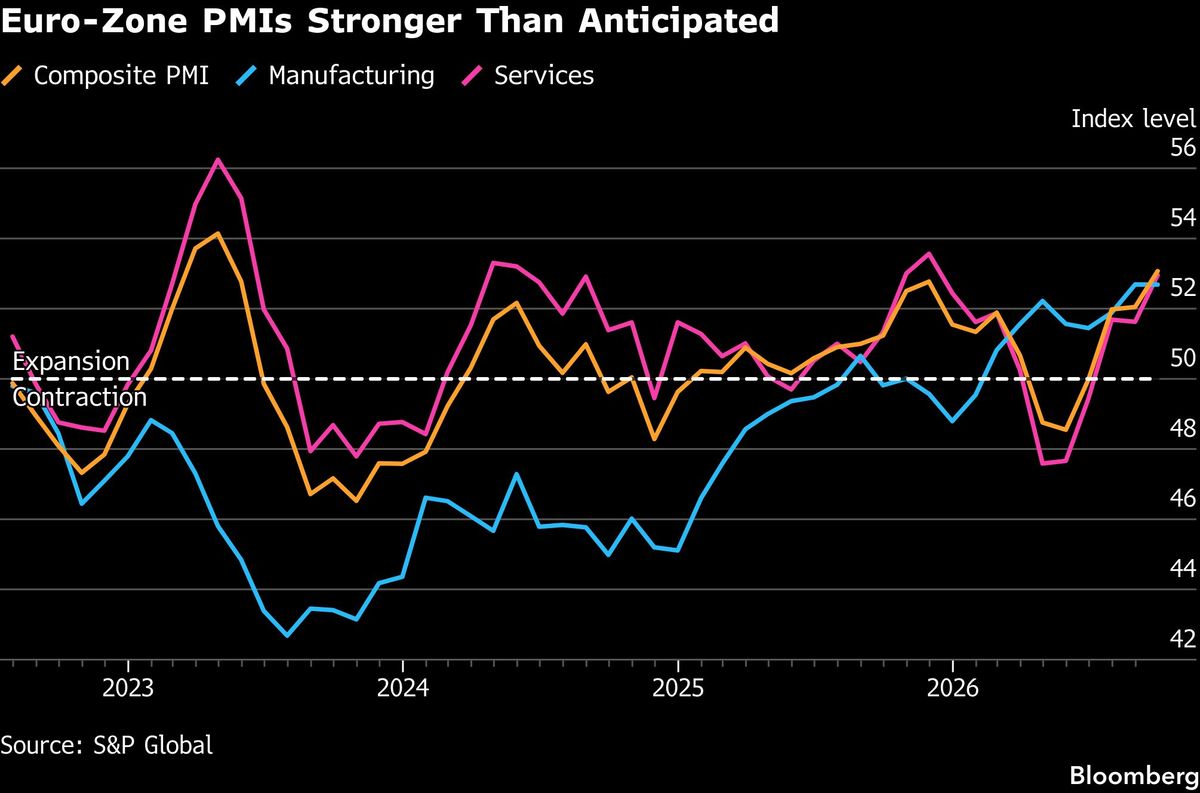
(Sept 23): Private-sector activity in the euro area grew at the fastest pace in more than three years as the service sector unexpectedly improved.
The Composite Purchasing Managers’ Index compiled by S&P Global increased to 53.1 from 52 in August, well above the 50 threshold separating growth from contraction. Analysts in a Bloomberg survey had anticipated a small decline to 51.7.
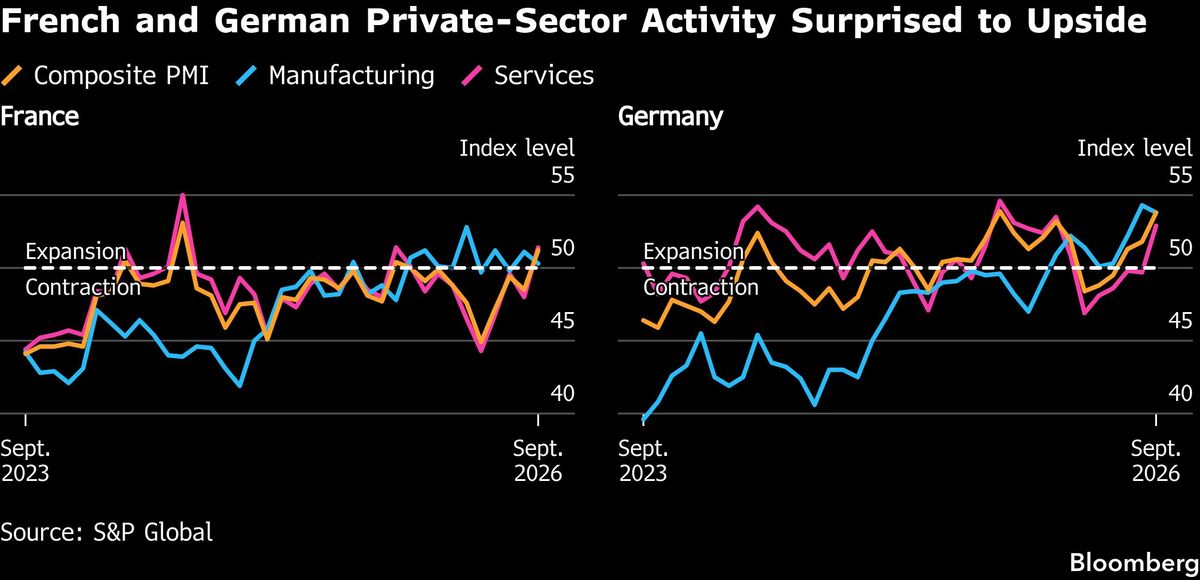
The region’s two largest economies both exceeded expectations, with activity in Germany growing at the fastest pace since October 2025 and France unexpectedly expanding at the quickest in more than two years.
“Manufacturing, spearheaded by Germany, is enjoying its best growth spell for over four years, spurred by rising AI and defence spending,” Chris Williamson, chief business economist at S&P Global Market Intelligence, said Wednesday in a statement. “But service-sector growth is also perking up to signal a broad-based improvement in the economic growth story.”
The euro-area economy is showing greater resilience than expected to the Middle East conflict and the resulting jump in energy costs. How long it can resist such headwinds remains uncertain, however, with inflation at its highest level in almost three years and borrowing costs rising.
The European Central Bank lifted interest rates this month for the second time since the Iran war broke out and is expected to do so again, possibly as early as October. Officials have been reassured by the robust economy, upgrading this year’s growth projection to 0.9%.
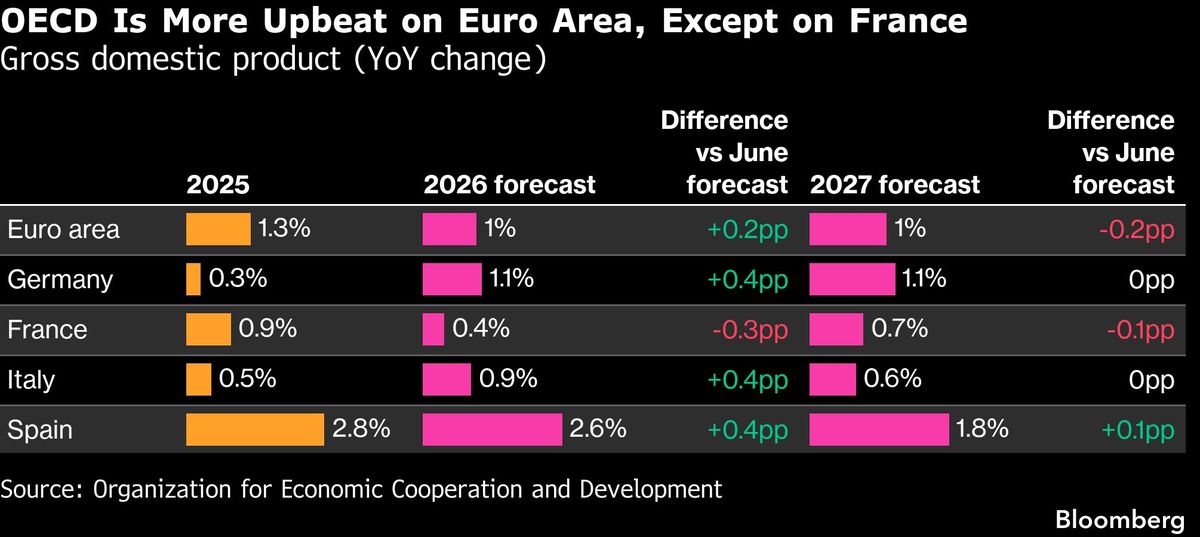
The OECD also revealed a more positive outlook for the euro area, raising its 2026 growth forecast on Wednesday by 0.2 percentage points to 1% and also lifting its predictions for Germany, Italy and Spain. By contrast, it slashed its estimate for France and now sees the currency bloc’s number two economy expanding just 0.4%.
Boosts this month to eurozone manufacturing and services order books hint at “sustained momentum heading into the fourth quarter", Williamson said. But he noted that economic strength is driving consumer prices higher.
“It’s no surprise to see inflationary pressures on the rise again in September, given the increase in energy prices emanating from the ongoing conflict in the Middle East,” Williamson said. “The resilience of economic growth amid the headwinds of geopolitical issues and rising prices will likely embolden the ECB to hike interest rates again before the end of the year.”
While there may be some weakness from the household side in the months ahead, better times look set to follow, according to Holger Schmieding, chief economist at Berenberg.
“Probably consumption growth will slow down in the next few quarters because prices are high,” he told Bloomberg Television. “But once that is over, once we get a half resolution of the Iran situation, the eurozone is probably heading for a nice upswing next year and probably even a mini boom in 2028.”
PMIs are closely watched by markets as they arrive early in the month and are good at revealing trends and turning points in an economy. A measure of breadth of changes in output rather than depth, business surveys can sometimes be difficult to map directly to quarterly GDP.
Uploaded by Arion Yeow