

KUALA LUMPUR (Sept 23): A large majority of developers are delaying property launches in the remaining months of 2026 as rising construction costs squeeze margins and take-up remains soft.
Apart from unfavourable market conditions, delays in approval and higher number of unsold stock were the top three reasons for not launching any projects in the second half of 2026 for 63% of the developers, according to the Real Estate and Housing Developers’ Association Malaysia (Rehda).
Developers have to reassess launch schedules rather than commit to projects with weak take-up, as construction payments would continue even if sales fail to meet expectations, said Rehda president Datuk Zaini Yusoff.
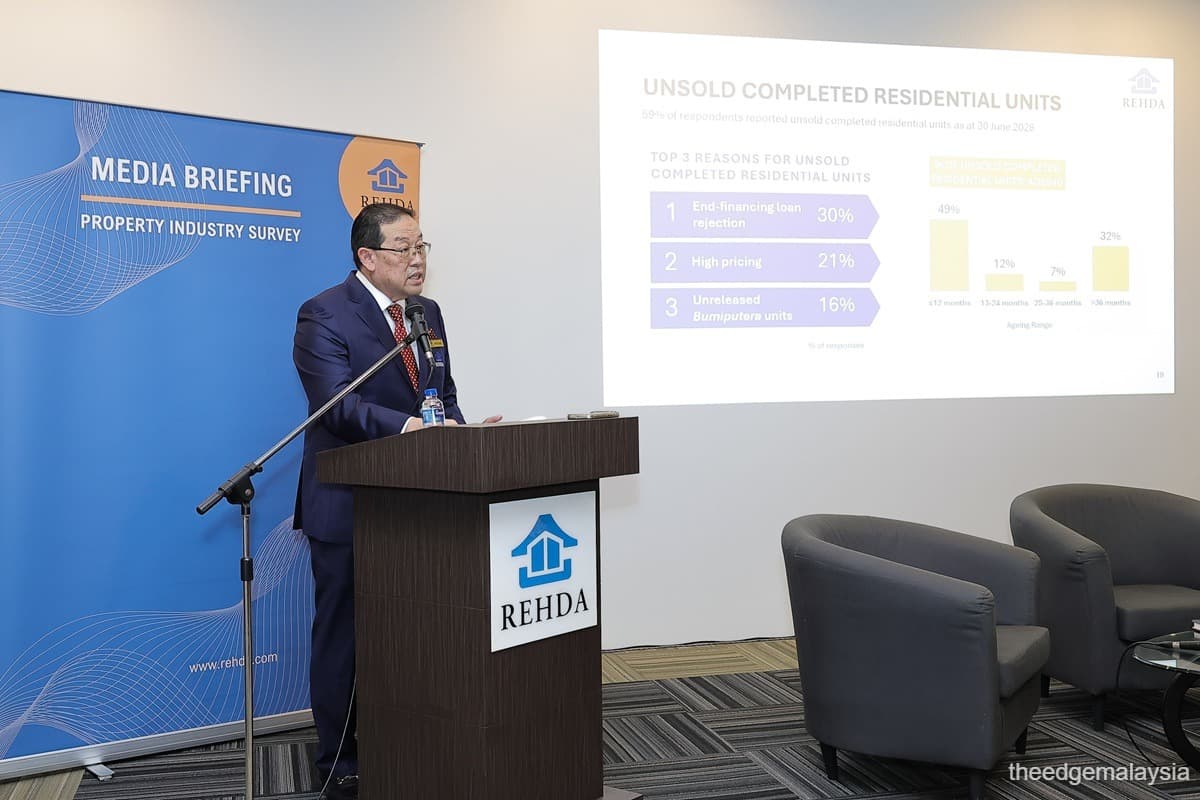
Zaini was speaking at a briefing on Rehda’s latest Property Industry Survey on Wednesday. Conducted by Rehda Institute in July and August, the survey covered 181 members in Peninsular Malaysia and assessed their first-half performance and expectations going forward.
In the first six months of 2026, sales from new residential launches rose 3.2% from the preceding six months to 5,260 units. The take-up rate edged up to 33.2% from 32.2%, while launch volumes were largely unchanged.
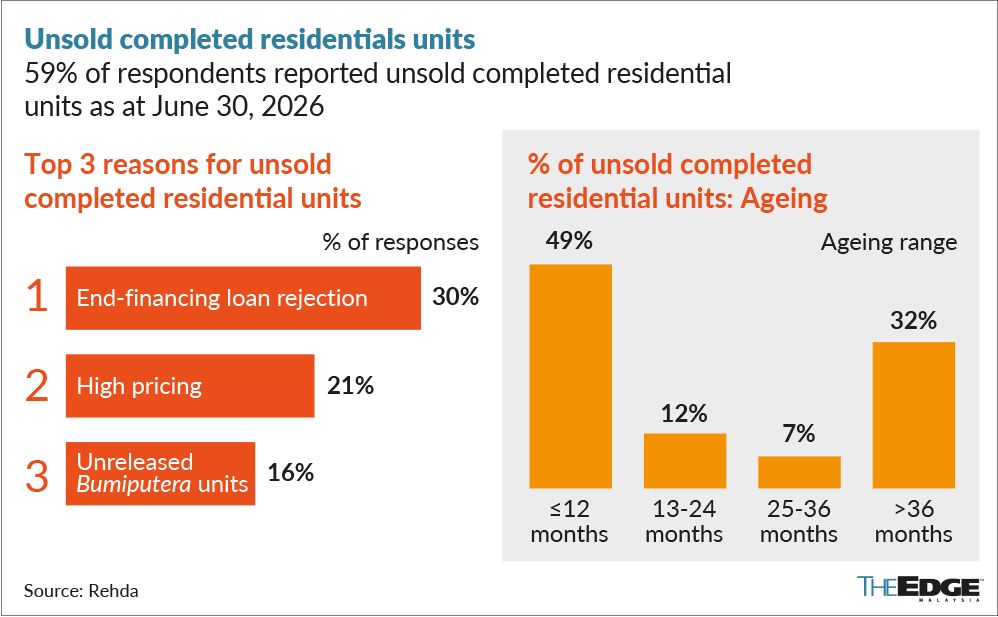
Some 59% of respondents in the survey reported unsold completed residential units as at June 30, with buyer loan rejections, high prices and unreleased Bumiputera units cited as the main reasons. Of the reported unsold completed stock, 32% had remained unsold for more than three years.
Still, developers planning to brave the market in the second half of 2026 will launch 18,696 residential units, about 18% more than the 15,834 units launched in the first half.
“We are quite optimistic that the market will turn around” once the geopolitical conflict is resolved, Zaini said. Buyers, however, likely to remain cautious into early next year, he said.
Higher costs
Construction costs have risen between March and June 2026, with an average increase of 13%, affecting 90% of the 168 developers who answered the survey’s question on recent global economic challenges.
Respondents linked the increase to rising fuel prices and geopolitical uncertainty. In response, developers accepted lower profit margins, renegotiated contracts with contractors and suppliers, raised selling prices, reviewed project designs and specifications, and delayed launches.
Earthworks and infrastructure were more exposed to diesel and oil-linked materials such as bitumen, with some experiencing increases of about 20% to 25%, compared with around 3% to 5% for ordinary building works.
However, Zaini said construction material prices had broadly stabilised following the initial increase, and he does not expect another jump of similar magnitude even if the conflict continued.
Developers and contractors had already factored anticipated cost increases into recent tenders, he said. For existing contracts, some developers agreed to share the additional costs to ensure contractors could complete their work.
“We don’t want a contractor to fail and the project is not completed,” Zaini said, adding that most developers are currently reviewing designs and undertaking value engineering to keep homes within prices the market could absorb.