

This article first appeared in The Edge Malaysia Weekly on September 21, 2026 - September 27, 2026
SINGAPORE-listed Riverstone Holdings Ltd sees itself as a proxy for the current boom in the semiconductor industry simply because it is making clean room gloves, which command higher margins than medical gloves.
As semiconductor manufacturing becomes increasingly sophisticated, the need for contamination-controlled environments and specialised clean room products continues to grow.
Riverstone’s clean room glove operation has widened its net profit margin to above 20% — more than double that of its Malaysian peers listed on Bursa Malaysia.
Beyond clean room gloves, Riverstone, which runs manufacturing plants in Malaysia, Thailand and China, is looking to strengthen its presence in the broader clean room consumables segment, which includes premium face masks, packaging bags, finger cots and wipes. This would allow it to tap the increase in orders for specialised consumables.
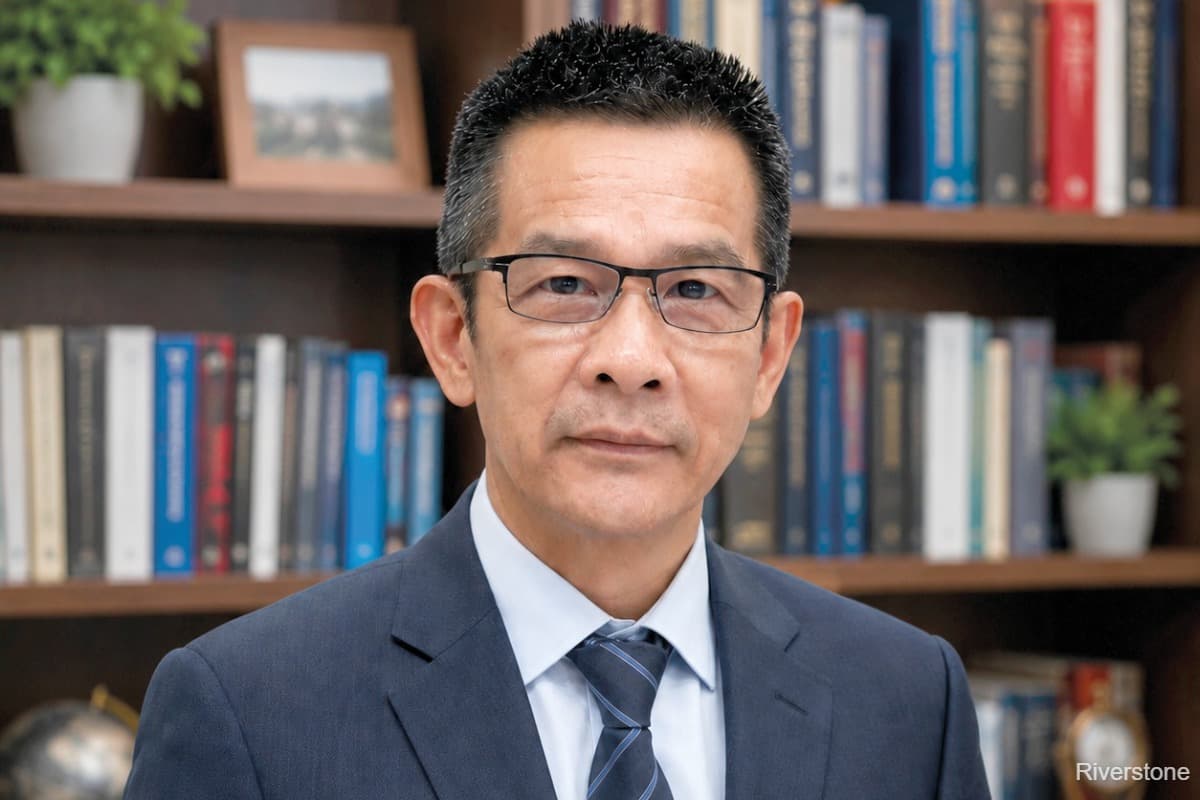
“We need to have a full package of clean room products for our customers. We are expanding our clean room face mask production at our Taiping plant now and we want to expand our packaging bag production as well because we have received very good support from our customers,” Riverstone founder, executive chairman and CEO Wong Teek Son, 64, tells The Edge in an interview.
Currently, clean room consumables command a gross profit margin of more than 30% even though they contribute less than 10% to the group’s revenue.
Wong says the company’s clean room products are mostly sold directly to end-users under the Riverstone brand, helping the group maintain relatively high margins without having to go through middlemen or distributors.
Although many players can enter the Class-10,000 and Class-1,000 lower-specification segments, Wong says very few can consistently meet the Class-10 and Class-100 specifications that Riverstone mainly caters for.
“We can sell at high prices because we focus on high-end markets … our electronics customers have their cost-down activity every quarter or half year. The good thing is that the product specification itself has to be upgraded. So, whenever there is a new version, we can mark up the price,” he explains.
Thailand is the largest market for Riverstone’s clean room gloves, thanks to the large number of hard disk drive (HDD) component suppliers there.
The production and assembly of electronic products in the HDD and semiconductor industries demand exacting clean room standards for particle and static control in order to protect highly sensitive electronic components from contamination.
It is worth noting that in the lucrative clean room glove segment, Kossan Rubber Industries Bhd (KL:KOSSAN) is expanding its business through the proposed acquisition, announced last month, of two clean room product businesses in Singapore and Thailand for a total of RM48.41 million.
Meanwhile, Wong says 70% of Riverstone’s healthcare gloves are exported to the US while the remaining 30% go to Europe and Japan.
Chinese glove players currently face a 100% tariff on their medical-grade gloves exported to the US, giving a distinct advantage to non-Chinese players.
Wong acknowledges the challenge of competing with the Chinese players outside the US market but he says he is encouraged by the willingness of environmental, social and governance (ESG) conscious customers to pay a premium for products manufactured using renewable energy to reduce carbon emissions, which accords Riverstone a competitive advantage in the global market.
“It’s difficult to quantify the actual savings as we still use a mix of renewable energy sources. When we switch from fossil gas to biomass, we can see significant cost savings in terms of raw material costs. However, from an operational standpoint, biomass requires more maintenance than fossil gas,” he explains.
Riverstone, which has an annual production capacity of nine to 10 billion gloves, has four manufacturing plants in Malaysia (comprising three in Taiping, Perak, and one in Bukit Beruntung, Selangor), as well as a plant each in Thailand and China.
Of the company’s total production capacity, 20% is allocated to clean room gloves, which contribute 70% to gross profit, reflecting the segment’s relatively high profitability.
The remaining 80% of production capacity is dedicated to healthcare gloves, which account for the remaining 30% of gross profit.
Easing competition from China?
Recently, news of easing competition from Chinese glove makers has seen a rally in the share prices of Bursa Malaysia-listed glove players.
Intco Medical Technology Co Ltd, the world’s largest disposable glove manufacturer, was reportedly raising its prices by RMB15 to RMB40 (RM9 to RM36) per 1,000 pieces by Sept 9, narrowing the price gap between the Malaysian and Chinese players.
According to Affin Hwang Investment Bank, the price gap has narrowed to about 50 US cents per 1,000 pieces from nearly US$4 in 2022 and 2023.
While this development is positive for Malaysian players as “the buyers may not press so hard on prices”, Wong says it remains to be seen whether Intco’s customers accept the increase.
Analysts too are cautious on the outlook for the glove sector, citing the relocation of Chinese glove manufacturers to Indonesia and Vietnam to avoid higher US tariffs.
PublicInvest Research has stressed that there could be further risk of market share erosion if domestic players continue to compete primarily on volume and price, reinforcing the need for innovation and product differentiation to defend margins.
“While the recent increase in Chinese glove average selling prices has provided room for Malaysian manufacturers to raise their prices, their structural cost disadvantage continues to constrain competitiveness,” the research house says in a Sept 17 note.
Malaysia’s share of global glove production declined from 54% in 2018 to 36% in 2025 while China’s rose from 8% to 23% over the same period, reflecting its rapid capacity expansion.
For the financial year ended Dec 31, 2025 (FY2025), Riverstone reported a lower net profit of RM207.77 million, down 27.6% from RM286.93 million in FY2024, mainly owing to the strengthening of the ringgit and volatile raw material costs.
As a result, its net profit margin narrowed to 20.9% in FY2025 from 26.7% in FY2024.
Annual revenue slipped 7.2% year on year to RM995.3 million in FY2025, due to softer demand from several key markets, particularly Europe and certain parts of Asia.
Improved selling prices were reflected in its latest 1HFY2026 results, with net profit expanding 5% to RM106.9 million from RM101.8 million in the same period a year ago despite a 3.2% decline in revenue to RM480.9 million from RM497.1 million previously.
Generous dividends
It is worth noting that Riverstone has been paying generous dividends to its shareholders, with a dividend payout ratio exceeding 100%.
“We plan to maintain about RM500 million to RM600 million in our balance sheet. We don’t want to keep the money and let it depreciate year after year if there are no expansion plans. This is not a policy, but this has been our practice for a few years,” Wong says.
Despite lower earnings, the group had a dividend payout ratio of 121.3% in FY2025 based on a dividend per share of 17 sen against 24 sen in FY2024. Its dividend payout ratio even reached a peak of 160.3% in FY2022, before moderating to 151.3% in FY2023 and 124% in FY2024. Its 12-month trailing dividend yield stands at nearly 6%.
Nonetheless, in view of the prolonged Middle East conflict that has significantly pushed up global raw material prices, Wong highlights the need to maintain substantial cash reserves to prepare for unforeseen circumstances. As at end-June 2026, the company had a net cash balance of RM576 million.
“Certain raw material prices surged by 100% after the war, leading to a big increase in working capital. We have learnt a lesson [from the war] and have to be careful. We cannot assume that the business environment will always be the same.”
Wong, a chemistry graduate, had begun his career as an R&D chemist in 1985, spending two years in the field. He then had a brief stint as a reporter with a local Chinese daily before founding Riverstone in 1989.
“I felt bored working in the lab, so I joined China Press and worked there for two years before joining a factory as a chemist. The factory I worked for decided to temporarily cease operations due to competition. I then took over the plant and started out by packing gloves and rolling finger cots for electronics companies. I was very lucky to have developed the coordination process by helping glove companies to convert their gloves to powder-free gloves,” he says, recalling how he had started the business.
And as Riverstone grew bigger, Wong decided to list the group in Singapore in 2006.
He says there are no plans for a secondary listing as management resources are limited and the current Singapore listing is considered adequate. He notes that the group does not want to divert focus from day-to-day operations and the strategic execution of its business plans.
“I don’t see any benefit in having a secondary listing in Malaysia. Our size is not that big. Previously, Malaysian glove manufacturers had better valuations than us in Singapore. But right now, the valuation is fair, so we don’t want to divert our focus because we have very limited resources,” he adds.
Wong has a 0.6% direct stake and a 50.85% indirect stake in Riverstone via Butterfield Trust Asia Ltd. Co-founder, chief operating officer and executive director Lee Wai Keong owns 8.82%.
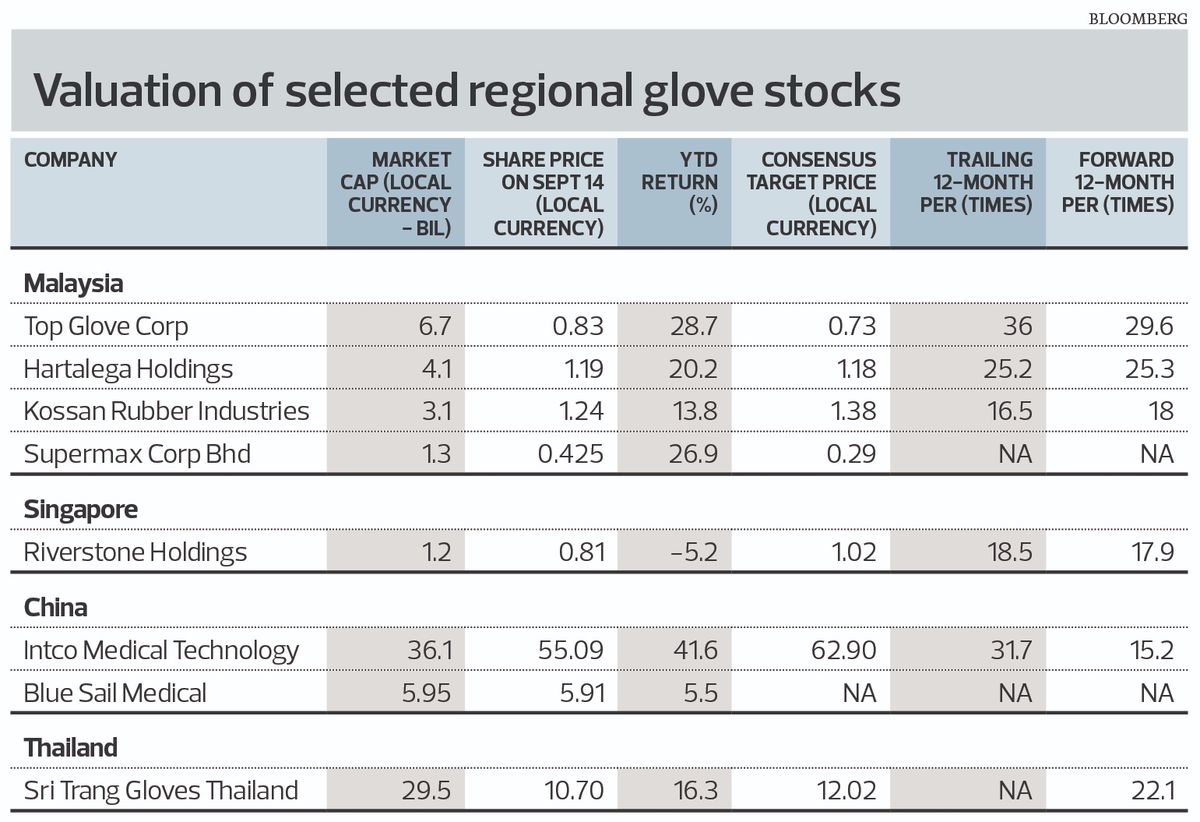
Riverstone’s share price has slipped 5.2% year to date, closing at 81 Singapore cents last Tuesday for a market capitalisation of S$1.2 billion (RM3.8 billion). The stock is trading at a forward 12-month price-earnings ratio (PER) of 17.9 times.
Although Kossan is trading at a similar valuation of 18 times, two other Bursa-listed peers — Top Glove Corp Bhd (KL:TOPGLOV) and Hartalega Holdings Bhd (KL:HARTA) — command significantly higher forward 12-month PERs of 29.6 times and 25.3 times respectively.
Meanwhile, Intco is trading at a lower forward 12-month PER of 15.2 times compared with Sri Trang Gloves Thailand PCL’s 22.1 times.
Save by subscribing to us for your print and/or digital copy.
P/S: The Edge is also available on Apple's App Store and Android's Google Play.