

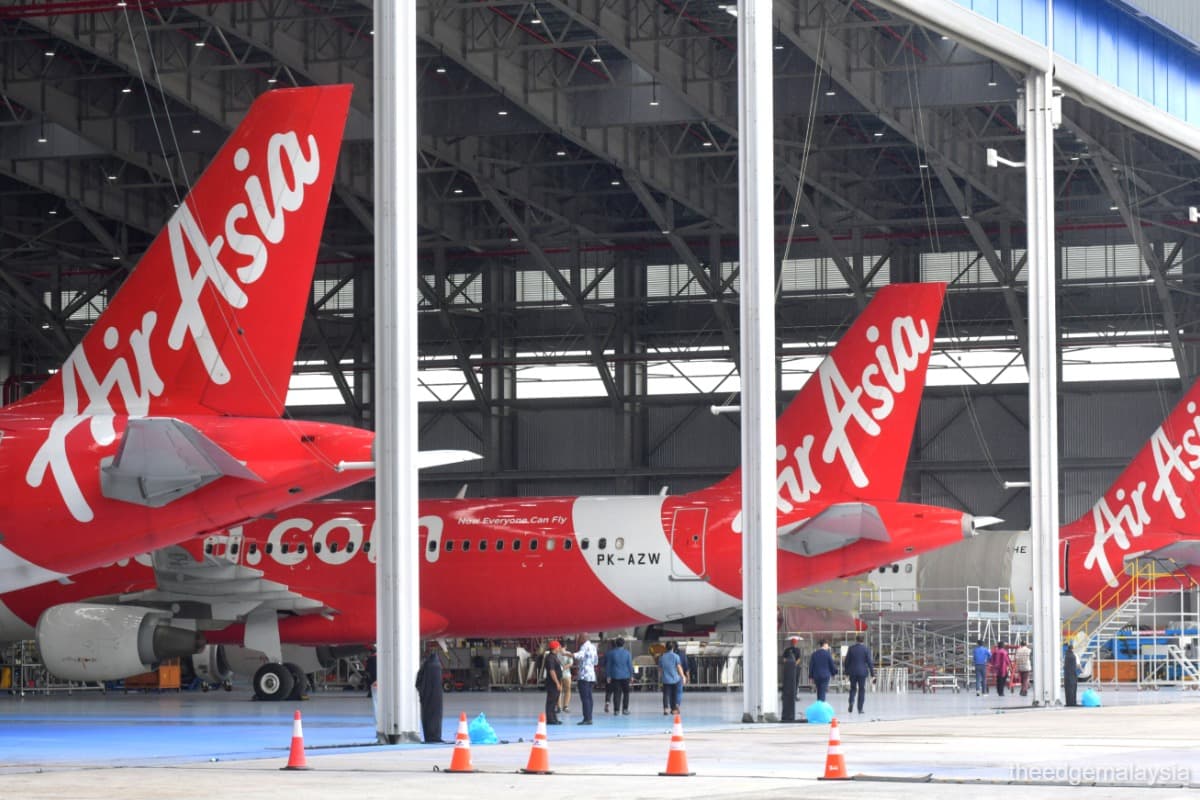
This article first appeared in The Edge Malaysia Weekly on September 21, 2026 - September 27, 2026
AIRASIA Group Bhd (KL:AAGB), which is seeking to raise up to US$1 billion (RM4.08 billion) on the international debt market, has dismissed concerns about its liquidity, with co-founder and adviser Tan Sri Tony Fernandes insisting that the low-cost carrier remains financially resilient.
“We do not need a rescue, bailout or whatever,” he said, adding that the group was “good at managing cash” and “strong in liquidity” and had more than RM1 billion available.
Fernandes’ remarks come amid heightened scrutiny of AirAsia’s finances and funding needs as surging fuel costs and mounting losses following the Iran war weigh on the airline. Its share price has fallen nearly 70% year to date, closing at 53 sen last Friday, giving the company a market capitalisation of RM1.78 billion.
The decline has coincided with reports that the government was conducting scenario planning around AirAsia’s financial position, including discussions with rival airlines about absorbing some of its domestic market share should the need arise.
Reuters reported, citing sources, that AirAsia could require at least US$3 billion in fresh capital — substantially more than the US$1 billion in international funding and RM700 million in local facilities the airline said it is seeking.
Fernandes rejected the suggestion that AirAsia had sought a government bailout. He also said he had no knowledge of the Ministry of Finance’s reported appointment of Alton Aviation Consultancy to assess the group’s funding requirements. “There have not been any discussions with the government,” he said at a press conference last Friday.
Fernandes said AirAsia is targeting December or January to complete its fundraising. He added that the group had received a signed US$1 billion term sheet from a Middle Eastern investor, but was considering other options in search of better terms. It is also in discussions with banks in Europe, the US and Malaysia.
AirAsia described the fundraising exercise as “largely refinancing to lower interest costs and improve terms, not new capital”.
‘Refinancing alone will not be sufficient’
However, an aviation analyst who spoke to The Edge on condition of anonymity says refinancing alone will not be sufficient if the current operating environment persists.
“While AirAsia’s losses will likely narrow quarter on quarter in the third quarter ending Sept 30 (3QFY2026) due to the non-recurring foreign exchange (forex) losses suffered in 2QFY2026, the group will likely still report core losses if fuel prices remain high. And loss is loss, meaning that the group will eventually have to raise fresh capital,” says the analyst.
He notes that AirAsia had entered the latest fuel shock with a relatively weak balance sheet even after completing its aviation restructuring. Under a more normal operating environment, the group may have been able to rebuild its equity position gradually through internally generated earnings, he says. “But as long as the status quo remains, it’s difficult to believe that the group won’t need new capital over the medium term,” he adds.
Put simply, cheaper refinancing may reduce financing costs, but does not rebuild the group’s capital base if losses persist.
AirAsia’s latest financial statements illustrate the pressure on its balance sheet.
In 1HFY2026, the group generated RM1.98 billion in operating profit before working capital changes. After working capital, interest and tax, however, it recorded a net operating cash outflow of RM581.6 million.
During the period, it received RM988.9 million from its private placement, RM651.6 million from debentures and RM1.17 billion from borrowings. It also repaid RM1.05 billion of borrowings, RM147.2 million of debentures and RM1.21 billion of lease liabilities, resulting in net financing cash inflow of RM404.5 million.
The RM1 billion private placement completed in January has been fully utilised, with RM954.6 million used for the enlarged aviation group and RM45.4 million for proposal expenses. AirAsia did not disclose how the RM954.6 million was split among permitted uses, including working capital, payments to lessors and suppliers, debt and lease repayments, and capital expenditure.
The composition of AirAsia’s liabilities also warrants a closer look.
Fernandes took issue with references to an about RM18 billion liability figure, noting that about RM13 billion related to total lease liabilities, most of which were classified as non-current and whose payments extend over several years rather than amounts immediately payable.
The group’s accounts at end-June showed RM18.41 billion in current liabilities. These included RM10.26 billion of trade and other payables, RM2.76 billion of current lease liabilities, RM2.09 billion of sales in advance, RM1.10 billion of aircraft maintenance provisions, RM803 million of borrowings and RM368 million representing the current portion of long-term debentures.
Total lease liabilities stood at RM13.33 billion, of which RM10.58 billion was classified as non-current. AirAsia said the total included deferred aircraft leases but did not quantify the deferred portion.
The RM18.4 billion current liability figure is therefore not equivalent to RM18.4 billion of financial borrowings due immediately. Nonetheless, AirAsia had RM3.87 billion of current assets against RM18.41 billion of current liabilities at end-June, leaving net current liabilities of RM14.54 billion. Cash and bank balances stood at RM953.7 million.
Refinancing also under scrutiny
Questions have also been raised about the structure of AirAsia’s existing financing. Bloomberg reported, citing people familiar with the matter, that the group was seeking the consent of Ares Management Corp and Indies Capital Partners to amend a US$200 million private credit facility, potentially allowing revenue from certain pledged routes to also support payments to aircraft lessors.
Fernandes denied that the group was renegotiating the Ares facility or seeking an increase in the borrowing. “There is no additional loan from Ares. There is no renegotiation with Ares. There is no increase in the facility,” he stressed, adding that AirAsia did not intend to take on additional high-cost private-credit debt.
Fernandes said the group had completed US$240 million of repayments on Covid-19-era financing over the past two years, with the final repayment made this month, and did not require bridge financing.
Fuel shock
The more immediate pressure point is fuel.
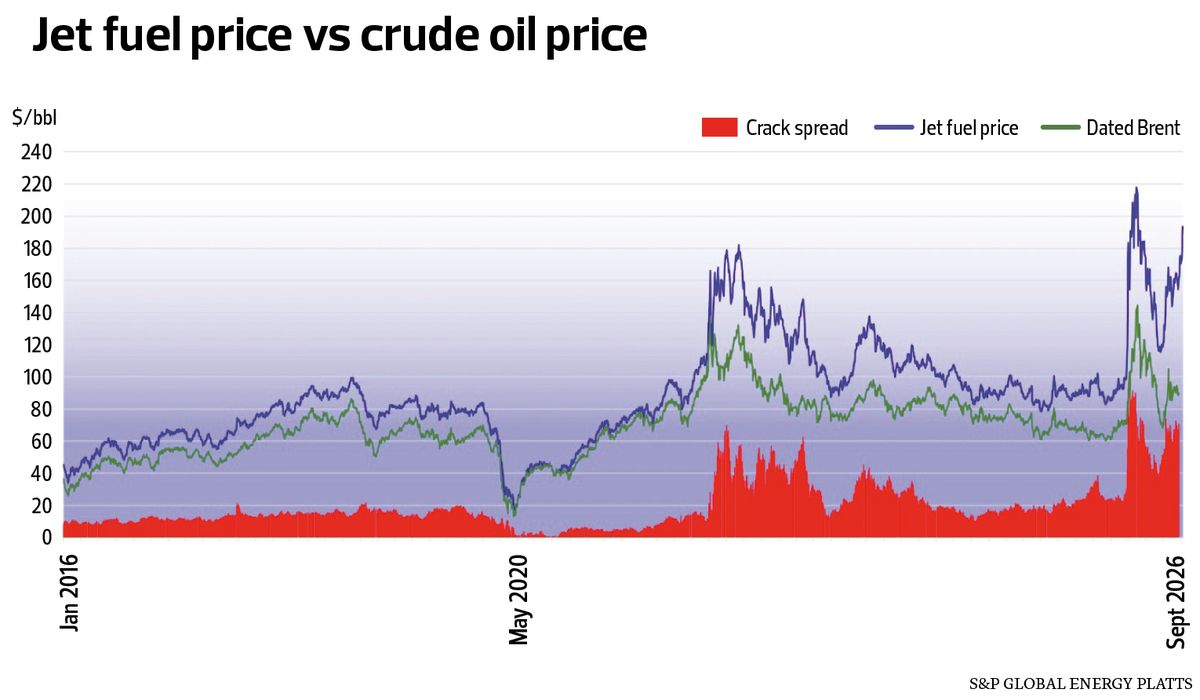
AirAsia’s average fuel price reached US$183 per barrel in the second quarter, up 66% from the previous quarter. Aircraft fuel expenses rose to RM2.8 billion, equivalent to more than half of the group’s RM5.09 billion quarterly revenue.
AirAsia recorded a net loss of RM527.2 million in 2QFY2026, including RM331 million in forex losses.
The airline said it had recovered about 70% of the increase in fuel costs through higher fares and lower non-fuel operating costs. It is cutting seat capacity by 20% to 25% year on year in the third quarter, with capacity expected to return towards pre-Iran war levels in the fourth quarter.
The fuel shock has also highlighted AirAsia’s limited disclosed hedging protection.
Earlier this month, AirAsia said it was establishing a broader fuel-hedging strategy and disclosed that Thai AirAsia had hedged 13% of its 3Q2026 fuel consumption at US$89 per barrel. IATA’s global jet fuel price stood at US$181.46 per barrel for the week ended Sept 11, up 101.6% from a year ago.
Fernandes said AirAsia had wanted to hedge before the latest escalation but had been unable to obtain the necessary credit. Once credit became available, he would prefer shorter-dated jet fuel hedges aligned with the group’s booking curve.
The limited protection is significant because airlines often sell tickets months before the associated fuel is consumed.
Fernandes said AirAsia had sold large numbers of tickets when jet fuel was around US$85 per barrel before prices subsequently surged towards US$200. He added that AirAsia could not retrospectively reprice passenger tickets already sold, contrasting this with its cargo business, where fuel surcharges can be applied.
“The second quarter is the worst quarter because we sold all our tickets mostly at US$85 per barrel for oil, but then we had to book in oil at almost US$190 per barrel,” said Fernandes, adding that the group expects its cash position to improve in the third and fourth quarters. Average fares were 21% higher in the second quarter and domestic fares had risen about 40% from pre-Iran war levels, while it expects fares to increase by more than 20% in 4Q as it continues to reprice for higher fuel costs.
AirAsia has responded by suspending underperforming routes, returning older aircraft, raising fares and prioritising capacity on routes that meet its profitability hurdles. Of the 81 routes suspended, it plans to reinstate 17 in 3Q and 4Q2026, while returning 25 older aircraft on what it describes as favourable terms.
Demand has held up so far despite the capacity cuts. AirAsia said its monthly load factor rose to 82% in August from 78% in June, even as August capacity remained 23% below the previous year. Load factor measures how well an airline is filling available seats. AirAsia also said forward sales for November and December remained healthy, while seats sold were outpacing the reduction in capacity.
Fernandes is also betting that the current geopolitical shock will prove considerably shorter than Covid-19. But that assumption remains increasingly difficult to forecast.
JPMorgan said last week that it no longer had a clear baseline view for oil markets for the first time since the start of the Iran war. “We simply don’t know how to model the endgame,” said its analysts, noting that several thresholds it had assumed the US administration would be unwilling to cross — including oil above US$100 per barrel, petroleum nearing US$5 a gallon and sharply higher US Treasury yields — had already been breached.
Supply risks have also spread beyond the Strait of Hormuz. Three pumping stations along Saudi Arabia’s East-West Pipeline were damaged this month, with sources cited by Reuters saying repairs could take five to six weeks, although partial pumping could resume sooner.
AirAsia has asked investors to look at its 3Q and 4Q performance as fare increases and capacity adjustments work through the business. The next tests are whether the group completes its refinancing on the terms and timetable management expects, and whether operating cash flow turns positive as those changes take effect, particularly if jet fuel prices remain elevated.
Save by subscribing to us for your print and/or digital copy.
P/S: The Edge is also available on Apple's App Store and Android's Google Play.