

(Sept 22): Qatar raised US$3 billion (RM12.23 billion) from its first public international bond of the year as the Gulf state contends with the economic fallout from the US-Iran war.
The deal drew more than US$7.7 billion in orders at the peak before bids eased to about US$6.8 billion, according to a person familiar with the matter. They asked not to be identified as they are not authorised to speak publicly.
The government, which has seen exports of liquefied natural gas plunge and its fiscal deficit rise because of the conflict and effective closure of the Strait of Hormuz, sold five- and 10-year bonds. The shorter debt was priced with a spread of 55 basis points over US Treasuries and the longer bonds were sold at 65 basis points. Both were about 30 basis points tighter than Qatar’s initial guidance.
The country issued US$3 billion of bonds in the private-placement market in April but had not entered the public market since November.
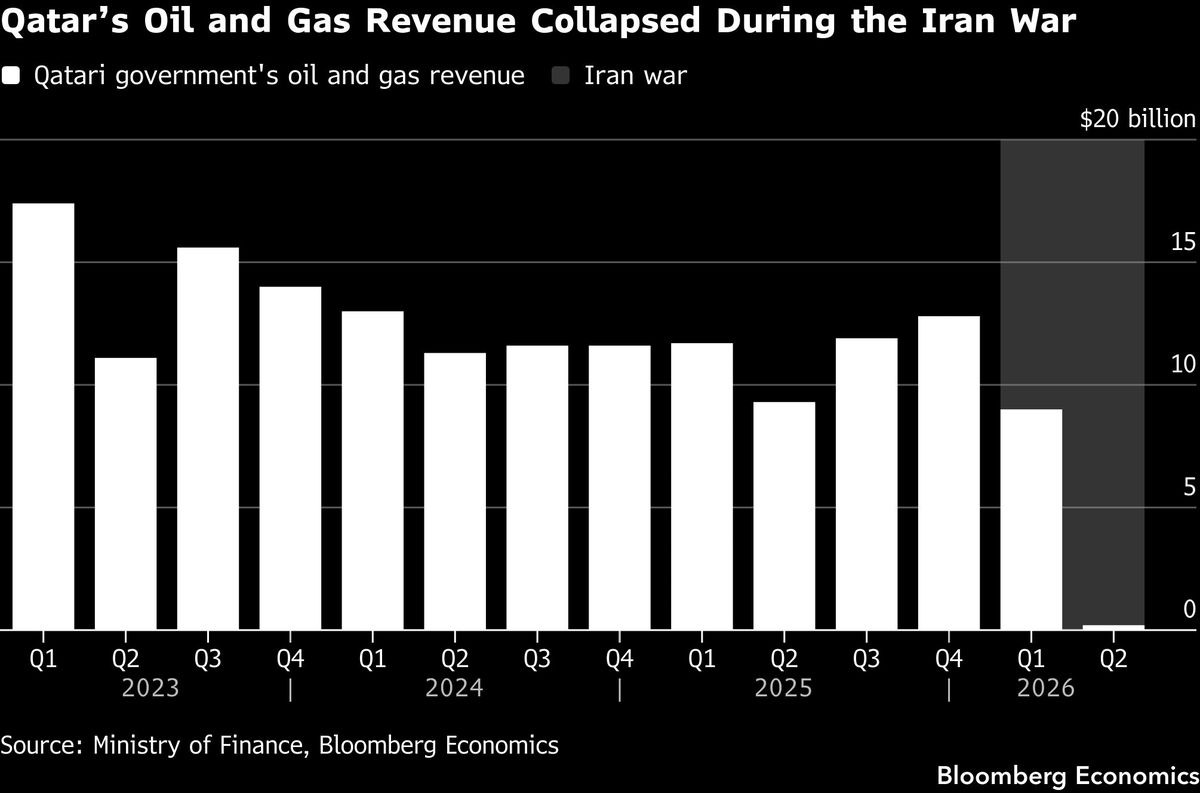
The disruption to shipping through the Strait of Hormuz has hit Qatar particularly hard because of its reliance on the waterway to export LNG, by far its biggest source of export revenue. That revenue collapsed to just US$200 million in the second quarter, from US$9 billion between January and March, according to data from the ministry of finance.
Qatar is helped by being one of the richest countries in the world, with buffers including a US$580 billion wealth fund and more than US$70 billion of foreign-exchange reserves. It is rated AA by S&P Global Ratings, the same as the UK and South Korea.
Yet its economy will contract 12.1% in 2026, according to a Bloomberg survey of economists. That’s the worst forecast among all the countries surveyed by Bloomberg.
The budget deficit reached US$5.8 billion in the second quarter, equivalent to 11.4% of quarterly gross domestic product and the largest quarterly shortfall on record, JPMorgan Chase & Co economist Francesco Arcangeli wrote in a Sept 14 note.
Government revenue fell 57% from a year earlier, almost entirely because of the slump in hydrocarbon receipts, according to JPMorgan.
“We need a break” so the country — one of the main mediators between Iran and the US — can refocus on its economic agenda and diversification, Finance Minister Ali Al-Kuwari said at the Qatar Economic Forum in New York on Sunday. “We hope there is peace, a deal.”
At the same conference, Qatari Energy Minister Saad Al-Kaabi underlined the importance of fully reopening Hormuz when he said Scott Bessent, the US treasury secretary, was “completely wrong” to suggest the chokepoint can be rendered irrelevant in two years. Bessent said it could be “a worthless piece of water” in that timeframe.
Some flows of oil and LNG are getting through the strait but only with the support of the US military and volumes of those and other commodities are still significantly down from before the conflict. There’s little sign that the US and Iran are prepared to restart peace negotiations soon.
Monday’s bond deal was managed by banks including Goldman Sachs Group Inc and HSBC Holdings plc.
The government of the State of Qatar is the underwriter of the Qatar Economic Forum, Powered by Bloomberg.
Uploaded by Arion Yeow