

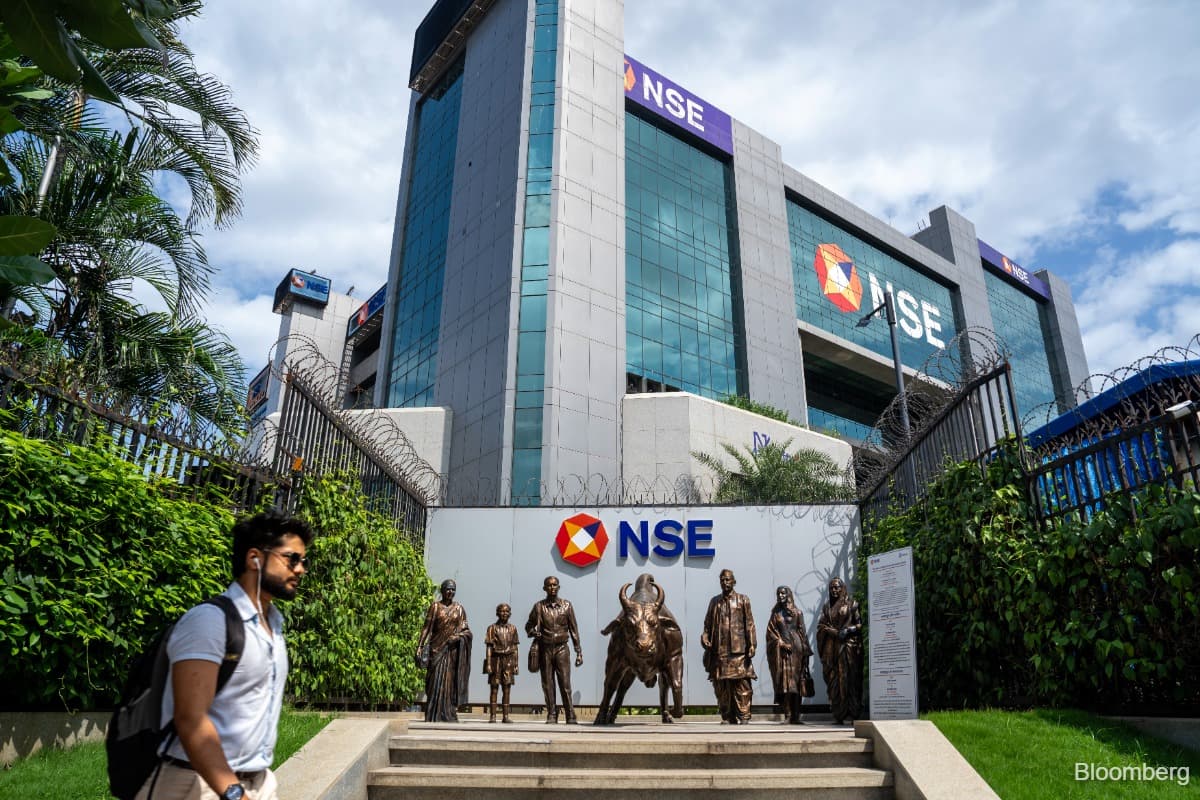
(Sept 22): National Stock Exchange of India Ltd’s US$2.4 billion (RM9.78 billion) initial public offering drew subdued demand, particularly from retail investors, as valuation concerns continued to weigh on one of the largest stock market debuts in India’s history.
The deal was subscribed 5.7 times and demand was mainly driven by institutional buyers who bid for 12.7 times their allotted portion, according to data on BSE Ltd's website. The non-institutional investor category — reserved for wealthy individuals — was subscribed 6.5 times while the retail investor portion was covered 1.3 times. NSE on Monday set the offer price at 1,785 rupees per share, at the top end of the marketed range.
The subscription levels fell short of other large Indian IPOs in recent years, another reflection of the valuation debate that has clouded the already downsized offering. LG Electronics Inc’s US$1.3 billion offering of its Indian unit was subscribed about 54 times in October last year while SBI Cards & Payment Services Ltd’s IPO was subscribed almost 27 times in 2020. HDB Financial Services Ltd’s offering drew bids for about 17 times the shares on offer last year.
NSE’s dominant position in one of the world’s fastest-growing capital markets and its high profitability drove a deal that values the company among the world’s 10 largest listed stock exchanges. But tighter regulatory scrutiny of speculative derivatives trading, a business central to NSE’s profitability, has emerged as a key risk that forced the company to scale back its valuation expectations.
“Profitability was one of the biggest concerns following the regulator’s crackdown on derivatives trading, a key source of revenue for NSE,” said Sandip Sabharwal, founder of research house Asksandipsabharwal.com in Mumbai. “At the same time, NSE was already widely held and actively traded in the unlisted market, meaning many wealthy and retail investors already owned the stock before the IPO.”
Proprietary traders’ share of equity derivative turnover has fallen to the lowest level in almost four years at the NSE as problems with the closing auction mechanism add to an increasingly restrictive trading environment, Bloomberg News reported.
NSE offered shares at 1,700 rupees to 1,785 rupees apiece. The offering consists entirely of shares sold by existing investors, meaning the exchange won’t receive any proceeds. At the top end of the range, the offering is set to raise about 226 billion rupees (RM9.62 billion), trailing only Hyundai Motor India Ltd’s 279 billion-rupee share sale in 2024 among Indian IPOs.
At that price, NSE would be valued at about 42.9 times its earnings for the year ended March. While that’s a discount to domestic rival BSE Ltd, it’s well above the roughly 24 to 25 times ratio for some of the world’s largest listed exchanges.
According to Charlie Hong, chief investment officer of LOGOS Asset Management, regulatory headwinds surrounding futures and options trading, along with NSE’s relatively high valuation, may also weigh on the stock’s near-term performance.
With lower than expected demand, NSE’s grey-market premium fell to about 3% on Monday from a peak of about 16% on Sept 7, according to ipowatch.in.
Before opening the order book, NSE allocated 67.46 billion rupees of shares to anchor investors. They included global money managers such as Goldman Sachs, HSBC, Fidelity and Eastspring as well as sovereign wealth funds GIC and Abu Dhabi Investment Authority. Among domestic investors, Life Insurance Corp of India, SBI Funds Management Ltd and ICICI Prudential Asset Management Co were among the largest participants.
Uploaded by Arion Yeow