

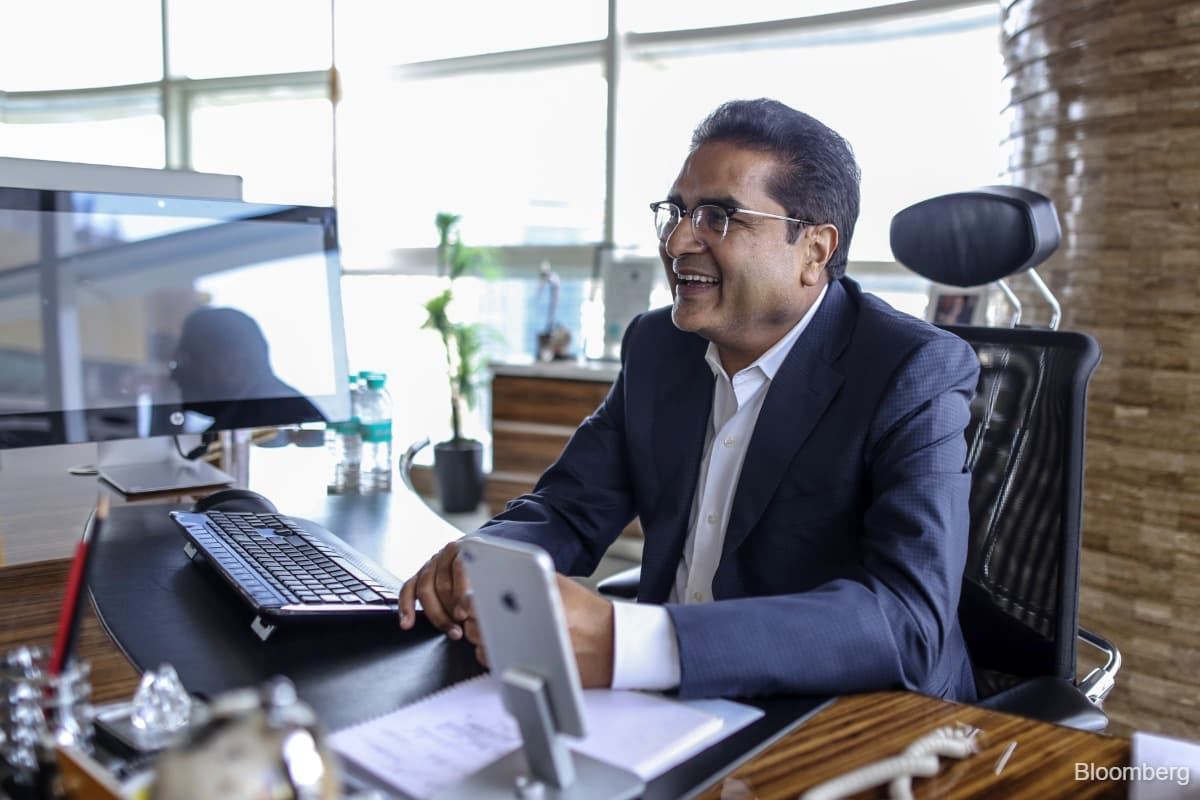
(Sept 22): Alok Sanghi used to work in his family’s cements business, Sanghi Industries, which his father founded more than four decades ago.
In 2023, they sold a majority stake to a much bigger rival, Ambuja Cements Ltd, controlled by Gautam Adani, India’s richest person.
Sanghi, 42, now oversees a luxury real estate business in Dubai, a professional volleyball team and a handful of start-ups. He also trades in the private, public and commodities markets through a family office with US$100 million (RM407.7 million) in assets under management.
“Most families had a single engine of growth which was the business, and if the business did well or badly, the family was affected,” Sanghi, who runs his family’s investment firm Resolute Corp, said in an interview. “Now business owners want to separate the two so that the fate of the business and families are de-coupled.”
The shift from dynastic enterprise to money management is picking up in one of the world’s fastest growing economies, worrying some of the nation’s elders. For the richest of the rich, family control remains paramount and selling out isn’t really an option. The kids of Adani and Mukesh Ambani are working to push their dynasties forward from industrial roots into data centres and tech. But, the younger generation of families worth hundreds of millions of dollars increasingly are cashing out, taking their inheritance and investing it elsewhere.
In an economy dominated by first-generation fortunes, it’s become a broader discussion about society and the country’s future. Indian billionaire Uday Kotak, the founder of Kotak Mahindra Bank, lamented last year that many scions of rich families were “taking the easy way out” by running family offices and trading financial assets. “They should be creating real-world businesses,” said the 67-year-old.
It’s also a question of identity. Some of India’s business families trace a line to pre-independence from the British Empire. Carrying the baton forwards has become a way of establishing social credit. The Wadia family began in 1736 making ships for the British East India Company and evolved into a conglomerate that makes biscuits and fabrics. The Bajaj dynasty began with a cotton business in 1905 and later became one of the world’s biggest motorcycle makers. Both are still family owned.
“Our generation which is over 60 years of age has to give the younger generation space,” said Raamdeo Agrawal, a billionaire who co-founded stock brokerage Motilal Oswal Financial Services Ltd with his partner Motilal Oswal about four decades ago. Agrawal’s son is a money manager at the asset management arm and may, over time, take on more responsibilities. “I told him that you have to get the respect of your colleagues and the company. He has to learn the tricks of the trade.” he said in an interview.
For family-backed firms with fewer business lines, the economics can be quite different. In some cases, their operating companies are no longer growing as much as before, forcing owners to rethink their succession and wealth preservation plans. Managing investments through a family office wasn’t an option when Adani and Agrawal started their businesses, but India’s rapid financial boom has given medium-sized and smaller family businesses a chance to exit.
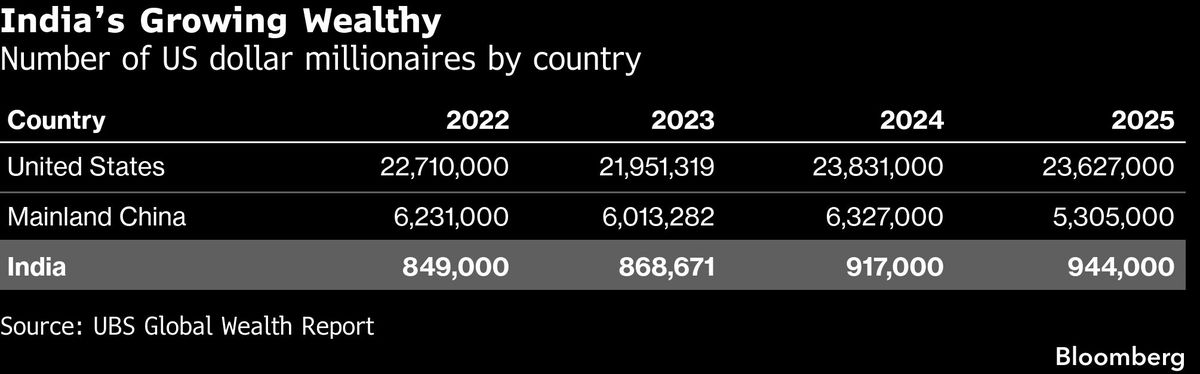
India has scores of owner-operated companies in manufacturing, retail or pharma. Excluding the billionaire class, the country has around 944,000 millionaires in dollar terms, estimates UBS. There were more than 300 family offices in the country in 2024 versus 45 in 2018, according to data from PwC. If you count family investment firms more broadly, there are likely more than a thousand, according to Sougata Ray, vice chancellor at the Narsee Monjee Institute of Management Studies.
“I get messages on LinkedIn at 2am asking advice about creating a family office,” said Vikrant Agarwal, a managing partner at Proxima Capital Services, a financial advisory firm. “Often because they are bored of the family business and they do not want to work on the factory floor,” he said.
Scions of rich families and some wealth advisers say it’s not that simple. They say that by investing their wealth broadly, they can seed more start-ups and local businesses, and help support other Indian entrepreneurs in search of growth. To this effect, more family offices are involved in venture capital activities.
Some business owners are finding a middle ground by selling stakes to private equity investors that can provide capital for them to grow. About US$18 billion worth of buyout and control transactions from 2020 to 2025 involved family and founder-owned businesses, according to EY India.
In 1995, the Manchanda family started a bakery making cookies under a brand called Homemade Baker’s. The business pivoted into producing millions of ice cream cones and sleeves for major consumer brands, and its revenue topped US$1 billion in its fiscal year ended 2025, though profits were a small fraction of that.
Two generations of the family have run the company: Krishan Kumar Manchanda, his brother Rajiv Manchanda and Rajiv’s nephew Puneet. Last year, the family sold a majority stake to Singapore-based Growtheum Capital Partners, a private equity firm.
Puneet, now 51-years-old, said the deal will help Homemade Baker’s open more manufacturing facilities, increase its market share and possibly enable it to pursue an initial public offering in a few years. Puneet told Bloomberg News that he plans to start a family office in the coming months once things are in place, and his son will join that entity instead of working in the bakery business.
Gaurav Burman, a fifth-generation heir of the family behind Dabur Group, a consumer goods giant best known for its personal care products, said the business his ancestors started has been under professional management for several decades. Family members still hold director positions but are no longer involved in operations. He is also managing director at Burman Family Holdings, where he helps invest the family’s wealth.
“Whatever path the next generation of Indian business families choose, whether they decide to work in their own family businesses or become entrepreneurs, their decisions should be applauded,” he said. “Surely the greatest gift we can give the next generation is help and confidence to pursue whatever they are passionate about. Eventually if one pursues their passion they will become successful.”
Uploaded by Magessan Varatharaja