

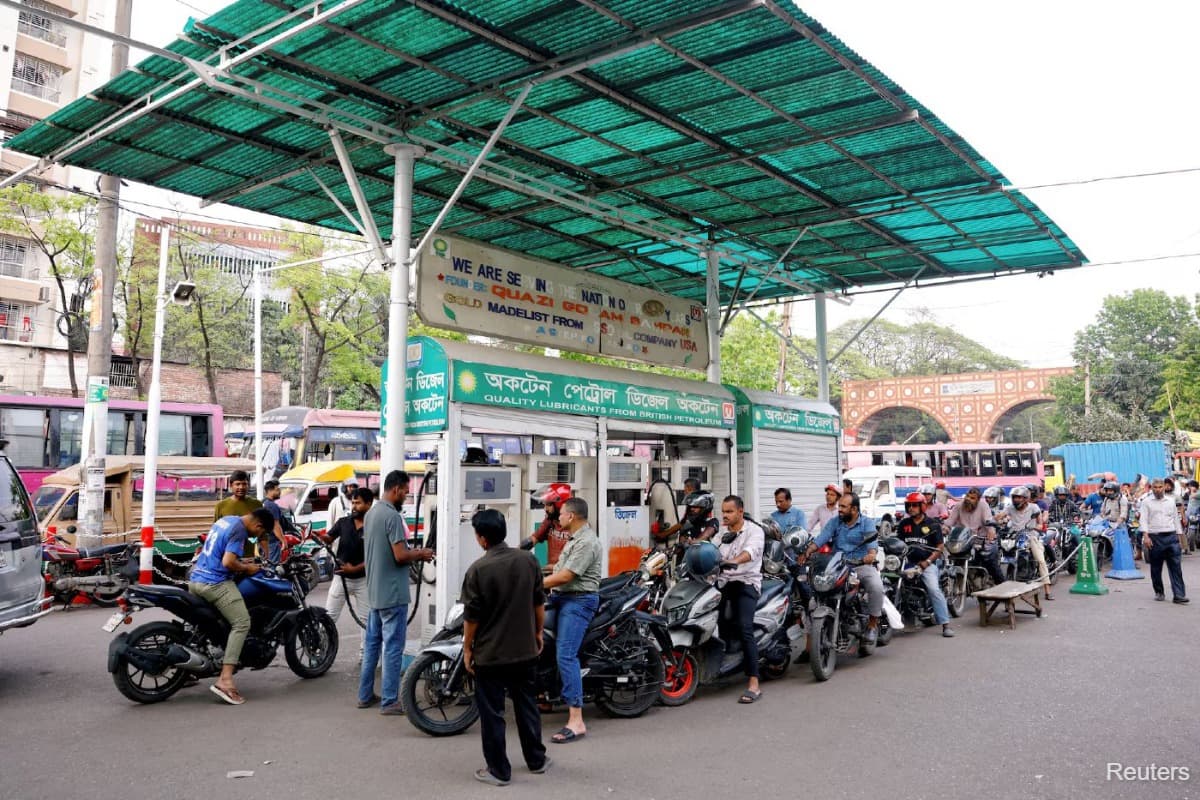
DHAKA (Sept 21): Bangladesh has raised fuel prices by up to 17.4%, piling fresh pressure on consumers and businesses, as the government moved to stem mounting losses from surging global oil prices and higher shipping costs linked to the Middle East conflict.
The new rates, effective from Monday, are expected to raise transportation and production costs across the import-dependent economy, adding to inflationary pressures at a time when industries, including the country's key garment export sector, are already grappling with an acute energy crunch.
The Energy Ministry said international fuel prices had more than doubled since March 2026, while freight charges had risen significantly because of regional instability.
Under the new rates, diesel prices rose 17.4% to 135 taka per litre from 115 taka. Prices of 95-octane gasoline increased to 165 taka per litre from 145 taka, petrol rose to 160 taka from 140 taka, while kerosene increased to 155 taka from 135 taka.
The latest increase follows fuel price hikes in April and June, when the government also raised prices to help offset rising import costs driven by higher global oil prices.
The ministry said state-owned Bangladesh Petroleum Corporation incurred losses of 228.76 billion taka (US$1.9 billion) between March and August and that the latest price hike could cut annual losses by about 100 billion taka, while conserving foreign exchange reserves and curbing fuel smuggling to neighbouring countries where prices are higher.
The ministry also cited substantial subsidies for liquefied natural gas, saying the government had continued to support electricity and gas supplies despite higher import costs stemming from the regional energy crisis.
The move drew concern from exporters, who said higher fuel costs would further squeeze manufacturers already battling energy shortages.
"The fuel price hike will hurt everyone, from common people to businesses and industries. It will fuel inflation, increase production and transportation costs, trigger job losses and force some businesses to downsize," said Anwar-ul Alam Chowdhury, president of the Bangladesh Chamber of Industries.
"The move will add pressure across the economy, including on manufacturers already struggling with energy shortages and thin margins," he said.
Uploaded by Liza Shireen Koshy