

This article first appeared in The Edge Malaysia Weekly on September 21, 2026 - September 27, 2026
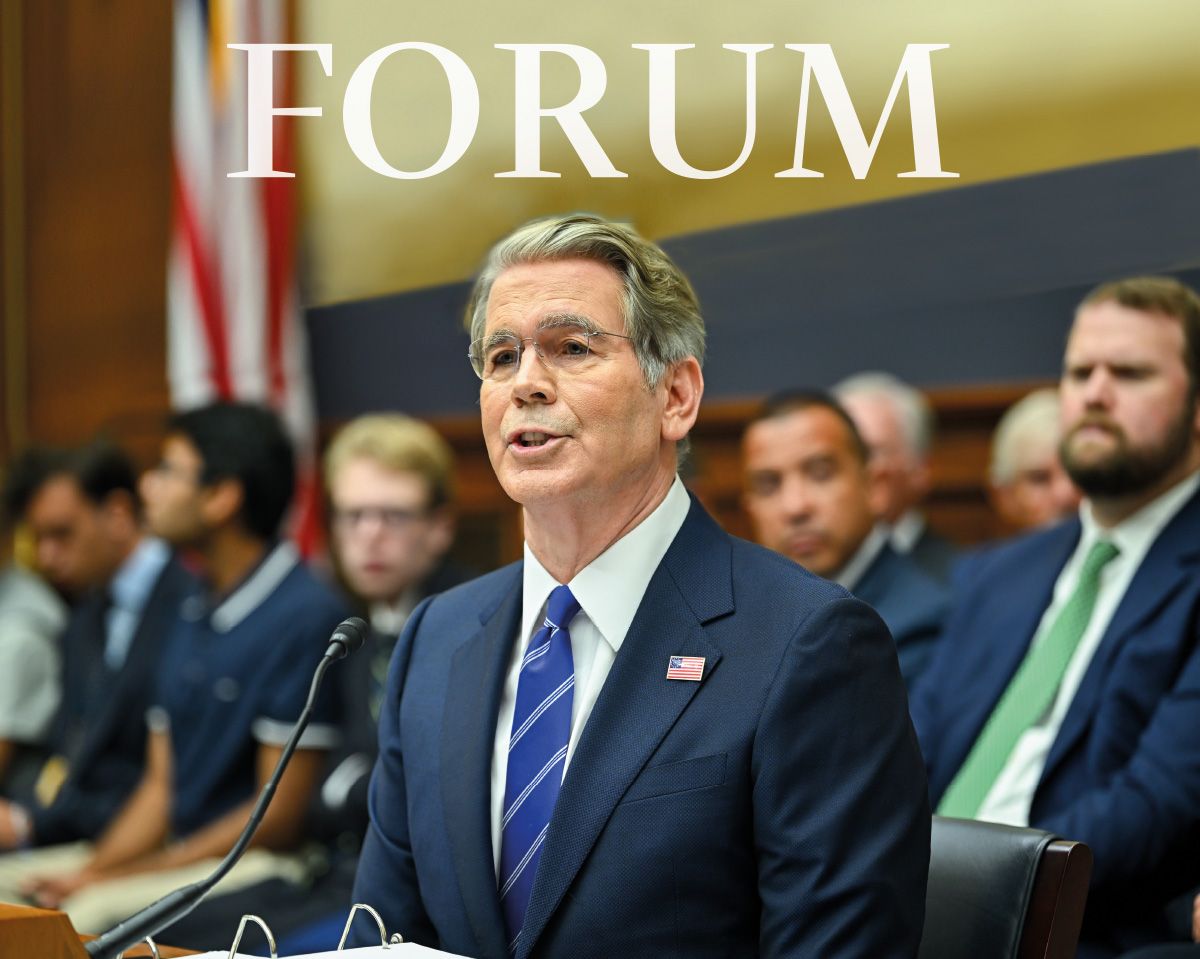
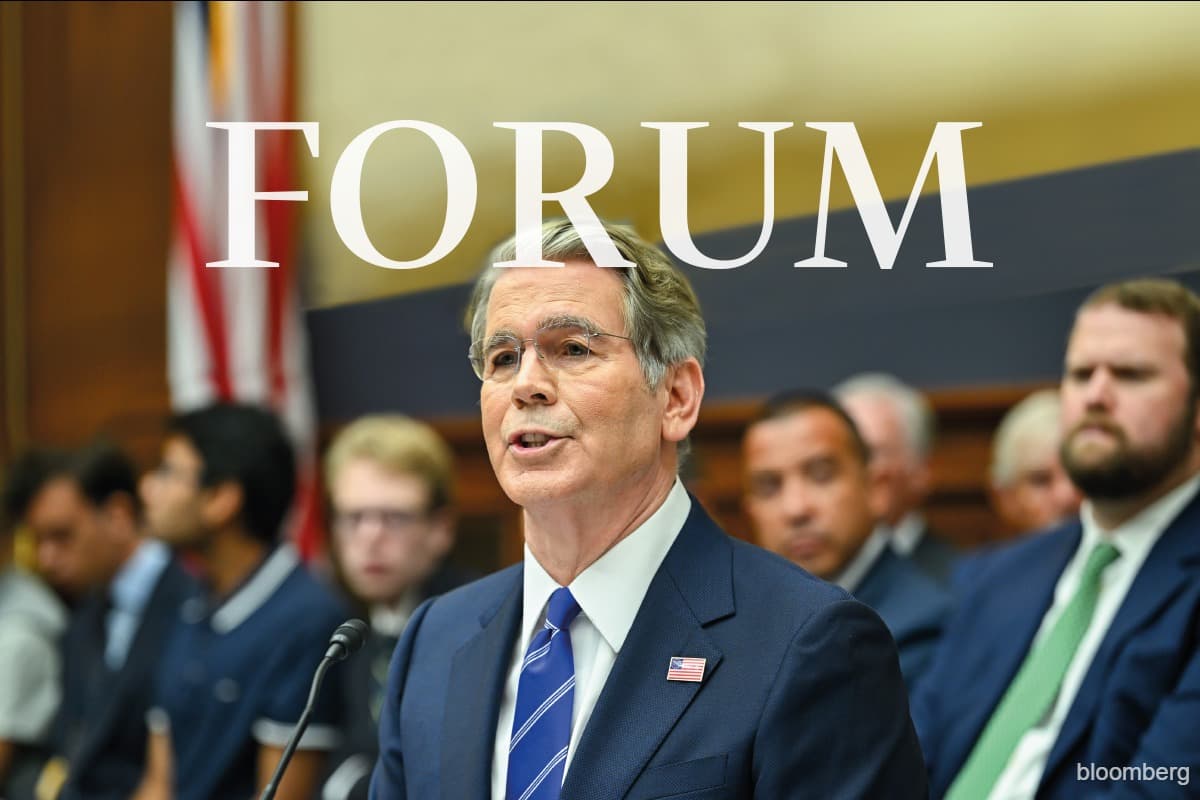
US Treasury Secretary Scott Bessent said earlier this month he was “the house” and warned markets not to bet against him. What he implied is that no one should bet against the banker in a casino, because “the house” can change the rules as he owns it. The US bond market is one of the most liquid in the world, trading US$1.2 trillion (RM4.91 trillion) daily.
Spending the last fortnight in London allowed me to catch up with how the second largest financial capital in the world is looking at the current state of markets. The Financial Times’ headline “Foreign Investors prefer US stocks to Treasuries as debt worries grow” said it all. No one trusts the bond market if the banker is buying his own debt to shore up the market. Yes, the US Federal Reserve can print money to buy US Treasuries to keep US yields stable (the higher the yield, the lower the value of US long bonds). Yes, the Fed has raised interest rates by 25 basis points (bps). With US Treasuries paying 5.3% per annum and inflation growing around 3.8% per annum as oil prices exceed US$108 per barrel, global investors are exiting bond markets for fear of higher interest rates but have nowhere else to go except US stocks, or at least the Magnificent 10, which is holding the whole market up.
Investors do not dare to go into real estate markets because of higher interest rates, the declining value of offices and even factories (as robotics replace workers) and demographics (an ageing population does not need more housing). They are wary of commodity markets because of huge weather effects that either produce bumper crops or devastate production due to drought or typhoons. Gold prices staged a rally as China and other central banks kept on buying gold at around US$4,000 per ounce.
If artificial intelligence is the story, let’s all pile into AI-related stocks. Never mind if more scientists and even US right-wing Republican Steve Bannon and left-wing Democrat Bernie Sanders both agree about the dangers of AI. AI stocks go up every time bankers, consulting firms and CEOs announce layoffs due to AI not needing so much staff, even as they proclaim higher bonuses for top partners, chief financial officers and chief technology officers.
This is the silly season for everything. US President Donald Trump announced US$5,000 for every American adult if the Republicans win the November mid-term elections. That would add US$1.3 trillion to US debt, already running at a record US$40 trillion. There is therefore a “risk-off” on US bonds and a “risk-on” for US AI stocks.
Investors are finally waking up to the Siamese twins of yen-dollar funding for global markets. For decades since the 1990s, Japan has weakened the yen with low to near-negative interest rates, forcing Japanese savers to plough into higher-yielding US dollar assets from real estate to US Treasuries. Now that Japanese interest rates are rising to over 3% per annum for Japanese 30-year bonds, Japanese investors are selling dollars to defend the weakening yen, protecting themselves against foreign exchange (FX) risks. This reversal of the carry trade will have a profound impact on the US bond market. People are not betting against the dollar — they are protecting themselves against FX and inflation risks by bringing money back home, especially when interest rates between dollar and domestic rates are narrowing.
The latest end-July data on foreign holdings of US Treasuries showed a US$50.4 billion drop to US$9.25 trillion, as Japan sold net US$12.8 billion, China (-US$15.4 billion) and France (-US$41.5 billion) while UK holdings increased by US$58.4 billion.
Bessent is finding himself in what Asians recognise as usurious pawnbroker territory. The more you borrow, the higher the interest rate. The higher the interest rate, the more onerous the debt burden. There are only three ways for governments to get out of their debt. The worst way is to default. That used to be the way of Third World banana republics. The best way is to grow out of debt, with the gross domestic product (GDP) growing faster than the rise in debt. But the US is already growing at a historical high of 3% per annum; unfortunately, the debt is growing at a faster rate, since the current fiscal gap is more than 6% of GDP.
So the alternative path is financial repression, meaning you pay interest rates lower than the inflation rate. Unfortunately, nominal Treasury rates are rising faster than the inflation rate, the latest at 3.8%, so a 5% 10-year Treasury rate means that the government is paying a 1.2% real rate per year. The higher the real rate, the harder the borrower finds it to service the debt, meaning you must borrow from Peter to pay Paul.
In short, instead of the US enjoying a discount on debt because the US is supposed to be the best credit in town, she is now paying a credit risk premium, which looks to grow the more the US government runs fiscal deficits.
Bessent’s tragedy is that he cannot cut welfare or military expenditure (Elon Musk tried earlier with his Department of Government Efficiency [DOGE] programme) and his interest burden keeps on growing. So, the AI optimists are hoping that technology and AI will uplift US productivity fast enough so that the US can grow out of its debt. Of course, some conspiracy theorists think that war is also another way of defaulting on debt.
There is a fourth way out of the house of cards and that is to drastically cut expenditure so that the US can run a primary surplus which enables her to shrink the debt. Such an action would win approval from the bond market, allowing interest rates to drop, because a cut in spending would reduce inflation, have a short recession and then allow accelerating growth to move into the virtuous circle of growth, low inflation and declining government debt.
The realpolitik of democratic elections means that such an option is highly unlikely. The tech oligarchs are spending as much as £72 million (RM395 million) to support the far-right Reform movement of Nigel Farage in the UK and more than US$250 million in funding right-wing Republicans in the coming US mid-terms. Among the tech oligarchs are the crypto-billionaires, who want the freedom to continue printing money. Money-politics-technology-power-energy have one single aim — fund politics to control power.
This is a house of cards that will collapse but no one knows when. When six volcanoes blow up at the same time in Southeast Asia and the El Niño may cause extreme climate heating to rise by as much as 4°C in certain parts of the world, the ancients say that when the stars are ominously aligned, kingdoms and empires may fall. This is the greatest financial bubble in history and we know something will puncture it. If it does under the Trump presidency, then history will remember this as Trump’s bubble. If not, his successor will have to handle the mess. The next card will be the Joker. As bridge players note, full house, all trumps, can the game be finessed to win?
Tan Sri Andrew Sheng writes on global issues from an Asian perspective.
Save by subscribing to us for your print and/or digital copy.
P/S: The Edge is also available on Apple's App Store and Android's Google Play.