

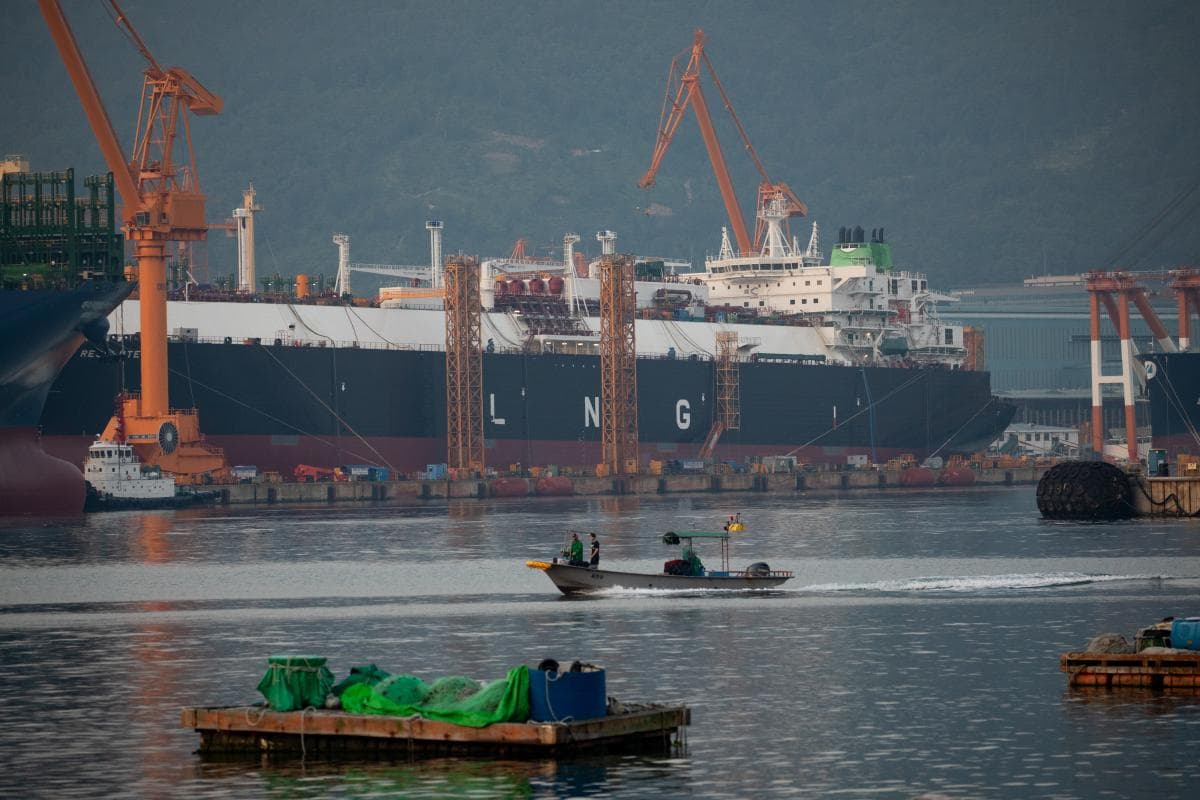
(Sept 21) : Qatar expects inaugural output from its massive liquefied natural gas expansion next year as shipping disruptions in the Strait of Hormuz slow projects across the country’s economy, Energy Minister Saad Sherida Al-Kaabi said.
The first production train at North Field East — the initial phase of Qatar’s LNG expansion — is expected to come online in the first half of 2027, Al-Kaabi said at the Qatar Economic Forum in New York Sunday. The company previously anticipated the plant to start producing in 2026. Bloomberg reported earlier this year that the facility’s start was delayed into 2027.
Al-Kaabi warned that a prolonged disruption to Hormuz could delay some of its LNG expansion plans and the start of additional production trains.
“It will depend a lot on the Hormuz Strait for the additional trains that are going to come, because that could push it back if we can’t get facilities coming in,” he said. The North Field South project — the second phase of the project — is slated to come online in 2028, Al-Kaabi said.
The timeline reinforces the expectations that the near-closure of the Strait of Hormuz due to the Iran war threatens to tighten global LNG supplies for years, as Qatar’s expansion was part of a record wave of new supply set to flood the market this decade. Disruptions have already choked supplies of the fuel from Qatar — the world’s second largest exporter — sending spot prices surging to the highest level since 2022 in Asia and Europe.
Still, Al-Kaabi said that Hormuz will never be obsolete, adding that Treasury Secretary Scott Bessent is “wrong” when he said that the waterway will be worthless in two years. He also said that Qatar isn’t currently planning to build new pipelines to bypass Hormuz.
The disruption has sent shockwaves through Qatar’s economy, as natural gas revenue all but evaporated and the country has no alternative shipping routes to bypass the strait. Qatar is expected to suffer an economic contraction of more than 8% this year, according to the International Monetary Fund.
Qatar’s Ras Laffan plant — which produced nearly a fifth of the world’s LNG before the war began in February — can resume operations at undamaged parts of the facility “within a couple of weeks” when Hormuz reopens, the minister said.
An attack on Ras Laffan in the early days of the war — which began when the US and Israel attacked Iran — damaged about 17% of the plant, which will take years to repair.
Qatar is currently exporting a very small amount of LNG through the strait, Al-Kaabi said.
The country is pivoting to become a larger trader of LNG in the meantime, and is handling more LNG outside of the Persian Gulf with the start of its Golden Pass export facility in the US.
“We will be, in the very near future, the largest LNG trader in the world by far,” said Al-Kaabi. “And we’re building our position to become the largest trader.”
Shell Plc’s Pearl GTL facility in Qatar, which was also damaged in the March attacks, will resume production in the first quarter of next year, he said.
Uploaded by Isabelle Francis