

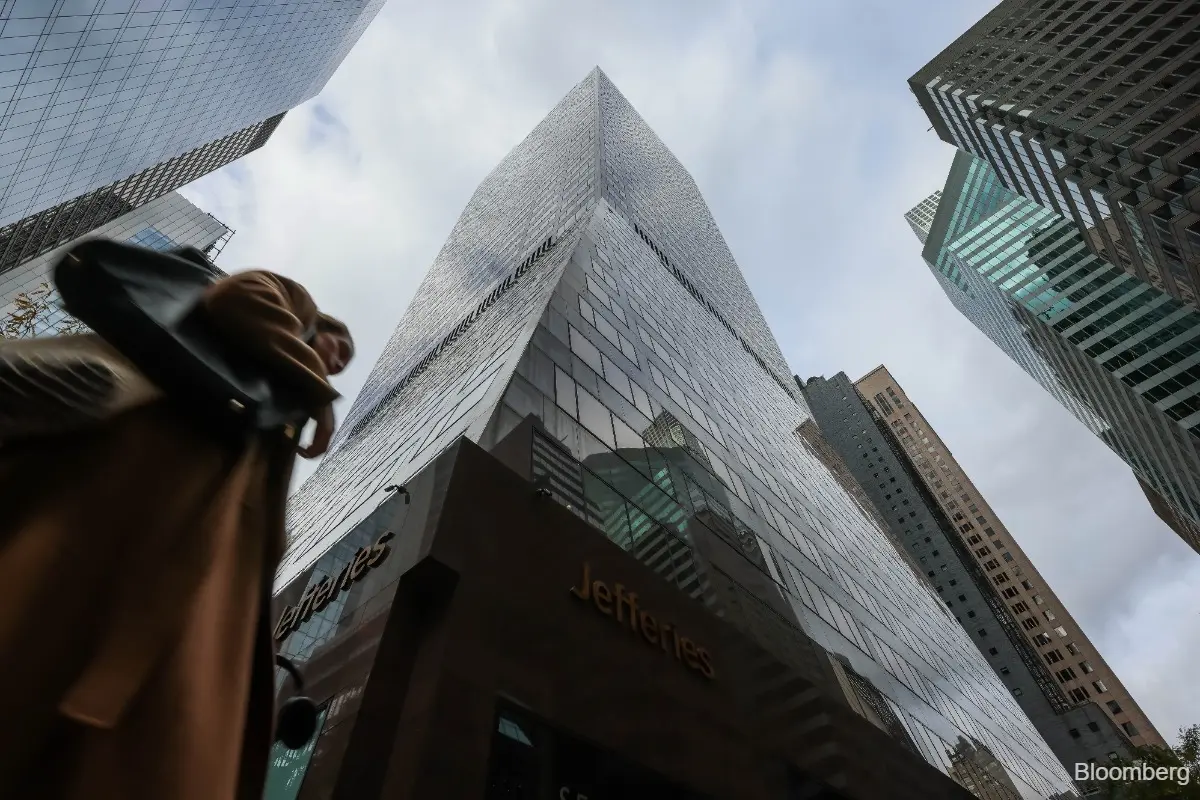
(Sept 20): Executives at Jefferies Financial Group Inc were sounding increasingly irate.
For months, they had been pressing Glencore Plc for information about overdue payments linked to Radiant World, an iron ore trader that had become one of the most important customers of their Point Bonita trade finance unit.
The name of Glencore, one of the world’s biggest commodity traders, appeared on the invoices the Jefferies fund had bought — and so Glencore, in their view, owed them the US$526.4 million (RM2.1 billion) outstanding. But Glencore was denying that it owed Jefferies anything.
“We have a deadly serious issue,” Mike Sharp, general counsel at Jefferies, wrote in an email to his opposite number at Glencore on July 1. “I am, of course, willing to hear Glencore out, but flat denials and ignoring a half-decade history of a well-trodden course of business conduct just don’t work.”
The emails, included as attachments in legal documents seen by Bloomberg News, offer a window on Jefferies’ hunt for answers about Radiant World, which, together with Sapphire Minmetals, a closely related but legally separate iron ore trader, was one of the biggest clients of Point Bonita. They show, together with court filings, legal statements and other reporting gathered by Bloomberg News, how Jefferies executives’ tone progressed from concern to anger, followed by acceptance — and ultimately righteous indignation.
They also offer further insight into Glencore’s relationship with Radiant World — and how it appeared to have evidence that the smaller company was borrowing against invalid invoices months before it cut ties. Bloomberg News has not seen all the emails between Jefferies, Glencore and Radiant World, and the full context of the exchanges is not always clear.
By now the contours of the story are well known. Jefferies, through a Point Bonita fund called LAM Trade Finance Group II LLC, financed billions of dollars of receivables for Radiant World and Sapphire Minmetals.
Then early this year, payments started arriving late. Eventually, the companies whose names were written on the invoices — major commodity traders Glencore and Vitol Group — denied that they were genuine. A lawyer for Jefferies last week said in court in London that Radiant World had been part of a “very large scale fraud.”
Radiant World has denied wrongdoing and says the allegations against it are the result of a commercial dispute with Glencore. Sapphire Minmetals has also denied falsifying invoices and has joined with Radiant World in a US$2 billion Singapore lawsuit against Glencore.
Glencore says the Singapore lawsuit is “meritless.” In a statement in response to questions about its interactions with Jefferies, a Glencore spokesperson said: “When Glencore was first contacted about certain invoices involving Radiant and LAM TFG, we confirmed that we had no record of the invoices having been assigned and that they had been paid. We subsequently understood that LAM TFG and Radiant had reached an arrangement regarding the receivables and did not hear anything further for some time.
“It is now clear that Radiant was deceiving Glencore, LAM TFG and multiple other counterparties. When contacted again later this year, Glencore provided further information to support claims against Radiant and expose their fraudulent scheme. We continue to engage constructively on a voluntary basis with LAM TFG and other financial institutions.”
A spokesperson for Jefferies declined to comment.
The emails show the extent of the Jefferies fund’s involvement with the Radiant World network of companies — it financed US$3.8 billion of Glencore invoices alone for Radiant World and Sapphire Minmetals since 2021. Bloomberg has previously reported it also financed invoices purporting to be for trades with Vitol.
For Jefferies, the situation is more than embarrassing: it is the second major alleged fraud that its Point Bonita unit had extensive financial exposure to, after the collapse of First Brands Group last year. A Radiant World table of lenders seen by Bloomberg News suggests that Jefferies is the company’s largest single bank creditor. (The US bank’s direct exposure is limited, because its own stake in the Point Bonita fund is just 5.9%, according to its most recent quarterly report.)
Last week, a group of Point Bonita investors requested information on the fund’s dealings with Radiant World and Sapphire Minmetals, as part of a lawsuit accusing the bank of defrauding them by misrepresenting the terms of their purchase of First Brands receivables. Jefferies has denied the claims and said it will vigorously defend itself.
Rising tensions
The emails also show rising tensions between Jefferies and Glencore. Months after it first contacted Glencore for information about invoices from the Radiant World group, Jefferies was still pressing Glencore for information about trades and payments that it couldn’t reconcile.
In February, Ross Berger, a Jefferies managing director who ran Point Bonita, emailed Glencore to ask why it hadn’t yet paid invoices it supposedly owed to Radiant World, and by extension Jefferies.
“You are 15-days past due on US$42.5MM of the US$334.4MM of Glencore International AG invoices we own, all purchased from Royalline/Radiant World,” Berger wrote to Mark Francis, Glencore’s iron ore operations manager, on Feb 4. “Want to make sure you are aware of this and to understand from you when you will be paying us. If not immediately paying, we are looking for some feedback on why we have not received payments? Please call me.”
Berger sent four follow-up emails on Feb. 5 and 6 before Francis eventually replied: Jefferies’ relationship was with Radiant World, he said, “but it is not with Glencore on this topic.”
A few weeks later, however, Glencore appeared to have investigated the details of the invoices Jefferies had shared with it. On Feb 21, Francis sent an email to Pinkesh Nahar, Radiant World’s founder and owner, containing a spreadsheet.
It showed a list of invoices, marked as “Jefferies information”, alongside several more columns marked as “Glencore information.” The Glencore information appeared to show that the large majority of the invoices being financed by Jefferies had already been shipped on vessels whose names were listed. Crucially, the sums outstanding had already paid by Glencore, some as long ago as July 2025. For two of the invoices, the Glencore information column simply stated: “Not a Glencore invoice; vsl not found, contract not found.”
Francis presented the information without comment, simply saying that it was “following from your conversation with Peter” — a reference to Peter Hill, Glencore’s head of iron ore and other steelmaking raw materials, who was last week suspended pending a review of the company’s dealings with Radiant World. (Hill has declined to comment on the matter.)
Between February and April, Radiant World claims in its Singapore lawsuit, Glencore worked to help resolve the dispute with Jefferies. And Radiant World did enter into a forbearance agreement with Jefferies, under which it agreed to pay the sums owing while Jefferies refrained from taking action against them, Bloomberg has previously reported, citing a Jefferies legal document.
Still, Radiant World later defaulted on that agreement, Jefferies claimed in the same document. By June, the emails show that Jefferies was again chasing Glencore for information.
Glencore’s main argument was straightforward: according to its contracts with Radiant World, Radiant had no right to sell its invoices without its consent. Since that consent hadn’t been received, Jefferies should take its dispute up with Radiant World rather than Glencore.
“None of the invoices that were sent to Glencore that were purportedly purchased by Jefferies reflect any notice of assignment to Jefferies and the relevant contracts preclude assignment without our consent,” Shaun Teichner, Glencore’s general counsel, wrote on June 29. “We therefore do not see on what basis you continue to assert that Glencore owes any money to Jefferies.”
Losing patience
By July, Jefferies was losing patience.
“To be frank, I am not sure of what our next steps will be, but time and patience are running out on our end,” wrote Sharp, the Jefferies general counsel. “I am certain that, were a full scrub done of your internal and external communications, it would make plain that your people knew that Glencore invoices were routinely being sold and assigned to Point Bonita for around five years, starting in 2021 up until recently.”
Still, Glencore held firm. “As I have indicated, Glencore has paid all amounts that are due by us and it is clear that the information that you have received from Radiant is false,” Teichner wrote. He asked Jefferies to stop making suggestions that it might seek to claim on credit insurance over Glencore — a move that could have increased Glencore’s cost of borrowing.
It is not clear whether Teichner’s answers satisfied Jefferies — the emails seen by Bloomberg News don’t include the bank’s response.
A few weeks later, Bloomberg News reported that several commodity traders had stopped doing business with Radiant World amid concerns it had provided falsified invoices to banks. Glencore had stopped doing new business with Radiant World, Bloomberg reported. At the time, a person familiar with Jefferies’ position — who asked not to be identified due to the sensitivity of the issue — said the bank was reviewing its deals with Radiant World and had found some discrepancies in the documentation, but still believed the underlying trades were valid.
It was only in August that Glencore cut all ties with Radiant World, Bloomberg reported that month. And by September, both Glencore and Jefferies were publicly accusing Radiant World of fraud.
“They are party to a very sophisticated, large scale international conspiracy,” Simon Salzedo, a lawyer for the Jefferies fund, told a London court room last week.
Uploaded by Magessan Varatharaja