

(Sept 19): As Europe heads into winter, electricity markets are flashing their strongest warning since the energy crisis.
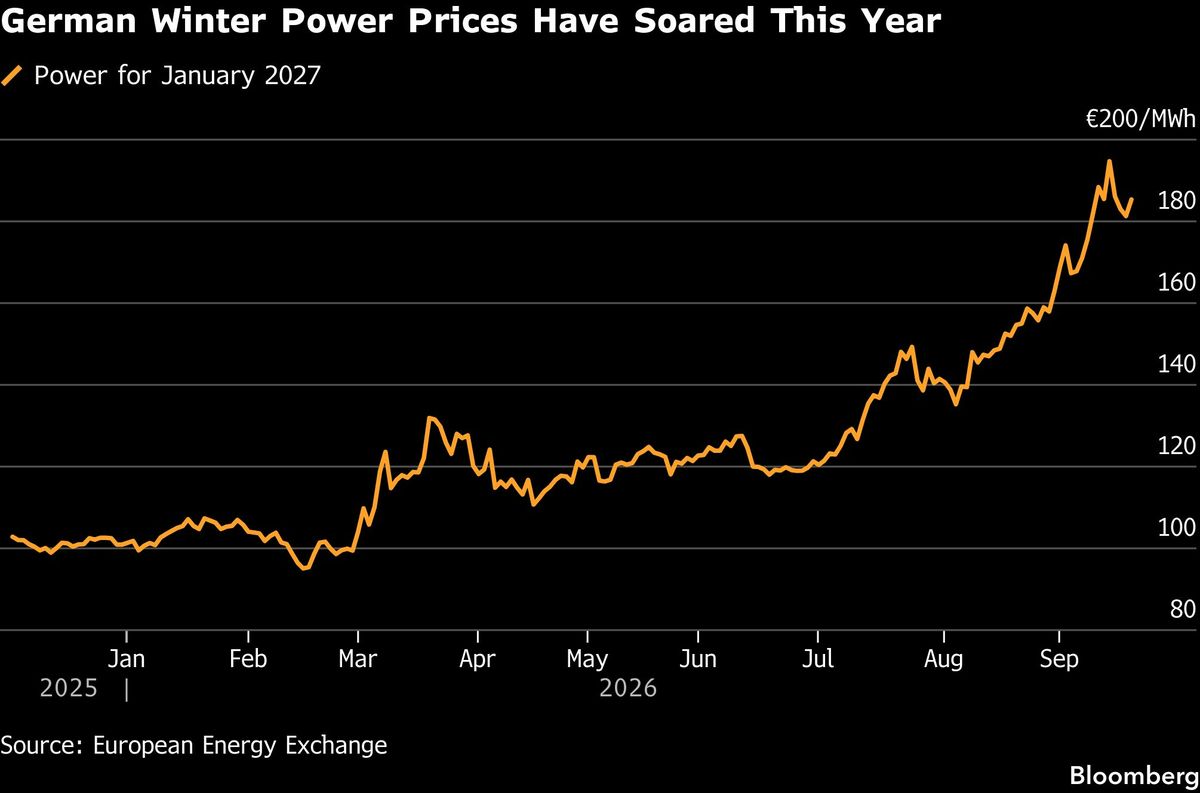
Wholesale power for January in Germany, the region’s biggest economy, is trading above €180 (RM843.44) a megawatt-hour on the European Energy Exchange, up more than 60% from a year earlier. The main driver is natural gas, which has surged in recent weeks as Europe struggles to refill storage amid intensifying competition for the fuel. The Iran war has added to the pressure, with the closure of the Strait of Hormuz cutting off supplies from Qatar.
The rise in power costs comes as the continent tries to electrify its economy and reduce reliance on imported fossil fuels, which have repeatedly exposed it to price spikes when supplies are disrupted. Europe has made significant progress since Russia’s invasion of Ukraine triggered an energy crisis four years ago, helping the region weather this year’s energy shock better than many initially feared.
But this winter’s jump in electricity prices underscores just how dependent Europe remains on fuels like gas and coal — and how quickly turmoil in global energy markets can still feed through to its economy. Higher power costs threaten to push up household bills and expenses for businesses, adding to inflation pressures just as investors are betting on further interest-rate hikes. They are also politically sensitive for governments that have spent billions of euros protecting consumers from energy shocks while pushing ahead with the transition away from fossil fuels.
At the same time, curtailment of France’s nuclear fleet from heat and strikes as well as low hydro power stocks have added extra strain on the power system this year. And with no sign of an end to the Iran war, price-related pains could get even worse.
“There’s potential for higher prices in power and perhaps a quicker rally than what we’ve seen so far,” said Ulf Ek, chief investment officer at commodities-focused hedge fund Northlander Commodity Advisors LLP. “We can hope it’s going to be a windy and sunny winter, and if not, then electricity, gas and coal prices will go higher.”
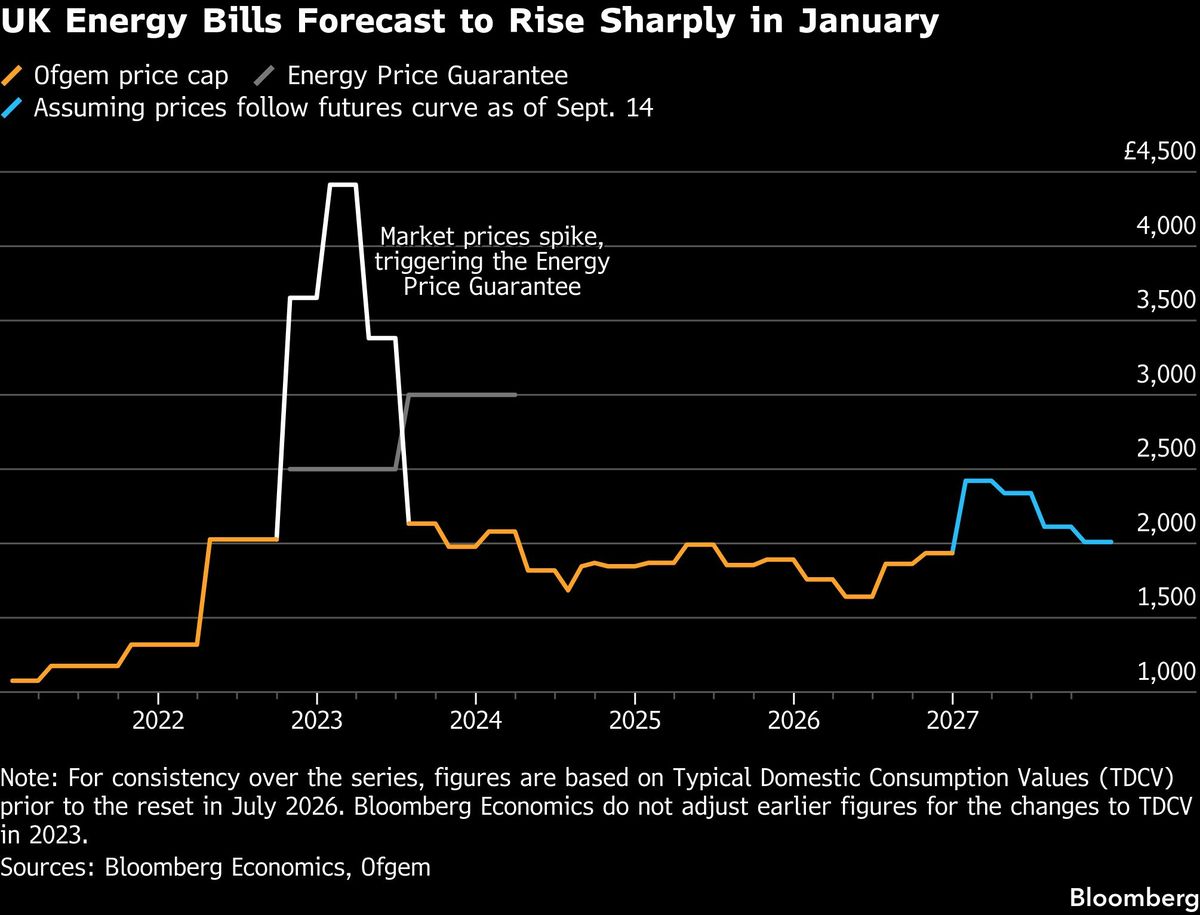
In a cold winter with Middle East supplies still constrained, Ek sees wholesale power prices rising as much as 50%. The impact on consumers’ bills wouldn’t be as dramatic because suppliers typically buy electricity in advance at lower prices, and it will vary widely by country. In the UK, household energy bills are set to rise 25% in January, while in Norway state subsidies will largely shield consumers from higher wholesale prices.
Europe is in a much stronger position than it was during the energy crisis in 2022, when the loss of Russian pipeline supplies sent power prices soaring to more than €1,000 a megawatt-hour, over five times current futures prices for next January. Since then, the region has built more infrastructure to import liquefied natural gas, reduced fuel consumption and diversified its suppliers, making an outright shortage less likely even as prices rise.
That resilience has come with a trade-off. Europe is now more exposed to the global LNG market, where it competes with buyers elsewhere in the world for cargoes. That means disruptions thousands of miles away can quickly reverberate through European gas and power markets.
The increase could provide a boost to the region’s power producers, including renewable generators, which benefit when more expensive fuels set the price of electricity. With prices heading higher, companies including Germany’s RWE AG, Engie SA and EDP Renewables SA could see earnings next year come in 10% above current estimates, according to research by Ahmed Farman, an analyst at Jefferies.
The expansion of renewable power has helped insulate Europe from volatile fossil fuel prices. Without the solar capacity added since 2021, for example, average wholesale power prices in Europe would have been 30% higher this summer, according to analysis by Baringa provided to Bloomberg News.
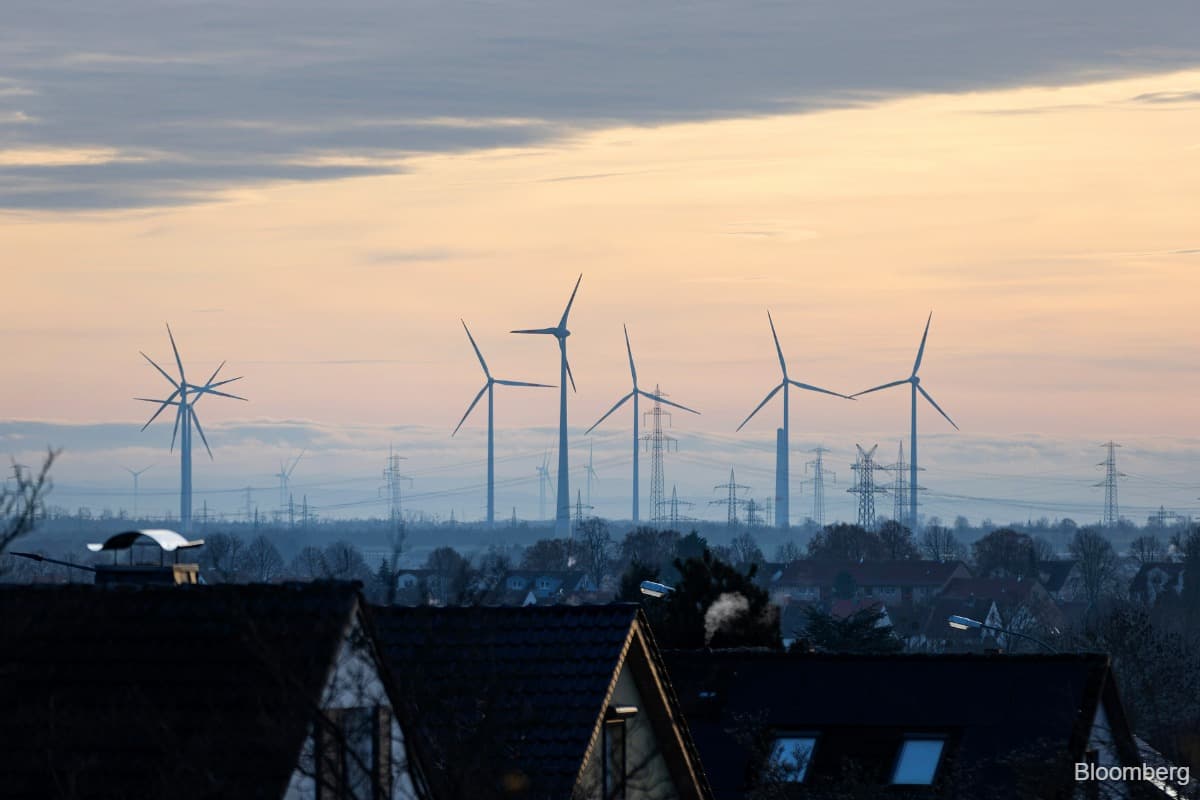
Solar has much less impact in winter, particularly in northern Europe, where short, cloudy days reduce output to a fraction of summer levels. That leaves wind farms to deliver cheap, green power and curb demand for fossil fuels. And while Europe’s growing fleet of turbines can generate significant amounts of electricity, periods of still weather — often coinciding with cold snaps — can leave the region exposed to higher prices.
“There is not much that can shield power markets,” said Florence Schmit, a senior energy strategist at Rabobank. “The renewables side has been growing but hasn’t been strong enough to make up for this huge reliance on gas.”
Expensive gas plants are still crucial to balance out the system and likely will be for many years to come. Germany recently opened an auction to build more gas-fired power plants on its grid. The UK has also mulled offering higher prices to help stimulate more investment in new gas-fired stations, despite plans to build a record amount of new offshore wind farms.
Still, high costs could be short lived if the conflict between the US and Iran eases. And if Europe gets lucky with mild, windy and wet weather, subdued demand and strong renewable power output could provide significant relief, particularly if gas prices fall further.
“We’re looking at a painful winter, a difficult winter,” said Caspian Conran, an economist at Baringa. “There’s going to be a reasonable hit to energy bills this winter, but nothing expected like Ukraine levels.”
Uploaded by Chng Shear Lane