

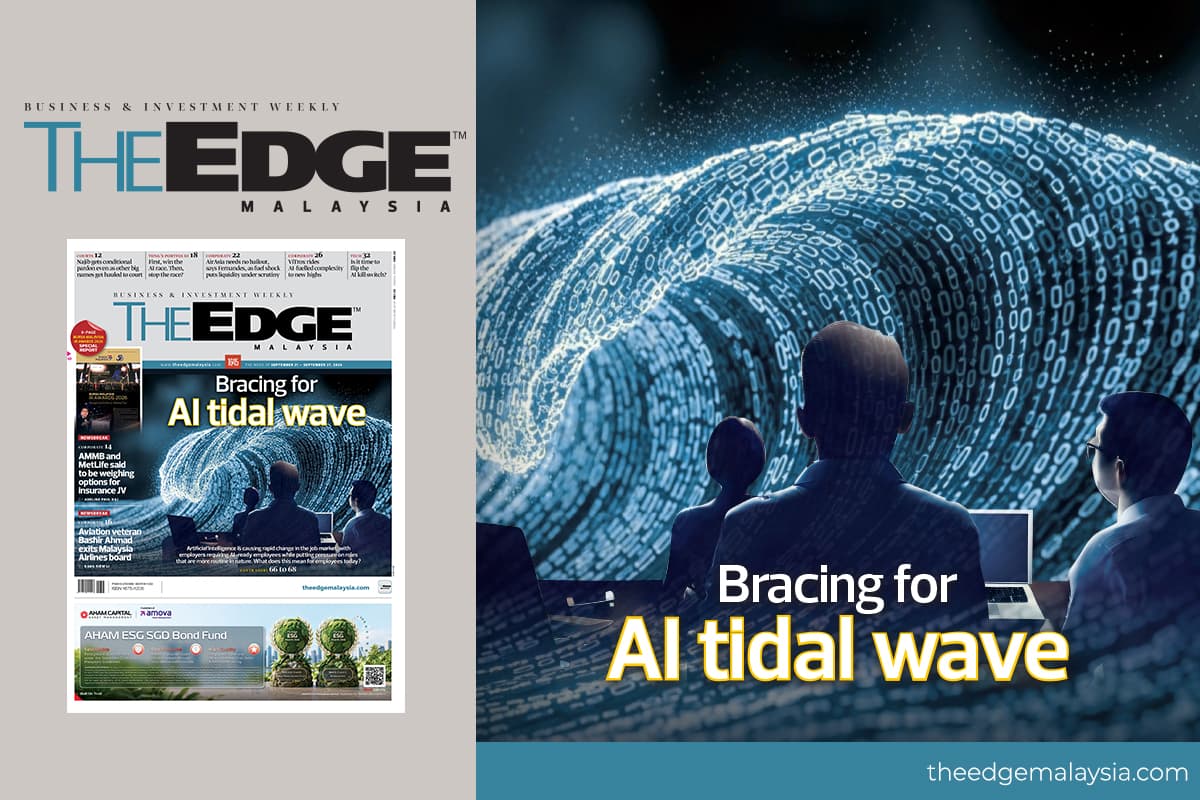
KUALA LUMPUR (Sept 19): These days, the use of artificial intelligence (AI) is prevalent in all aspects of life, in various sectors of the economy and professions, and more so among white-collar workers. Early research has shown that AI has, by some measure, improved the productivity of workers, but it still depends on the complexity of tasks and the user’s ability in AI prompting.
Even so, AI is increasingly becoming a part of everyday life. As a result, companies will soon be able to achieve the same outcomes with fewer workers — or, in some roles, none at all. The concern among white-collar workers about AI displacing jobs is real.
Jobstreet’s Workplace Happiness Index found that while only around one-third of Malaysian workers feel “very” or “extremely” concerned about AI affecting their job security, the score is even higher among professional services workers, coming in at 47%. While there is no evidence of massive job loss as a result of AI at this juncture, recruitment agencies observe that job postings for certain roles have been declining.
Among these are repetitive, standardised or administrative roles, many of which are being automated.
However, the gradual redesign of work does not necessarily imply that workers will be displaced. Instead, it points to a gradual shift in the mix of capabilities and skills required in those roles.
But the prevalence of AI also means employers increasingly expect employees to be adept in AI and digital tools, a shift that is already showing up in Malaysia’s hiring landscape.
What does this mean for employees and the future of employment?
In the sidebar accompanying this week’s cover story, we look at how AI’s impact on workers goes beyond whether jobs are displaced or transformed. As the technology raises productivity, will workers share in the gains?
Malaysia’s strong headline economic growth has not translated into workers getting a correspondingly larger share of the economic pie.
Compensation of employees (COE) accounted for 33.9% of gross domestic product in 2025, down from 35.6% in 2016 and low by international standards, even as gross operating surplus, which broadly represents income accruing to businesses and owners of capital from production, rose to 62% from 59.3%.
The government aims to lift COE to 40% by 2030, but the growing adoption of AI and automation adds another challenge in ensuring that productivity gains translate into higher wages and a larger share of economic output for workers.
Find out more in this week’s issue of The Edge Malaysia.
Save by subscribing to us for your print and/or digital copy.
P/S: The Edge is also available on Apple's App Store and Android's Google Play.