

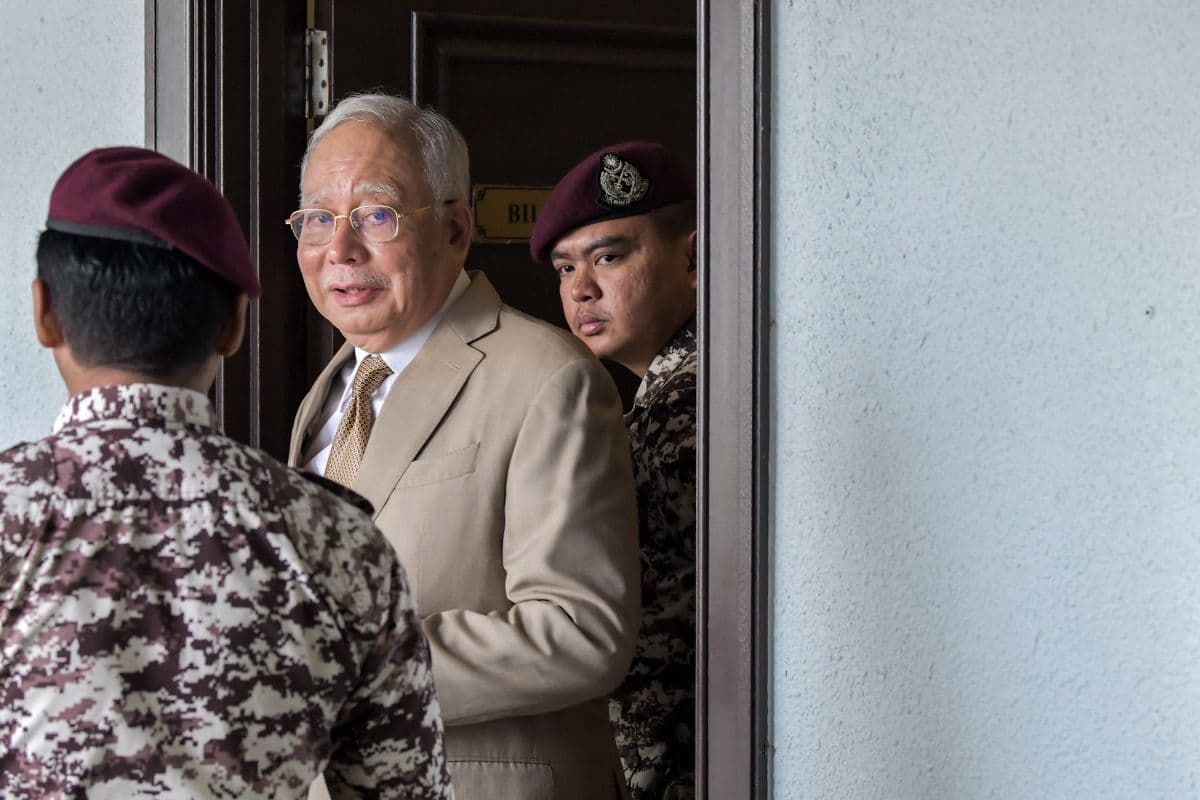
KUALA LUMPUR (Sept 18): Civil society groups have expressed concern and regret over the Federal Territories Pardons Board’s decision to allow former prime minister Datuk Seri Najib Razak to serve the remainder of his prison sentence under house arrest.
In a statement on Friday, the Coalition for Clean and Fair Elections (better known as Bersih) described the decision as a "massive blow to the struggle for justice and the Malaysian people's war against corruption." The coalition noted that allowing Najib to serve his term from home "sends a deeply confusing message to the public" while the nation is actively trying to combat graft and abuse of power.
Under the terms consented to by the King, Najib has been granted permission to transition to house arrest, on the condition that he pays the fine of RM50 million — a sum reduced from the original RM210 million — and adheres to other unstated conditions.
"If Najib is pardoned today and granted house arrest in his home — which is certainly larger and more luxurious than that of ordinary citizens — will former PMs who are prosecuted and convicted of corruption and abuse of power continue to be pardoned in the future using this precedent set by Najib? Which corrupt person will be freed and pardoned next?" said the Bersih statement.
Bersih emphasised that the 1MDB scandal remains a "dark chapter in our nation's history" involving billions in missing public funds and heavy national debt. It expressed frustration that leniency was granted without public transparency or consultation, especially while Najib faces a separate sentence of 15 years in prison and an RM11.38 billion fine in his ongoing 1MDB case, which is currently under appeal at the Court of Appeal.
Separately, the Malaysian Society for Transparency and Integrity (TI-M) cautioned that providing "exceptional treatment" to an individual convicted in a major corruption case carries serious consequences for Malaysia's governance.
"Exceptional treatment of a person convicted in a major corruption case risks — reinforcing the perception that those with political influence or status may face different consequences from ordinary offenders," TI-M said.
TI-M President Dr Raymon Ram noted that while the organisation respects the constitutional power of clemency under Article 42 of the Federal Constitution, the decision risks "potentially weakening the deterrent effect of Malaysia's anti-corruption framework".
The society added that high-profile decisions regarding accountability inevitably shape perceptions among experts and business communities, which could negatively impact Malaysia's score on the global Corruption Perceptions Index (CPI).