

This article first appeared in The Edge Malaysia Weekly on September 21, 2026 - September 27, 2026
Artificial intelligence (AI) is causing a shift in many industries, especially in the property sector, where the technology, alongside recurring digital services, can affect the way investors value properties.
A residence designed to integrate AI can be described as a home that consolidates every aspect of day-to-day living from the perspective of comfort, convenience, care and wellness through the implementation of innovative technologies.
Prem Kumar, managing director of Firdaus & Associates Group, says property development companies that continuously adopt a digitised AI ecosystem will have a far-reaching positive financial impact on their enterprise value, as opposed to retaining a conventional property development mindset.
A dynamic digital AI ecosystem redefines home living, shifting the focus from basic physical structures to enhanced quality of life. This integration creates a unique market segment where property development will begin centring around an AI-driven environment, in which digital systems must be accounted for alongside traditional land and building costs.
“As such, investors will evaluate property developers based on a combination of land and building, including net tangible assets, gross development value, location and so on, together with the service and technology capabilities,” says Prem.

— Prem Kumar, managing director of Firdaus & Associates Group
Prem explains the role of AI in a residence is akin to a brain that enhances the quality of life way beyond the daily needs of a human being while seamlessly synergising all physical and operational home systems.
“For example, smart home devices such as app-controlled lights or automated gates can be equated to the tyres and brakes of a car, while the concept of an AI-based residence is equivalent to a self-braking system of the car, which complements and assists the driver, who in this case is the resident,” he says.
The implementation of advanced and convenient technology reflects a growing appetite to price in long-term ecosystem value. Conventional property developments that choose to ignore aspects such as technology advancements will risk obsolescence.
Prem notes that there are buyers who are willing to pay a premium, especially in the context of value preservation and property value enhancement.
With the value pattern and profile for residential properties remaining static for years, AI-driven living features shift real estate valuation models and usher a different class of residential properties that will be deemed as sought-after premiums.
“Buyers are no longer ignorant to their needs and wants. The aspect of location and the other conventional property attributes that governed the marketability and saleability of residential properties are no longer foolproof. The incorporation of soft infrastructure has made the difference,” says Prem.
Additionally, the ability to evolve from having an AI and robotics ecosystem in a residence can protect a property’s long-term desirability, rental prospects and resale value by continuously adapting to human lifestyle needs across all life stages.
“As such, the value proposition relates to the entire spectrum of the human population and not just any specific age group. This makes the capability of satisfying the desires and needs of different segments of the population more easily attainable and as such a key determinant of long-term residential value,” he says.
On the cost side of things, Prem says, the additional upfront capital expenditure will be reflected as part of the development costs similar to conventional property developments. However, because most underlying AI features already exist in the market rather than requiring new development, set-up costs may not significantly inflate overall project expenses.
The core investment lies in building the primary operating system to connect these existing tools. For residents, ongoing software maintenance will follow standard, affordable subscription models comparable to everyday telecom, streaming or software services.
“Software maintenance costs will be benchmarked with typical subscription-based models that already exist in the market. As evident in the market, these subscription-based models will be generally affordable to most segments of the population and somewhat similar to subscription services such as for telecommunication, pay TV, softwares and so on,” says Prem.
In the coming years, an AI residence will represent a niche premium offering in the residential property space, and the operating system must be built to continuously adapt, integrating cutting-edge technological advancements to keep pace with evolving human needs and preferences.
“It will become a standard requirement that will continuously progress, and how property development companies adopt and constantly innovate their property offerings will definitely have an impact on how analysts assess the property sector,” says Prem.
“The innovations in terms of user experience and the availability of more diversified applications as part of the brain of the operating system will be continuously incorporated as the key determinant for its continuance as a niche premium property offering.”
AI’s impact on home design

— Tony Mak, director of SA Architect
For an AI residence to exist in the first place, there will be a disruption in how AI will change the way homes are designed.
Tony Mak, director of SA Architect, says compared to regular smart homes that add standalone devices to existing spaces, AI-ready residences instead integrate connectivity, sensors and autonomous systems directly into the underlying architectural design from the start.
Designing an AI residence will have to start from the beginning of the development, supported by questions on how people, technology and potentially autonomous systems interact with the space, and how power, connectivity, sensors and future equipment can be integrated into the building.
“Very simply put, a home with devices is mostly device-centric, but an AI home is occupant-centric and focuses on creating experiences within the 4C themes — which are comfort, connectivity, care and community,” says Mak.
Mak’s approach to designing AI homes stems from his role as the architect for AI Living, an upcoming residential development enabled by robotics and multiple intelligence systems working in harmony, developed by I-Berhad (KL:IBHD) in i-City.
Having been involved with a real life use case of designing an AI-ready residence, Mak emphasises the dual focus on design surrounding human movement and human activity alongside intelligent robotic systems.
Aspects like how people enter or move in a room, cook, rest and interact within the home, as well as the added consideration of charging ports, circulation widths and sensors for autonomous machines, will influence architects to design homes as one connected space, rather than viewing the property as isolated rooms.
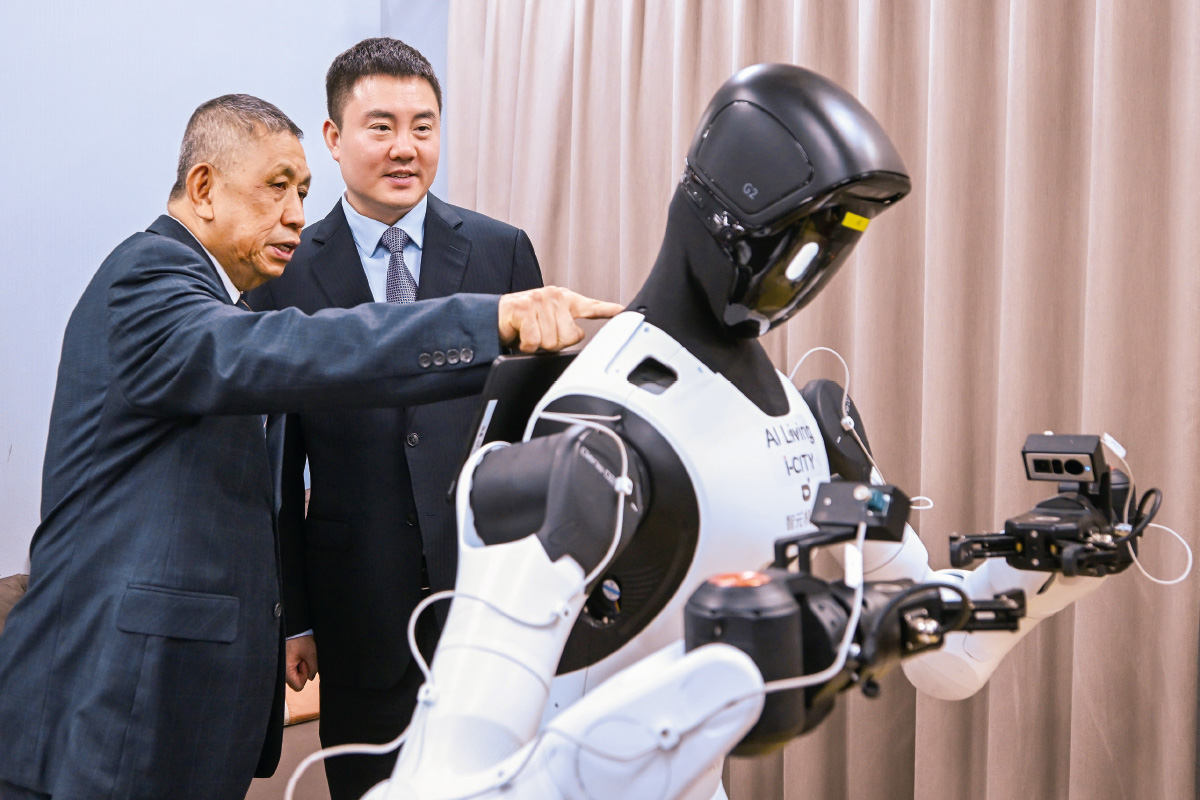
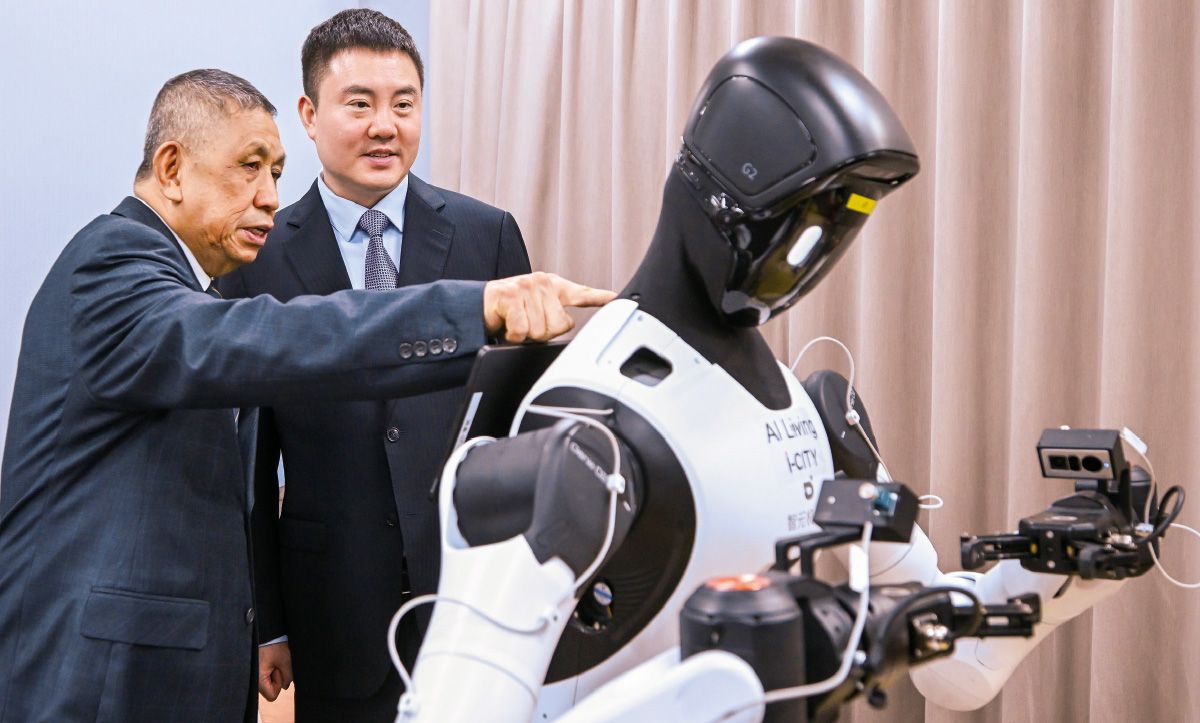
One example of how AI Living @ i-City is demonstrating the way homes are designed is reflected in the organisation’s recent meet with its robotics partner AgiBot Innovation (Shanghai) Technology Co Ltd to review the progress on AgiBot’s latest domestic robotics developments and how their evolving capabilities could be applied within the residential environment.
Furthermore, AI can make good passive architecture more effective. Mak explains that AI can help the systems that work in the background of a home be more sensitive and respond more intelligently.
For instance, adjustments to shading, ventilation or cooling can be autonomously made the moment an occupant uses or leaves a room.
“I see AI as an additional intelligence layer over good architectural principles. The architecture provides the environmental potential, while AI helps manage that potential in response to changing behaviour and conditions,” he says.
Looking forward, Mak acknowledges that it is impossible to design a home that can remain technologically adjusted for advancements within the next 20 years, but that homes should be designed in a way where the implemented technology can be updated without restructuring its fundamental architecture.
He approaches this by separating permanent layers (service routes, cable pathways and ceiling voids) from the technology layers (sensors, processors and interfaces), which should be designed to be replaceable and modular.
These forward-thinking thoughts that are put into a residence like AI Living may result in the property becoming a premium in the short term, but the broader benefits in energy management, ageing population support and improved residential could become more accessible over time.
This can also change the thoughts of future homebuyers to naturally question if a home was designed to support intelligent systems from the get-go.
“The technology will evolve, but the underlying purpose will remain quite simple, and that is to make living more comfortable and convenient, provide better support when people need care, and eventually create more responsive communities.,” says Mak.
Save by subscribing to us for your print and/or digital copy.
P/S: The Edge is also available on Apple's App Store and Android's Google Play.